+86-13925515590
 kleinma@aliyun.com


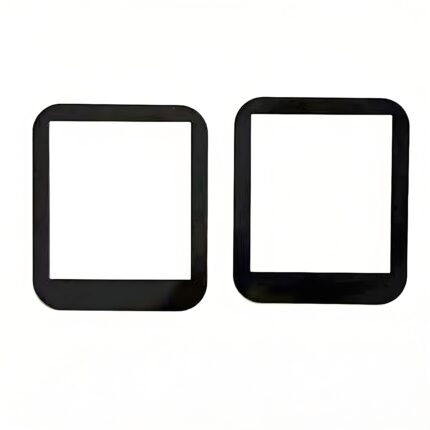
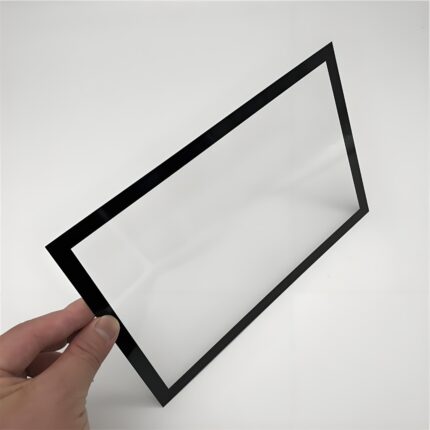
Panda Glass Cover | Custom Aluminosilicate Cover Glass
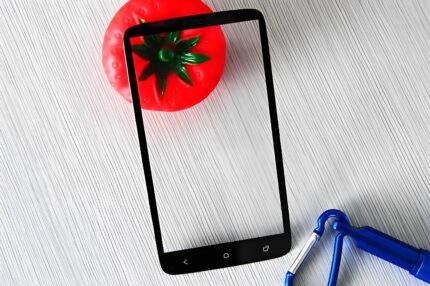
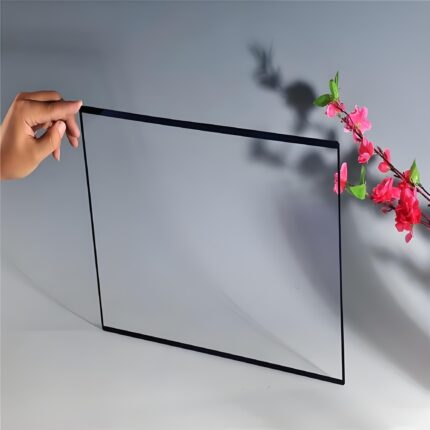
Panda Glass cover is an aluminosilicate display glass option for tablets, touchscreens, automotive HMIs and industrial electronic equipment. It can be chemically strengthened and supplied with custom thickness, dimensions, CNC machining, edge processing, silk screen printing and AR, AG or AF surface treatments. The glass specification can be matched to the display structure, touch system and finished product requirements.
Panda Glass Cover for Displays and Touchscreens
Panda Glass cover is an aluminosilicate glass option developed for electronic display applications where the front glass needs to combine optical clarity, mechanical performance and precise manufacturing.
It can be used for tablet displays, touchscreens, automotive interfaces, industrial HMIs, consumer electronics and other electronic equipment where the glass forms part of the front display assembly.
Unlike standard soda-lime glass, aluminosilicate glass is commonly selected for applications that require a stronger and thinner glass structure. Panda Glass can also be chemically strengthened when the finished product requires additional mechanical performance.
For OEM projects, the glass can be supplied according to the customer’s drawing, sample or technical specification.
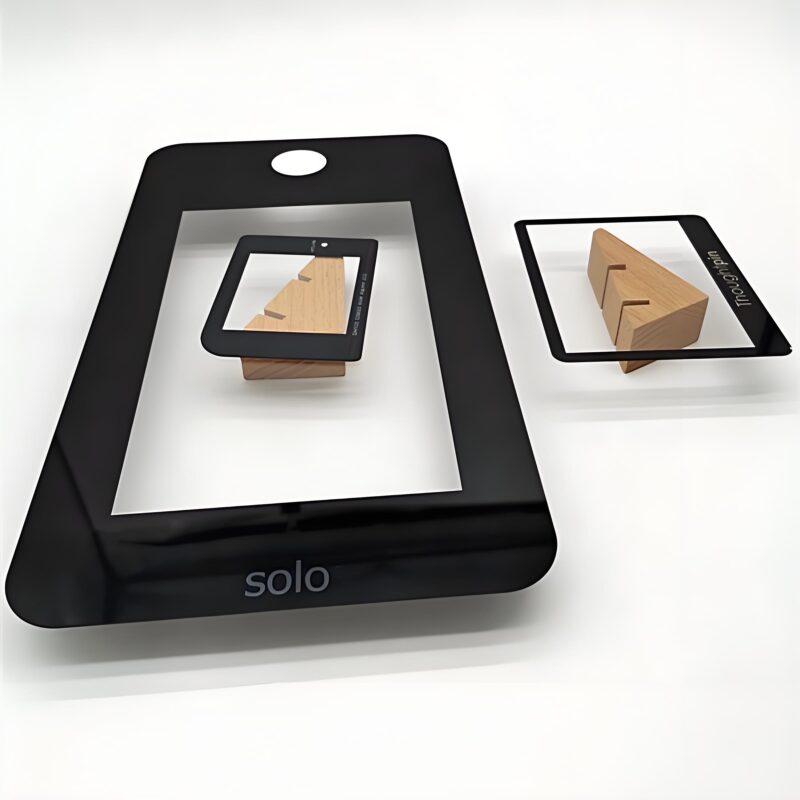
What Is Panda Glass Cover?
Panda Glass is an aluminosilicate glass material used in electronic display and tablet cover glass applications.
The material can be processed into custom display components rather than being limited to standard rectangular sheets.
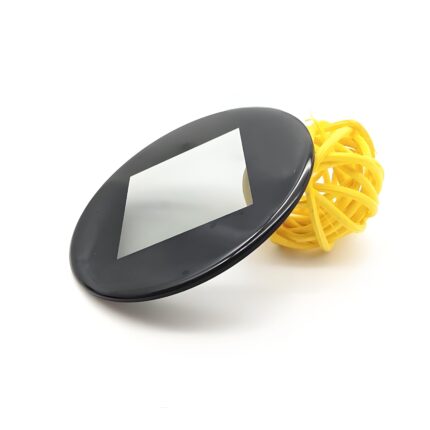
Depending on the project, a Panda Glass cover can be produced with custom dimensions, thickness, edge geometry, holes, cutouts, printed areas and suitable surface treatments.
The final specification should be selected according to the display structure, touch sensor, housing design and intended operating environment.
This makes Panda Glass a practical material option for manufacturers that need a customized display glass component rather than a standard replacement panel.
Panda Glass for Tablet Displays
Tablet devices are one of the applications where aluminosilicate electronic display cover glass can be considered.
A tablet cover needs to provide a clear viewing surface while fitting accurately into the display and housing structure.
Depending on the tablet design, Panda Glass can be specified with a suitable thickness and chemical strengthening process.
The glass can also be produced with:
- Custom outer dimensions
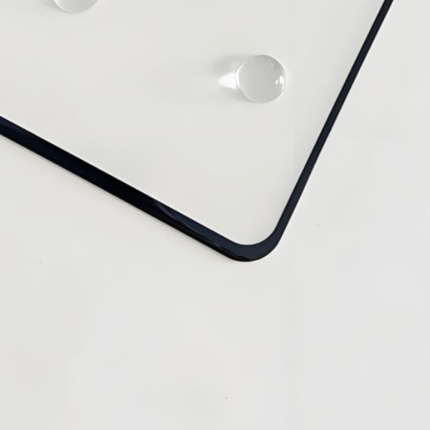
- Rounded corners
- CNC edge processing
- Camera or sensor openings
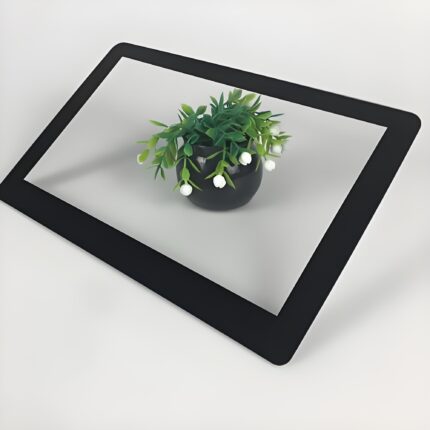
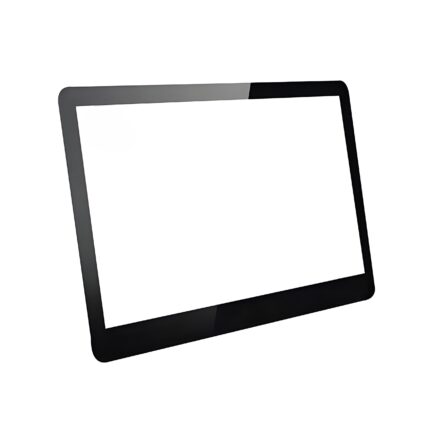
- Black border printing
- Logo printing
- Anti-fingerprint treatment
- Anti-glare treatment
- Anti-reflective treatment
For tablet OEM projects, the glass should be developed together with the display and touch assembly to ensure that the finished dimensions and surface characteristics match the device structure.
Panda Glass for Touchscreen Applications

Touchscreen glass has different requirements from a simple protective window.
The glass sits above the display and touch system, so thickness, flatness, optical properties and surface condition can all influence the finished assembly.
Panda Glass can be considered when the project requires an aluminosilicate substrate with custom processing.
The final glass thickness can be selected according to the touch sensor structure, display size and mechanical design.
For frequently touched equipment, a suitable surface treatment can also be considered.
An anti-fingerprint treatment can help reduce visible fingerprints, while an anti-glare surface may be useful where strong ambient lighting affects screen readability.
Chemical Strengthening for Panda Glass
Chemical strengthening can be used to improve the mechanical performance of suitable Panda Glass substrates.
During chemical strengthening, ions near the glass surface are exchanged to create a compressive layer.
The resulting glass can provide improved resistance to certain forms of mechanical damage compared with an untreated substrate of the same material.
The actual strengthening performance depends on the glass composition, thickness and process conditions.
For this reason, the final specification should be based on the required glass grade and the customer’s application rather than using one fixed strength value for every Panda Glass cover.
If the project has a defined strength, impact or bending requirement, the target can be reviewed during sample development.
Panda Glass vs Soda-Lime Glass
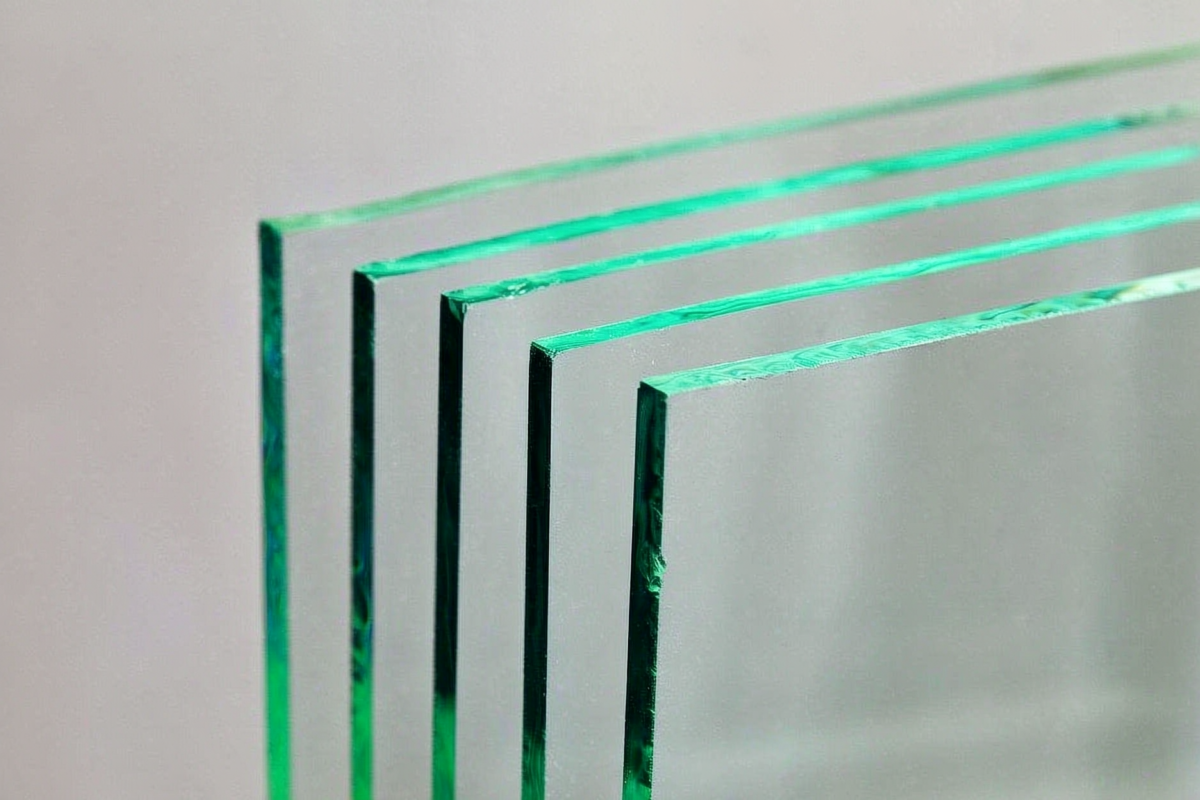
Soda-lime glass remains widely used for general-purpose glass applications.
However, some electronic display products require a glass material with a different combination of thickness, strength and processing characteristics.
Aluminosilicate glass is commonly considered for these applications because it is suitable for chemical strengthening and thin display constructions.
The choice between Panda Glass and soda-lime glass should depend on the actual product requirements.
Factors to consider include:
- Display size
- Required thickness
- Mechanical loading
- Touch structure
- Optical requirements
- Surface treatment
- Processing requirements
- Production volume
- Target product environment
There is no single glass material that is best for every display.
Panda Glass vs Other Aluminosilicate Glass
Panda Glass is one material option within the broader aluminosilicate glass category.
Other branded or non-branded aluminosilicate glasses may also be used for display applications.
The correct selection should therefore be based on the specific material grade and the requirements of the finished product.
Important parameters may include thickness tolerance, optical performance, chemical strengthening response, surface quality, dimensional capability and availability.
For an OEM project, it is more useful to compare the actual glass specifications than to select a material based only on brand name.
Custom Panda Glass Processing
A display cover rarely consists of a simple piece of cut glass.
The finished component may require several mechanical and decorative processes.
Depending on the product design, Panda Glass can be processed with:
- Precision cutting
- CNC machining
- Edge grinding
- Edge polishing
- Chamfering
- Drilling
- Slots
- Cutouts
- Rounded corners
- Silk screen printing
- Chemical strengthening
- Optical surface treatment
The available process combination depends on the glass thickness, geometry and final application.
A CAD drawing or physical sample can be used to confirm the required geometry before production.
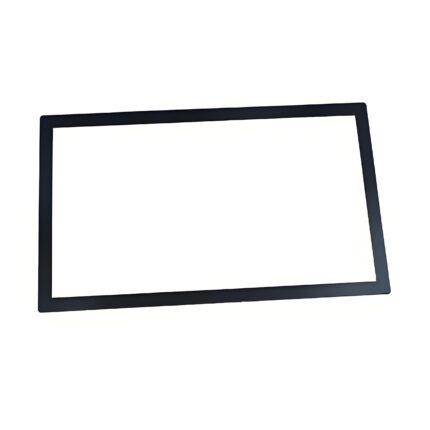
Black Printing for Panda Glass Cover
Black printing is commonly used around electronic displays.
The printed area can hide the display edge, adhesive, housing components or internal structures that should not be visible from the front.
Panda Glass can be supplied with customized printed borders and other graphics where required.
The artwork should be matched to the actual display opening and mechanical dimensions.
For products containing cameras, sensors, speakers or other openings, print registration becomes particularly important because even a small positional difference can be visible on the finished assembly.
Surface Treatments
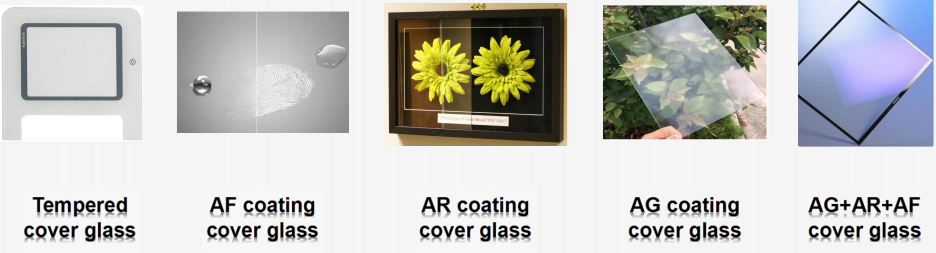
Panda Glass can be combined with suitable surface treatments when required by the application.
Possible options include:
Anti-Reflective Treatment
AR treatment can reduce surface reflection and may improve display readability in environments where reflected light is a concern.
Anti-Glare Treatment
AG treatment modifies the surface reflection characteristics and can be considered for displays used under strong ambient lighting.
Anti-Fingerprint Treatment
AF treatment is useful for touchscreen products that are frequently touched.
The correct treatment should be selected according to the display, lighting environment, touch requirements and cleaning conditions.
Not every coating is required for every Panda Glass project.
Panda Glass for Automotive Displays
Automotive electronic displays can require a combination of optical quality, mechanical performance and precise geometry.
Panda Glass can be considered for instrument displays, center-console interfaces, passenger displays and other electronic control surfaces.
The finished glass may include a printed perimeter, custom outline, curved or shaped geometry where technically suitable, and optical surface treatment.
Automotive projects should also consider temperature, vibration, optical reflection and assembly conditions.
The glass specification should therefore be developed around the complete display module rather than selected independently.
Panda Glass for Industrial HMI
Industrial HMIs are another suitable application.
Control panels and machine interfaces may be used continuously and can be exposed to repeated touch, cleaning and different workplace conditions.
Panda Glass Cover can provide a customizable glass substrate for these interfaces.
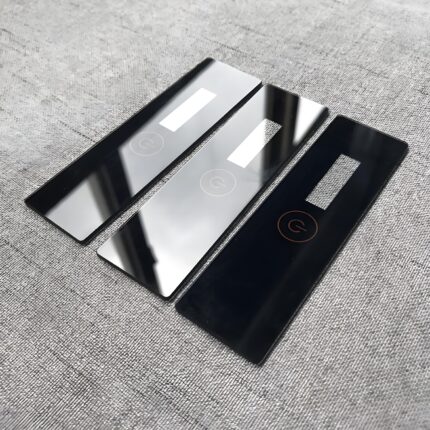
Depending on the project, the Panda glass cover can include printed control markings, custom openings, chemical strengthening and a suitable surface treatment.
For industrial equipment, the required glass specification should be determined by the actual enclosure, display size and operating environment.
Quality and Dimensional Control
For custom Panda Glass covers, dimensional consistency is important because the Panda glass cover must fit the customer’s assembly.
Production inspection can include checks of:
- Glass dimensions
- Thickness
- Edge condition
- Hole and cutout position
- Surface appearance
- Printing registration
- Coating condition
- Packaging condition
Inspection requirements can be defined according to the customer’s drawings and quality standards.
For projects with tighter dimensional or optical requirements, the inspection criteria should be confirmed before mass production.
Custom Panda Glass Cover for OEM Projects
Panda Glass is most useful when the customer needs a specific display Panda glass cover configuration rather than a standard off-the-shelf panel.
The project can start with a drawing, CAD file, sample or basic specification.
The Panda glass cover material, thickness, dimensions, edge processing, strengthening, printing and surface treatment can then be evaluated according to the final product.
This approach is suitable for tablet manufacturers, touchscreen equipment suppliers, industrial automation companies, automotive electronics manufacturers and other OEM customers.
If you are developing a new display product or replacing an existing glass component, provide the glass drawing, dimensions, thickness and application information for review.
Request a Panda Glass Cover Quote
Send your glass drawing or sample together with the required dimensions, thickness, quantity and processing requirements.
We can review the Panda Glass specification and evaluate the required cutting, CNC machining, chemical strengthening, printing and surface treatment before quotation.
Request a custom Panda Glass cover sample or quotation for your next display project.