+86-13925515590
 kleinma@aliyun.com

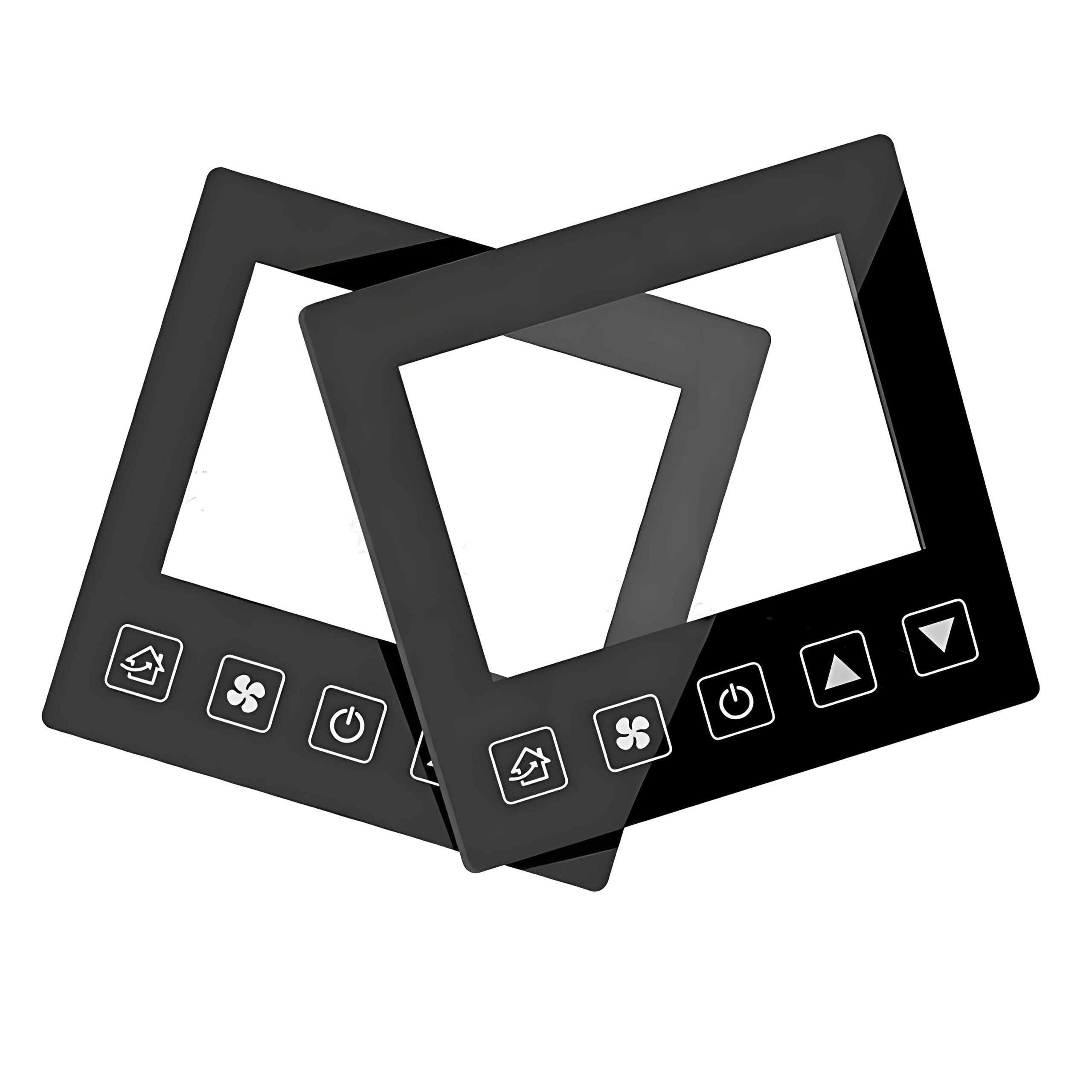
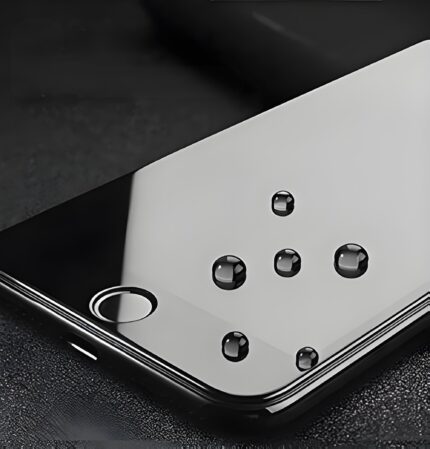
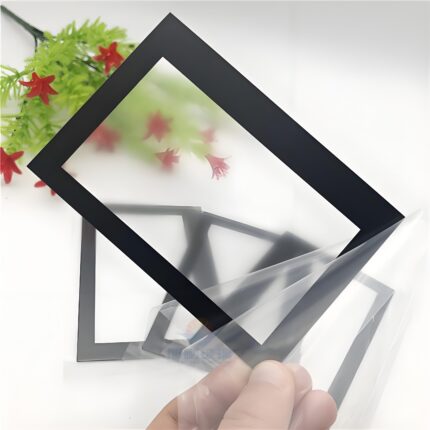
Gorilla Glass Substrate for Custom Display Applications
How Gorilla Glass Substrate Supports Touchscreen Performance
Gorilla Glass is widely used as a cover glass material for smartphones, tablets, automotive displays, industrial touchscreens and other electronic devices. Its combination of thin design, optical clarity and chemical strengthening makes it suitable for applications that require both display protection and a responsive touch interface.
Gorilla Glass does not directly detect touch input. Instead, the cover glass forms the outer layer above the touchscreen sensor. Its thickness, material properties, surface treatment and integration with the touch module can influence the overall touchscreen performance.
For OEM display projects, selecting the appropriate Gorilla Glass thickness and processing configuration can help maintain a good balance between durability, optical performance and touch responsiveness.
Gorilla Glass Substrate for Custom Electronic Applications
Our Gorilla Glass substrate solution is intended for custom glass components used in electronic displays, touchscreens and other applications where a thin, durable and optically clear glass material is required.
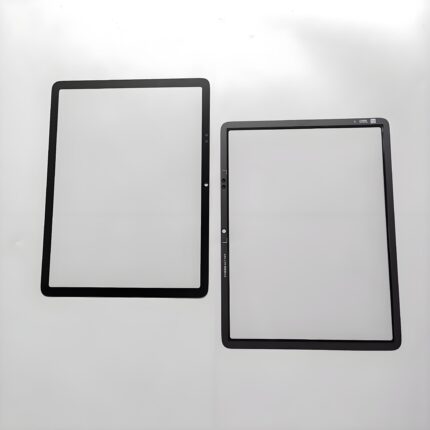
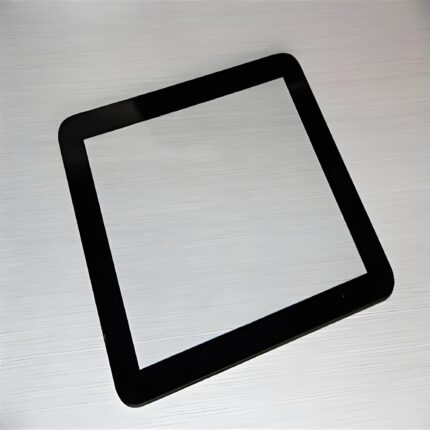
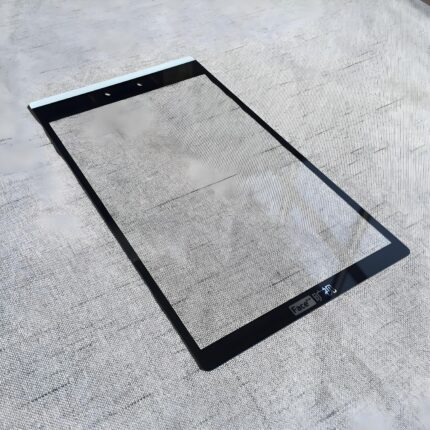
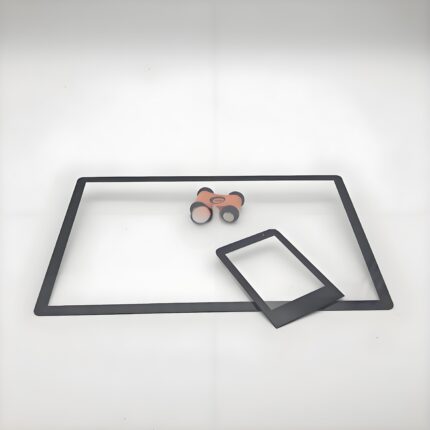
As an OEM glass supplier, we support custom cutting, CNC machining, edge processing, chemical strengthening, silk screen printing and selected AR, AG and AF surface treatments according to customer drawings and application requirements.
For projects that specifically require Corning® Gorilla® Glass, the applicable glass type and grade should be confirmed according to the customer’s technical requirements and supply availability.
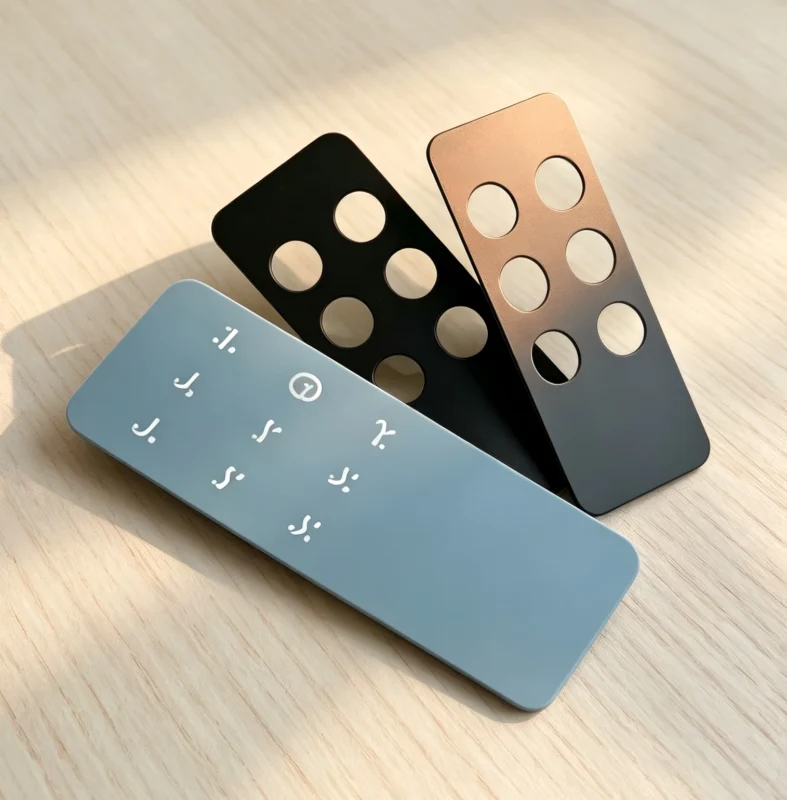
Gorilla Cover Glass has revolutionized display cover technology by significantly improving touch responsiveness while maintaining durability. Unlike conventional cover glass, Gorilla Cover Glass achieves this through three key innovations:
Ultra-Thin Formulations – New compositions allow thicknesses down to 0.4mm without sacrificing strength
Surface Optimization – Proprietary ion-exchange process creates smoother surfaces
Dielectric Consistency – Maintains stable electrical properties for capacitive touch accuracy
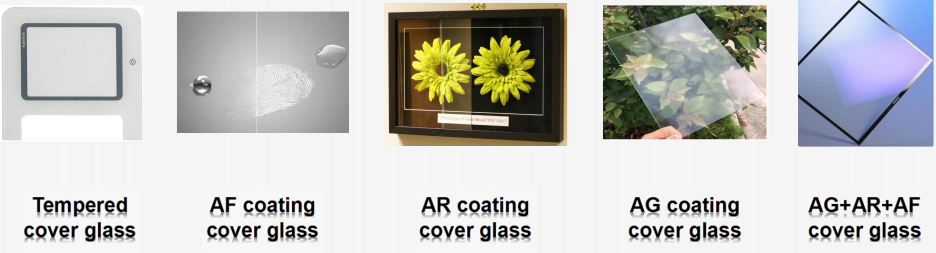
In Weiman, we offer not just limit on AF coatings but also
Cutting: Rough shapes by diamond unit or laser cutting from big sheet of glass substrate into rough shapes of the final products, but edge is still sharp and big tolerances.
CNC processings:Edge grinding and chamfering, slotting, hole drilling.
Tempering: Chemically strengthening for thickness under 3.0mm and thermally tempering for 3.0mm thickness above.
Silk screen print: For thin thickness cover glass option, we use resin ink for print and for thermal tempering we use 3.0mm thickness above.
AR means anti reflection by electroplating base on different spectral bands, single side increase 3-4% light transittance and double sides up to 99% at most.
AF with 2 kinds of methods including electroplating(costly but more durable) and spray(cheaper but less durable), it can also protect the AR coating from easy peel off.
Bonding: Mainly focus on 3M tapes including adhesive transfer tape, VHB tape and OCA tapes.
Lamination: Foil to protect from dirt and explosion proof sheet for better anti scatter.
Does Gorilla Cover Glass Improve Touch Sensitivity?
Gorilla Cover Glass does not inherently increase the sensitivity of a touchscreen sensor. Touch performance depends on the complete display stack, including the cover glass, touch sensor, controller, adhesive layer and device configuration.
However, a properly specified Gorilla Glass substrate cover can support touchscreen performance by providing a thin, optically clear protective layer while maintaining the mechanical durability required for everyday use.
For OEM applications, factors such as glass thickness, dielectric properties, bonding method, sensor design and surface treatment should be evaluated together rather than selecting cover glass based on thickness alone.
| Factor | Effect on Touchscreen |
|---|---|
| Glass Thickness | Affects the distance between finger and touch sensor |
| Glass Material | Can affect electrical and mechanical characteristics |
| Adhesive / OCA | Influences optical and touchscreen integration |
| Touch Sensor | Determines the primary sensing performance |
| Controller Tuning | Helps optimize touch detection |
| Surface Coating | Can affect surface feel, glare and optical performance |
| Glass Processing | Dimensional accuracy affects module integration |
Gorilla Glass Substrate vs Standard Glass
| Feature | Gorilla Glass | Standard Soda-Lime Glass |
|---|---|---|
| Chemical Strengthening | Available | Depends on glass/process |
| Thin Applications | Highly suitable | Suitable depending on design |
| Durability | High | Moderate |
| Optical Performance | Excellent | Good |
| Custom Processing | Available | Available |
| Typical Cost | Higher | Lower |
| Typical Use | Premium electronics/displays | Industrial/general applications |
Applications
- Smartphones & Tablets
- Automotive Displays
- Industrial HMIs
- POS Terminals
- Kiosks & Digital Signage
- Consumer Electronics

What Should OEM Buyers Specify?
Gorilla Glass Substrate type
Thickness
Overall dimensions
Holes and cutouts
Edge profile
Chemical strengthening requirements
AR / AG / AF treatment
Silk-screen printing
OCA or adhesive bonding
Prototype and production quantity
Frequently Asked Questions
1. What is Gorilla Glass Substrate cover glass?
Gorilla Glass Substrate cover glass is a chemically strengthened glass solution used as a protective surface for electronic displays, touchscreens and other devices. It combines a thin profile, optical clarity and enhanced mechanical durability for demanding applications.
2. Can you customize Gorilla Glass cover glass?
Yes. We provide custom Gorilla Glass Substrate cover glass according to customer drawings or specifications. Customization can include thickness, dimensions, shape, holes, slots, corner radius, edge processing, printing and surface treatments.
3. What thicknesses are available for Gorilla Glass cover glass?
The thickness can be customized according to the selected Gorilla Glass Substrate, display structure and application requirements. Please provide your required thickness or technical drawing so we can evaluate the suitable specification.
4. Can Gorilla Glass be used for touchscreen displays?
Yes. Gorilla Glass is widely used for touchscreen and electronic display applications where a thin, durable and optically clear cover glass is required.
5. Can Gorilla Glass cover glass be CNC machined?
Yes. CNC machining can be used for custom holes, slots, cutouts, stepped features, edge processing and other geometries according to the customer’s drawing.
6. Can Gorilla Glass be chemically strengthened?
Yes. Gorilla Glass Substrate is a chemically strengthened glass family. The final mechanical performance depends on the specific glass grade, thickness and strengthening process.
7. Can you provide AR, AG and AF coatings for Gorilla Glass?
Yes. Depending on the project requirements, Gorilla Glass cover glass can be supplied with AR (anti-reflective), AG (anti-glare) or AF (anti-fingerprint) surface treatments.
8. Can Gorilla Glass Substrate cover glass be screen printed?
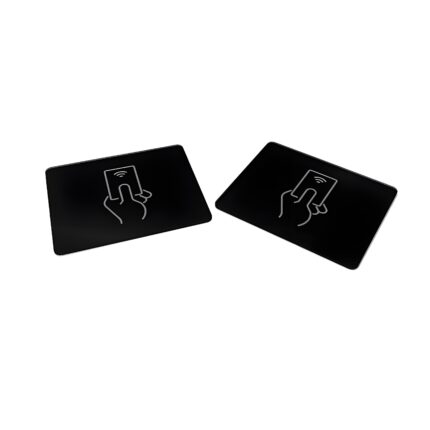
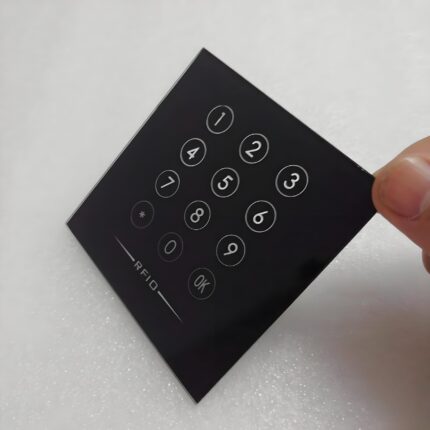
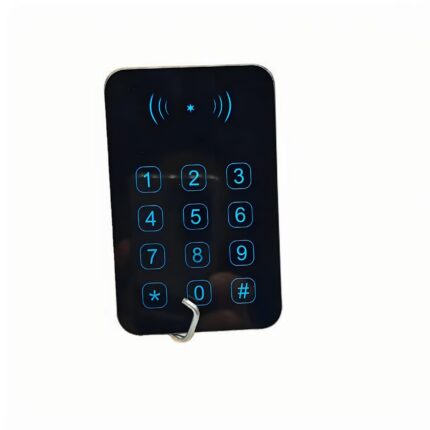
Yes. Custom silk screen printing can be provided for black borders, logos, icons, markings and other decorative or functional graphics.
9. What applications are suitable for Gorilla Glass cover glass?
Gorilla Glass cover glass can be used for consumer electronics, industrial displays, HMI panels, automotive displays, POS terminals, kiosks, smart devices and other touchscreen applications.
10. Can you provide Gorilla Glass samples and OEM production?
Yes. We can evaluate prototype, sample and production requirements based on the project specifications. Please provide the glass size, thickness, application, quantity and drawing for quotation.
Request a Quote for Custom Gorilla Glass Substrate Cover Glass
Looking for custom Gorilla Glass substrate cover glass for a touchscreen, LCD display, HMI panel or electronic device?
Send us your drawing or project requirements. We can evaluate the glass material, dimensions and processing requirements for your application.
Please provide the following information:
- Glass thickness
- Overall dimensions
- Glass shape
- Gorilla Glass grade, if specified
- Holes, slots or cutouts
- Edge processing requirements
- Chemical strengthening requirements
- Silk screen printing
- AR / AG / AF coating requirements
- Application or display type
- Prototype or production quantity
- CAD / DXF / PDF drawing, if available
Custom Gorilla Glass Processing
We can support:
- Precision cutting
- CNC machining
- Edge processing
- Chemical strengthening
- Silk screen printing
- AR / AG / AF coatings
- Custom shapes and cutouts
- OEM / ODM production
Get a Custom Gorilla Glass Quote
Send us your drawing, required thickness, dimensions, application and quantity. Our engineering team will review your requirements and provide a suitable Gorilla Glass cover glass solution.