 +86-13925515590
 kleinma@aliyun.com

How Chemical Strengthening Thin Cover Glass

How Chemical Strengthening Improves Thin Cover Glass
Thin cover glass is widely used in electronic displays, touchscreens, control panels, portable devices and other applications where low thickness, optical performance and durability are important.
As glass becomes thinner, manufacturers need to carefully balance thickness, strength, weight and processing requirements. Chemical strengthening is one of the most effective methods for improving the mechanical performance of thin glass without significantly increasing its thickness.
For OEM display and cover glass projects, chemically strengthened glass can provide a practical solution when a thin glass substrate needs better resistance to scratches, impact and everyday handling.
What Is Chemical Strengthening?
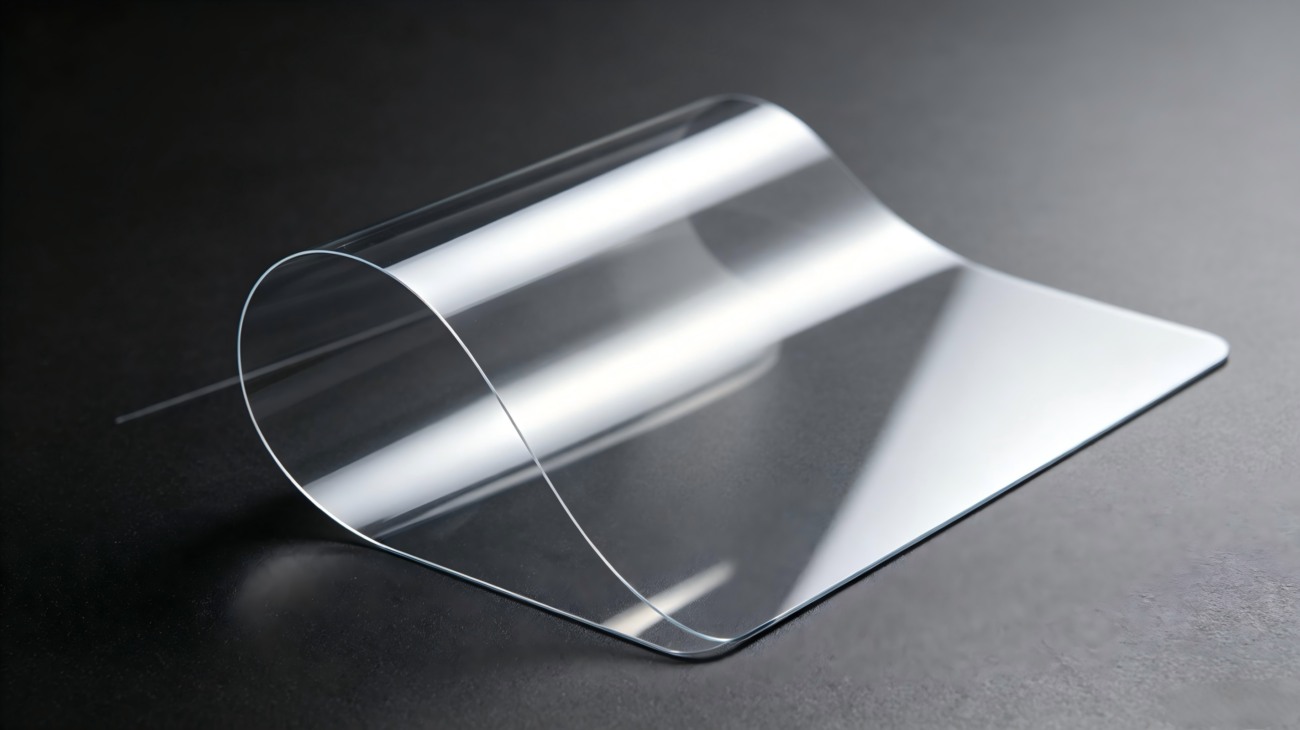
Chemical strengthening is a glass-strengthening process based on ion exchange.
During the process, glass is placed in a molten salt bath. Smaller ions near the glass surface are exchanged with larger ions from the salt. The larger ions create a compressive stress layer near the surface of the glass.
This surface compression helps the glass resist the formation and growth of cracks.
Unlike thermal tempering, chemical strengthening can be applied to relatively thin glass because it does not rely on rapidly heating and cooling the entire glass sheet.
Why Is Chemical Strengthening Important for Thin Cover Glass?
Thin glass is attractive for many electronic products because it can reduce weight and help manufacturers create thinner assemblies. However, reducing thickness can also make mechanical performance more challenging.
Chemical strengthening helps address this problem by improving the surface and edge performance of the glass while maintaining the original thin profile.
For example, a custom thin cover glass component may require:
- Thin glass thickness
- High dimensional accuracy
- Better impact resistance
- Improved scratch resistance
- CNC holes and cutouts
- Edge processing
- Silk-screen printing
- AR, AG or AF coatings
- Optical bonding or OCA lamination
Chemical strengthening can therefore be integrated into a larger cover glass manufacturing process rather than treated as an isolated operation.
How the Chemical Strengthening Process Works
A typical chemical strengthening process includes several important steps.
1. Glass Cutting
The glass substrate is first cut according to the required dimensions.
Depending on the application, the glass may be supplied in different compositions and thicknesses.
2. CNC Machining
After cutting, the glass can be processed to create:
- Holes
- Slots
- Notches
- Curved edges
- Camera openings
- Sensor openings
- Custom profiles
CNC machining is particularly important for electronic cover glass because the final component often needs to match a specific housing or display module.
3. Edge Processing
Glass edges can be processed to reduce sharp edges and improve handling and assembly characteristics.
Edge processing may include grinding, polishing or other customized edge treatments depending on the drawing requirements.
4. Chemical Strengthening
The processed glass is treated using an ion-exchange process.
The exact process parameters depend on the glass composition, thickness and required performance.
The objective is to create a compressive stress layer near the glass surface.
5. Cleaning and Inspection
After strengthening, the glass is carefully cleaned and inspected.
Typical inspection items include:
- Dimensions
- Thickness
- Surface quality
- Edge quality
- Flatness
- Optical appearance
- Surface defects
- Strengthening quality
6. Additional Surface Treatments
Depending on the application, additional treatments can be applied after strengthening, including:
- AR coating for reducing reflections
- AG coating for reducing glare
- AF coating for reducing fingerprints
- Silk-screen printing
- Decorative printing
The final configuration depends on the display and environmental requirements.
Chemical Strengthening vs. Thermal Tempering
Chemical strengthening and thermal tempering are both used to improve glass strength, but they are particularly suitable for different applications.
| Feature | Chemical Strengthening | Thermal Tempering |
|---|---|---|
| Suitable for thin glass | Excellent | More limited |
| Strengthening method | Ion exchange | Heating and rapid cooling |
| Surface compression | Yes | Yes |
| Thin-profile applications | Highly suitable | Depends on thickness and geometry |
| Complex shapes | Suitable depending on design | More challenging for some designs |
| Post-processing | Must be carefully controlled | Usually more limited after tempering |
| Typical applications | Electronic cover glass, displays, touchscreens | Architectural and thicker safety glass |
For very thin electronic cover glass, chemical strengthening is often more suitable because the process can improve mechanical performance without requiring the glass to become substantially thicker.
Chemical Strengthening for 1mm Cover Glass
1mm glass is a good example of where chemical strengthening can provide value.
A 1mm cover glass component may be used in:
- Industrial displays
- Touchscreen panels
- POS terminals
- Control panels
- Consumer electronics
- Instrument displays
- Optical and electronic equipment
For these applications, simply increasing glass thickness may not be desirable because it can affect the overall product design.
Chemical strengthening allows engineers to maintain a thin glass profile while improving its resistance to mechanical damage.
For OEM projects, the final specification should consider not only thickness but also glass composition, strengthening requirements, dimensions, edge processing and the intended operating environment.
Chemical Strengthening for Ultra Thin Glass
Ultra thin glass requires even more careful engineering because the glass substrate has limited thickness.
Potential applications include:
- Portable electronics
- Touch interfaces
- Compact displays
- Lightweight electronic devices
- Optical components
The appropriate strengthening process depends on the glass composition and the manufacturer’s processing capability.
For an ultra-thin cover glass project, buyers should provide the required thickness, dimensions, glass type, strengthening requirements and application environment before requesting production.
Does Chemical Strengthening Make Glass Scratch-Proof?
No.
Chemical strengthening improves the mechanical performance of glass, but it does not make glass completely scratch-proof or unbreakable.
Scratch resistance and impact resistance are also influenced by:
- Glass composition
- Surface condition
- Strengthening process
- Coatings
- Edge quality
- Product structure
- Installation method
For applications where fingerprint resistance, glare reduction or optical performance is also important, chemical strengthening can be combined with AF, AG or AR surface treatments.
Chemical Strengthening + AG / AR / AF Coatings
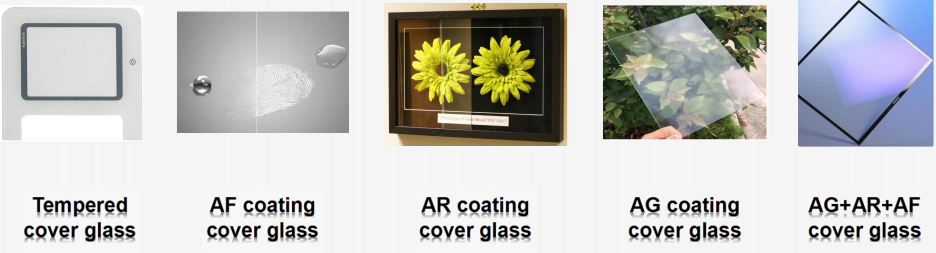
A custom cover glass component may require both mechanical strengthening and optical surface treatment.
AG Glass
Anti-glare treatment helps reduce reflections from strong ambient light sources.
This can be useful for:
- Industrial displays
- Outdoor equipment
- Control panels
- POS terminals
AR Glass
Anti-reflective treatment is designed to reduce surface reflection and improve optical visibility.
It can be considered for displays and optical applications where light transmission and visual clarity are important.
AF Glass
Anti-fingerprint treatment helps reduce visible fingerprints and makes the surface easier to clean.
It is commonly considered for touchscreens and frequently handled electronic devices.
Combining chemical strengthening with these treatments allows manufacturers to address both mechanical and optical requirements in one cover glass component.
What OEM Buyers Should Specify
When requesting chemically strengthened thin cover glass, providing detailed specifications can make quotation and engineering evaluation much faster.
Important information includes:
- Glass thickness
- Glass material or grade
- Overall dimensions
- 2D or 3D drawing
- Required holes and cutouts
- Edge processing requirements
- Chemical strengthening requirements
- Surface coating requirements
- Silk-screen printing requirements
- Application environment
- Prototype or production quantity
- Packaging requirements
For custom cover glass, the drawing is particularly important because it allows the manufacturer to evaluate machining, edge processing, strengthening and inspection requirements before production.
Custom Chemical Strengthened Cover Glass Manufacturing
A typical OEM project can include:
Glass Selection → Cutting → CNC Machining → Edge Processing → Chemical Strengthening → Cleaning → Printing → AR/AG/AF Treatment → Inspection → Packaging
The exact production sequence can be adjusted according to the customer’s product structure and processing requirements.
For applications requiring thin but durable display protection, chemical strengthening can be combined with precision machining and surface treatments to create a customized cover glass component.
Applications of Chemically Strengthened Thin Glass
Chemically strengthened thin cover glass can be used in a wide range of electronic applications.
| Application | Typical Requirements |
|---|---|
| Industrial Displays | Thin glass, impact resistance, AG/AR |
| Touchscreens | Chemical strengthening, AF, printing |
| POS Terminals | Strength, printing, CNC cutouts |
| Consumer Electronics | Thin profile, optical clarity |
| Control Panels | Durability, AG/AR/AF |
| Automotive Displays | Optical performance, precision machining |
| Instrument Displays | Thin glass, dimensional accuracy |
The appropriate material and strengthening process should always be selected according to the actual application and design requirements.
Why Choose Custom Chemical Strengthened Cover Glass?
For OEM and ODM projects, a cover glass supplier should be able to support more than just glass cutting.
A complete solution may include:
- Custom glass selection
- Precision cutting
- CNC machining
- Edge processing
- Chemical strengthening
- Silk-screen printing
- AR/AG/AF coatings
- Cleaning
- Quality inspection
- Custom packaging
This allows the customer to manage multiple cover glass requirements through one manufacturing partner.
Request a Quote for Thin Chemical Strengthened Cover Glass
If you are developing a thin display, touchscreen or electronic device and need chemically strengthened cover glass, send us your drawing and specifications.
We can evaluate:
- Glass type
- Thickness
- Dimensions
- CNC requirements
- Edge processing
- Chemical strengthening
- Printing
- AR/AG/AF coatings
- Prototype and production requirements
Send your drawing and application requirements to request a custom cover glass quotation.
FAQ
What is chemical strengthening of glass?
Chemical strengthening is a glass treatment based on ion exchange. Larger ions replace smaller ions near the glass surface, creating compressive stress that improves the glass’s resistance to cracking.
Is chemically strengthened glass suitable for 1mm cover glass?
Yes. Chemical strengthening is particularly useful for thin cover glass applications where maintaining a thin profile while improving mechanical performance is important.
What is the difference between chemical strengthening and thermal tempering?
Chemical strengthening uses ion exchange to create surface compression, while thermal tempering uses controlled heating and rapid cooling. Chemical strengthening is generally more suitable for many thin-glass electronic applications.
Can chemically strengthened glass have AR, AG or AF coatings?
Yes. Depending on the glass and process sequence, chemically strengthened cover glass can be combined with AR, AG or AF surface treatments.
Can chemically strengthened cover glass be CNC machined?
Yes, CNC machining can be used for holes, slots, notches and custom profiles. However, the manufacturing sequence should be designed carefully because post-strengthening machining can affect the strengthened surface.
What information is needed for a custom quote?
A drawing, glass thickness, material requirement, dimensions, cutouts, edge requirements, strengthening requirements, coatings, printing and estimated quantity are useful for an accurate quotation.
Conclusion
Chemical strengthening is an important technology for improving the performance of thin cover glass without simply increasing its thickness.
For electronic displays, touchscreens and other compact devices, chemically strengthened glass can be combined with CNC machining, edge processing, printing and AR/AG/AF treatments to create a complete custom cover glass solution.
For OEM projects, the best solution depends on the glass composition, thickness, design, strengthening requirements and application environment.