 +86-13925515590
 kleinma@aliyun.com

Chemical Strengthened Glass vs Tempered Glass for Display Cover Glass: Which One Is Better?

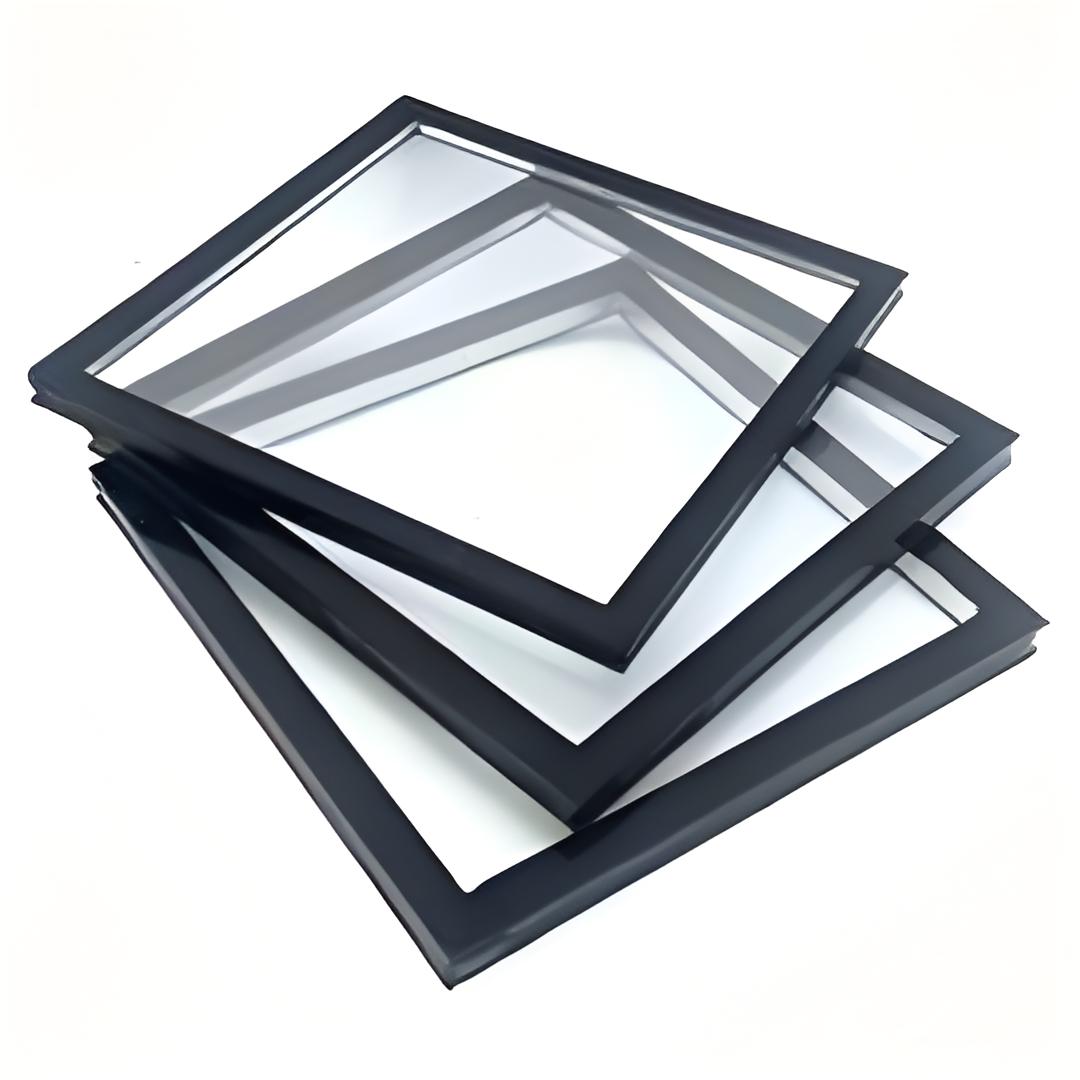
When you plan to select cover glass for electronic displays, touch panels, industrial equipment, and consumer electronics, choose the right strengthening technology is critical. Chemically strengthened glass and thermally tempered glass are two common methods used to improve glass durability, but they have significant differences in strength performance, thickness capability, optical quality, and application suitability.
For modern display cover glass, especially thin and lightweight electronic devices, chemically strengthened glass has become a preferred solution due to its excellent surface strength and flexibility in customization.
This article explains the differences between chemical strengthened glass vs tempered glass and helps you choose the right cover glass solution for your application.
What Is Chemically Strengthened Glass?
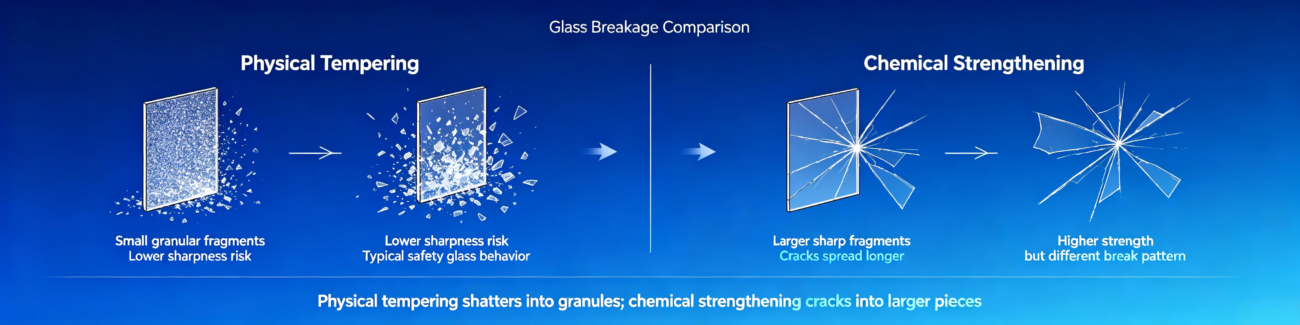
Chemically strengthened glass is produced through an ion exchange process. During manufacturing, smaller sodium ions on the glass surface are replaced with larger potassium ions in a chemical bath.
This process creates a high compressive stress layer on the glass surface, improving:
- Surface strength
- Scratch resistance
- Impact resistance
- Edge durability
- Thin glass performance
Unlike thermal tempering, chemical strengthening does not require heating the glass to extremely high temperatures, which helps maintain excellent optical clarity and dimensional accuracy.
Chemically strengthened glass is widely used for:
- Display cover glass
- Touchscreen panels
- Industrial displays
- Automotive displays
- Medical equipment screens
- Consumer electronics devices
What Is Tempered Glass?
Tempered glass manufactured through thermal tempering. The glass is heated up to a high temperature and then rapidly cooled to create internal stress.
This process improves mechanical strength and makes the glass safer when broken because it typically breaks into smaller fragments.

Advantages of tempered glass including:
- High mechanical strength
- Good impact resistance
- Safety break characteristics
- Cost-effective production
Tempered glass is commonly used for:
- Architectural glass
- Machine protection windows
- Large display panels
- Industrial safety applications
However, thermal tempering has limitations when used for thin electronic cover glass.
Chemical Strengthened Glass vs Tempered Glass Comparison
| Feature | Chemically Strengthened Glass | Tempered Glass |
|---|---|---|
| Strengthening Method | Ion exchange chemical process | Thermal heating and cooling |
| Suitable Thickness | Excellent for thin glass (0.3-2mm) | Better for thicker glass |
| Surface Compression | Very high | Medium to high |
| Edge Strength | Excellent | Good |
| Optical Clarity | Excellent | Excellent |
| Dimensional Accuracy | High | Lower due to heat treatment |
| Thin Display Applications | Excellent | Limited |
| Processing Options | CNC, printing, coating available | More limited after tempering |
| Typical Applications | Display cover glass, touch panels | Safety glass, industrial panels |
Which Glass Is Better for Display Cover Glass?
For most electronic display applications, chemically strengthened glass is usually more suitable than tempered glass, especially when the design requires:
1. Thin and Lightweight Glass
Modern electronic devices require thinner glass without sacrificing durability.
Chemical strengthening allows manufacturers to produce strong cover glass in thinner thicknesses, such as:
- 0.3mm
- 0.5mm
- 0.7mm
- 1.0mm
- 1.5mm
This makes it ideal for:
- Portable devices
- Touch displays
- Control panels
- Smart devices
2. Better Edge Strength
For display cover glass, edge damage is one of the most common failure risks.
Chemically strengthened glass provides a deeper compression layer, improving resistance against:
- Edge impact
- Drop damage
- Mechanical stress
This is especially important for custom-shaped glass with:
- CNC machining
- Cut-outs
- Holes
- Curved edges
3. Better Customization Capability
Display cover glass often requires additional processing, including:
- CNC cutting
- Precision polishing
- Silk screen printing
- AR coating
- AG coating
- AF coating
- OCA lamination
Chemically strengthened glass maintains better dimensional stability during these processes, making it suitable for OEM manufacturing.
Can Tempered Glass Be Used for Display Cover Glass?
Yes, tempered glass can be used for certain display applications, especially when:
- The glass thickness is larger
- Cost efficiency is important
- High safety requirements are needed
However, for thin electronic cover glass applications, chemically strengthened glass often provides better performance.
Examples include:
- Industrial HMI displays
- Outdoor control panels
- Medical devices
- Automotive displays
- Touchscreen equipment
Chemical Strengthened Cover Glass Manufacturing Solutions
As a professional custom cover glass manufacturer, WM Cover Glass provides customized glass solutions based on customer requirements.
Our capabilities include:
- Chemical strengthening
- Thermal tempering
- CNC machining
- Edge polishing
- Silk screen printing
- AG/AR/AF coatings
- OCA adhesive lamination
- Ultrasonic cleaning
We support custom specifications including:
- Glass thickness
- Dimensions
- Material selection
- Surface treatment
- Printing design
- Application requirements
Whether you need chemically strengthened cover glass or tempered display glass, our engineering team can help select the right solution for your project.
FAQ About Chemical Strengthened Glass and Tempered Glass
What is the main difference between chemical strengthened glass and tempered glass?
The main difference is the strengthening method. Chemical strengthened glass uses ion exchange technology, while tempered glass uses thermal treatment.
Is chemically strengthened glass stronger than tempered glass?
Chemical strengthened glass provides higher surface compression and better performance for thin glass applications. The best choice depends on thickness, application, and performance requirements.
Can chemically strengthened glass be used for touchscreen displays?
Yes. Chemically strengthened glass is widely used for touchscreen displays because of its thinness, durability, and optical performance.
Can you manufacture custom chemically strengthened cover glass?
Yes. Custom sizes, thicknesses, coatings, printing, and CNC processing can be provided according to customer drawings and requirements.
Can display cover glass include AR, AG, and AF coatings?
Yes. Chemical strengthened cover glass can be combined with:
- Anti-Reflective (AR) coating
- Anti-Glare (AG) coating
- Anti-Fingerprint (AF) coating
to improve display performance.
Conclusion
Choosing between chemical strengthened glass and tempered glass depends on the application requirements. For modern electronic displays that require thin, durable, and highly customizable glass, chemically strengthened glass is an excellent solution.
For OEM projects requiring reliable display cover glass, selecting the correct glass material and strengthening process can significantly improve product durability and user experience.
Need a custom display cover glass solution? Contact WM Cover Glass for professional glass manufacturing support.