 +86-13925515590
 kleinma@aliyun.com
Silk Screen Printing on Glass: Ceramic Ink vs. Epoxy Ink Explained

Silk Screen Printing on Glass: Ceramic Ink vs. Epoxy Ink Explained
For design and manufacturing engineers developing human-machine interfaces (HMIs), touch control panels, and smart appliances, the aesthetics of a custom cover glass are just as critical as its structural strength. A pristine black border, crisp icons, or an opaque sensor window rely entirely on the screen-printing process.
However, specifying “silk screen printing” on a technical drawing is not enough. The fundamental choice lies in the ink chemistry: Ceramic Ink versus Epoxy Ink. Choosing the wrong one can lead to ink peeling during high-temperature potting, yellowing under UV exposure, or light bleeding around infrared sensors.
At WM Cover Glass, we evaluate operating environments closely before ink application. Here is a technical breakdown of how ceramic and epoxy inks compare, and when to use each for your custom cover glass components.
1. Ceramic Ink: The Industrial & High-Temperature Choice
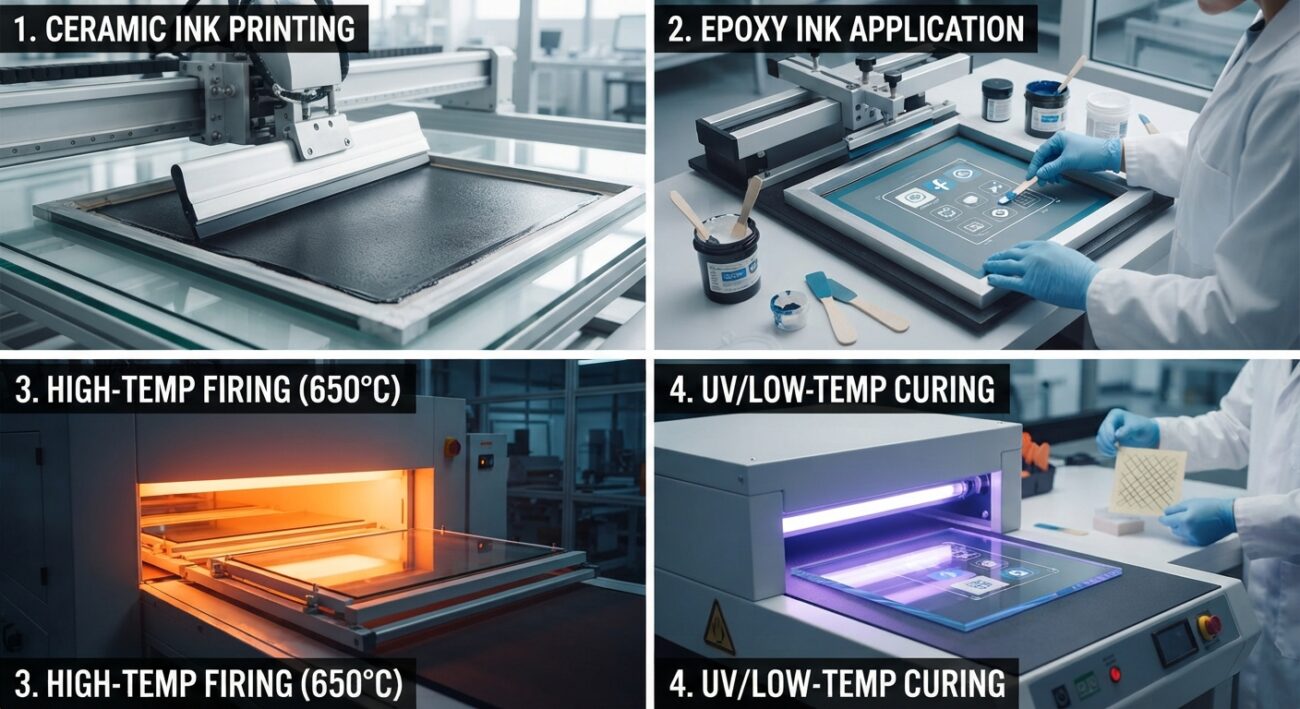
Ceramic inks consist of finely ground inorganic glass frits mixed with pigments and suspension carriers. During the post-printing phase, the glass goes through a tempering or heat-bending furnace at temperatures ranging from 600°C to 700°C.
How Silk Screen Printing on Glass Works & Key Advantages:
-
Vitrification (Molecular Fusion): At high temperatures, the glass frits melt and fuse directly into the surface of the base glass. It becomes part of the glass matrix rather than sitting on top.
-
Exceptional Durability and Adhesion: Because it is vitrified, ceramic ink cannot be scraped off mechanically without damaging the glass itself. It offers superior scratch, chemical, and solvent resistance.
-
Extreme Thermal and UV Weathering: It does not degrade, fade, or yellow under continuous exposure to direct sunlight, harsh cleaning chemicals, or high operating temperatures (ideal for outdoor LED lighting, automotive touch panels, and industrial appliances).
Limitations:
-
Color Matching Tolerances: Because the color develops during high-temperature firing, achieving exact Pantone matching can have wider tolerances compared to organic inks.
-
Cost and Setup: Requires dedicated thermal firing cycles, making it less economical for very low-volume rapid prototyping unless bundled with a tempering run.
2. Epoxy Ink: The Precision & Low-Temperature Alternative
Epoxy inks (also referred to as organic or cold inks) are polymer-based systems combined with hardeners and color pigments. Instead of furnace firing, they are cured via UV light or moderate thermal baking at low temperatures (typically 150°C to 200°C).
How Silk Screen Printing on Glass Works & Key Advantages:
-
Precise Color Control: Organic formulations allow for exact Pantone or RAL color matching and sharper edge definition for multi-color intricate icons.
-
No Thermal Distortion: Because low-temperature baking does not affect the flatness or tempering profile of the base glass, epoxy ink is often applied as a secondary step on already-strengthened glass.
-
Cost-Effective for Prototyping: Faster setup times and lower energy curing make it well-suited for low-volume runs or specialized functional coatings.
Limitations:
-
Lower Environmental Resistance: Prolonged UV exposure can cause organic inks to fade or chalk over time. They are also susceptible to degradation from aggressive solvents or continuous high humidity.
-
Surface Adhesion: Unlike vitrified ceramic ink, epoxy ink forms a mechanical and chemical bond on the surface. While durable, it can be compromised under extreme mechanical stress or aggressive chemical cleaning cycles.
Technical Comparison at a Glance
| Performance Metric | Ceramic Ink (Fired) | Epoxy Ink (Organic/Cured) |
| Curing Temperature | 600°C – 700°C | 150°C – 200°C (or UV) |
| Bonding Mechanism | Molecular fusion (Vitrified) | Surface polymer adhesion |
| UV & Weather Resistance | Excellent (No fading/yellowing) | Moderate (Prone to UV degradation over years) |
| Chemical & Solvent Resistance | Outstanding | Good (Vulnerable to harsh industrial solvents) |
| Color Precision & Matching | Good, limited by firing shifts | Excellent (Precise Pantone matching) |
| Typical Applications | Outdoor displays, automotive, appliances | Indoor touch panels, instrument overlays, prototypes |
Engineering Considerations for Your Design
When specifying silk screen printing cover glass for your next assembly, consider these three design rules:
-
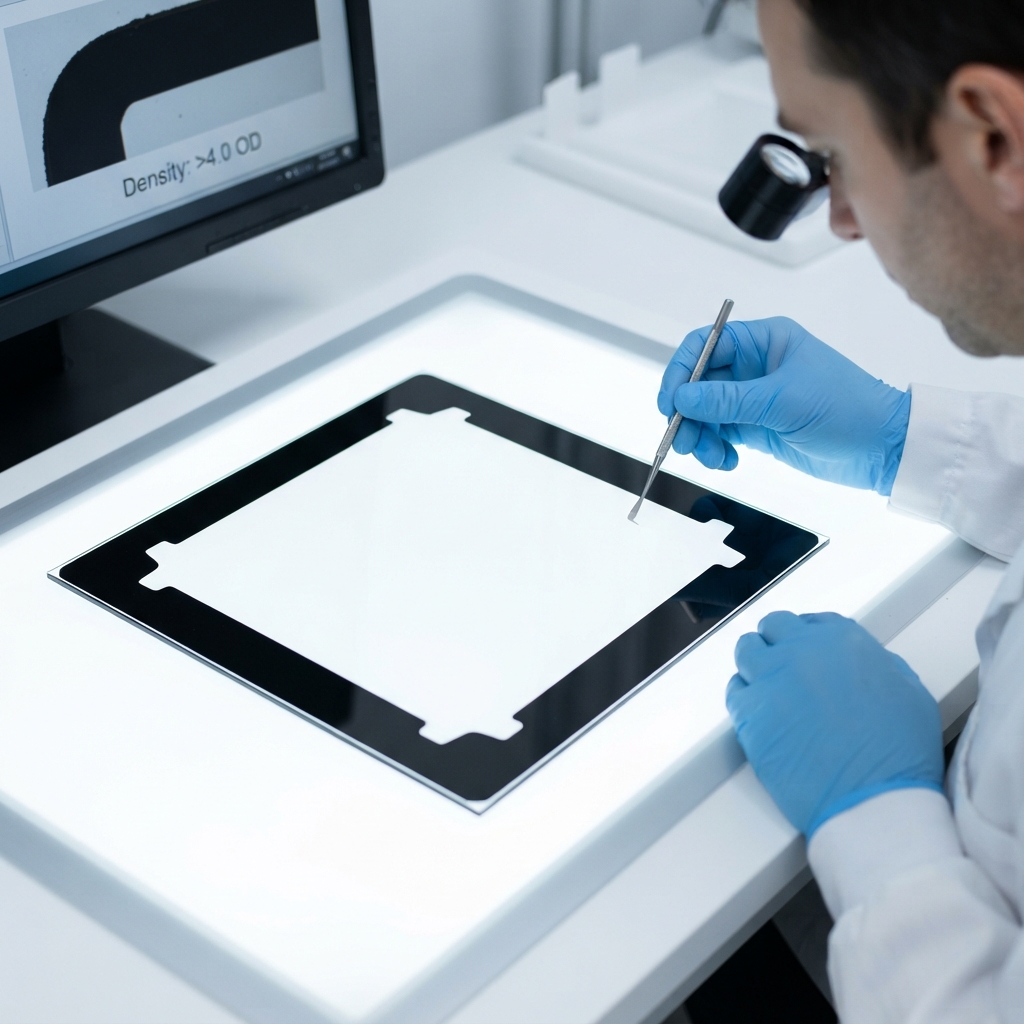
Light Blocking (Opacity): If your design includes an infrared proximity sensor window, ensure the ink blocks visible light while maintaining high IR transmission. Ceramic inks can be layered or formulated to meet strict optical density (OD) specs without light bleeding.
-
Post-Processing Compatibility: If your cover glass requires subsequent high-temperature bending, chemical strengthening, or waterproof sealing with silicone potting, ceramic ink is almost always mandatory to prevent thermal breakdown.
-
Edge Bleed and Tolerance: For complex geometric cutouts, coordinate with your manufacturer on the ink-to-edge exclusion zone to prevent edge delamination during CNC profiling.