 +86-13925515590
 kleinma@aliyun.com

How to Choose Cover Glass for Industrial Touchscreen Displays

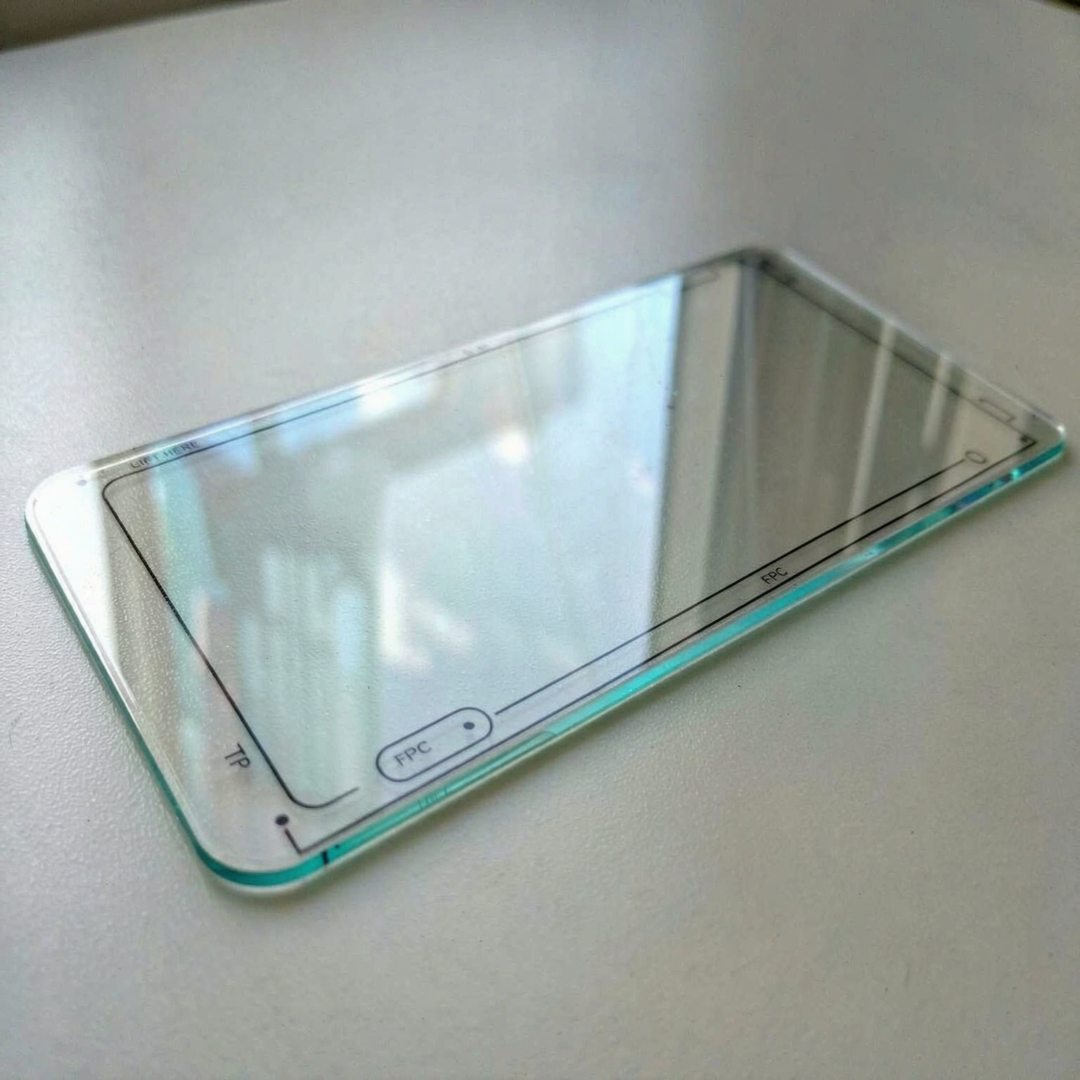
Introduction of Cover Glass for Industrial Touchscreen Displays
Industrial touchscreen displays are widely used in automation equipment and Human Machine Interface (HMI) systems, where reliable operation, clear visibility and durable front surfaces are important requirements. Compared with consumer electronics, industrial applications often require higher durability, better visibility and customized mechanical designs.
Choosing the right industrial touchscreen cover glass is an important step in developing a reliable touchscreen product. The glass needs to protect the display module while maintaining optical performance, touch sensitivity and compatibility with the equipment structure.
For manufacturers developing industrial touchscreen products, factors such as glass thickness, strengthening process, surface coatings, printing requirements and machining options should be considered before selecting a cover glass solution.
This guide explains the key factors to consider when choosing cover glass for industrial touchscreen displays.
1. Consider the Application Environment

The first step is understanding where the touchscreen display will be used.
Industrial environments can vary significantly:
- Factory automation equipment
- HMI control panels
- Outdoor terminals
- Medical equipment
- Laboratory instruments
- Commercial control systems
Different environments create different requirements.
For example:
- Outdoor displays may require anti-glare treatment to improve visibility.
- Frequently touched panels may benefit from anti-fingerprint coatings.
- Industrial machines may require stronger glass to handle daily operation.
Understanding the application environment helps manufacturers select suitable glass specifications.
2. Select the Appropriate Cover Glass for Industrial Touchscreen Displays Thickness
Glass thickness affects both durability and product design.
Common considerations include:
- Display module size
- Touch sensor structure
- Installation method
- Mechanical requirements
Thicker glass may provide improved durability, while thinner glass can help reduce product weight and maintain a slim design.
The suitable thickness depends on the complete product structure rather than a single requirement.
For OEM projects, glass thickness should be evaluated together with the display module, adhesive method and operating environment.
3. Choose the Right Strengthening Process
Industrial touchscreen applications often require improved mechanical durability.
Chemical strengthening is commonly used for hmi cover glass applications because it can improve resistance against daily impact and surface stress.
Compared with standard glass, strengthened industrial display glass can provide better durability for applications such as:
- Industrial control panels
- Touchscreen equipment
- Professional electronic devices
However, the strengthening requirement depends on the actual application and product specifications.
4. Evaluate Optical Coating Requirements
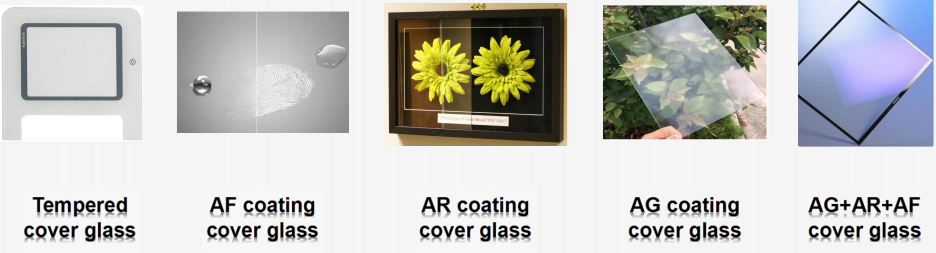
Optical performance is an important factor for industrial displays.
Different working environments may require different surface treatments.
Anti-Glare (AG) Coating
AG coating helps reduce reflections from surrounding light sources.
It is commonly considered for:
- Factory environments
- Outdoor equipment
- Bright lighting conditions
Anti-Reflective (AR) Coating
AR coating helps improve light transmission and display clarity.
It can be useful when visibility and optical performance are important.
Anti-Fingerprint (AF) Coating
AF coating helps reduce fingerprints and makes the surface easier to clean.
It is suitable for frequently operated touchscreen interfaces.
The correct coating depends on the product environment and user requirements.
5. Consider Custom Printing and Design Requirements
Many industrial touchscreen displays require customized appearance and functional markings.
Silk screen printing can be used for:
- Black borders
- Logo printing
- Functional icons
- Decorative patterns
- Hidden display areas
Custom printing allows the glass panel to match the overall product design.
For applications such as control panels and electronic interfaces, printing design should be considered during the early product development stage.
6. Check CNC Machining and Assembly Requirements
Industrial touchscreen glass often requires customized mechanical processing.
Depending on the product design, cover glass may need:
- Mounting holes
- Sensor openings
- Camera openings
- Special shapes
- Edge processing
Working with a supplier that supports CNC machining can simplify the manufacturing process and improve assembly compatibility.
7. Work With a Supplier That Understands OEM Requirements
Selecting an industrial touchscreen cover glass supplier is not only about glass material.
A reliable supplier should understand:
- Technical drawings
- Glass specifications
- Processing requirements
- Surface treatment options
- Quality inspection requirements
OEM glass projects usually require communication between the glass supplier and product manufacturer to ensure the final component meets application requirements.
Conclusion
Choosing the right cover glass for industrial touchscreen displays requires consideration of the complete application environment, including durability, optical performance, customization requirements and assembly design.
Factors such as glass thickness, strengthening, coatings, printing and CNC processing all influence the final solution.
WM Cover Glass provides customized industrial touchscreen cover glass solutions for HMI systems, industrial displays and electronic equipment. Our processing capabilities include glass cutting, CNC machining, chemical strengthening, silk screen printing and AR/AG/AF coating options.
Request a Custom Cover Glass For Industrial Touchscreen Solution
Need cover glass for your industrial touchscreen display project?
Send us your requirements, including:
- Glass dimensions
- Thickness
- Display type
- Printing requirements
- Surface treatment requirements
- Application environment
Our team can evaluate your project and provide a customized OEM glass solution.