 +86-13925515590
 kleinma@aliyun.com


What to Include in a Custom Cover Glass RFQ

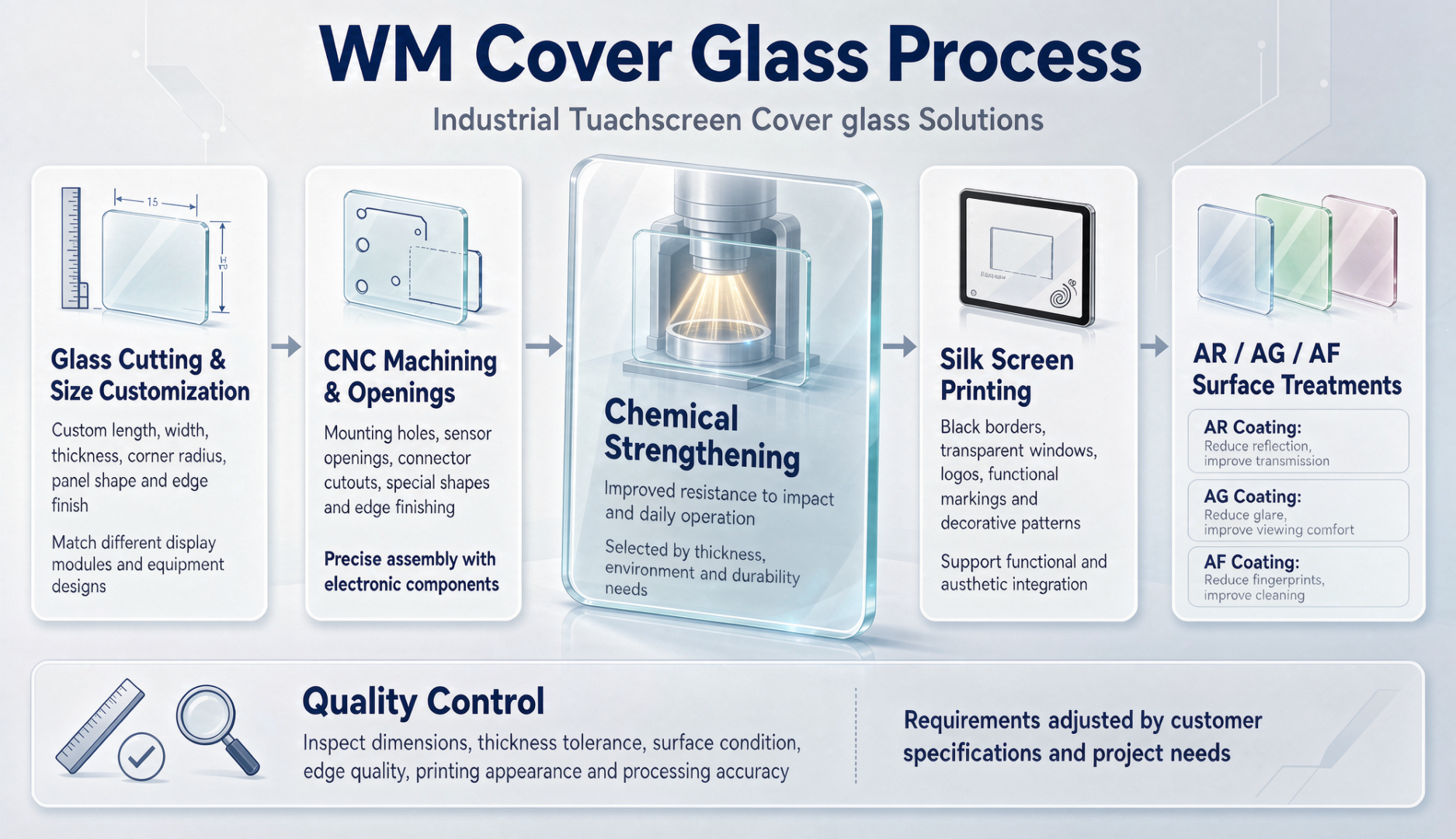
When sourcing custom cover glass, the first quotation is only as accurate as the information provided. A drawing with overall dimensions may be enough to estimate a simple glass panel, but a part with mounting holes, printed borders, optical requirements, or a special surface finish needs more detail.
For OEM buyers, product engineers, and sourcing teams, a well-prepared request for quotation (RFQ) helps clarify manufacturing feasibility, identify missing specifications, and reduce unnecessary revisions before sampling.
Whether you are sourcing custom cover glass for an industrial display, HMI control panel, household appliance, or electronic interface, the following information will help a glass manufacturer evaluate your project.
1. Provide a Technical Drawing or Sample
Start with a dimensioned drawing whenever possible. A PDF drawing is useful for initial review, while a DWG or DXF file can help communicate the geometry of a custom glass part.
Your drawing should identify:
- Overall length and width
- Glass thickness
- Corner radius and edge profile
- Mounting holes, slots, and cutouts
- Printed areas and visible windows
- Critical dimensions and tolerances
- Any curved, stepped, or irregular edges
For a rectangular display window, the overall dimensions may be straightforward. For an HMI cover glass with multiple openings, the location of each cutout can affect machining, edge strength, and the usable display area.
If the design is still being developed, provide the best available drawing and mark dimensions that are not yet finalized. A physical sample can also help clarify details that are difficult to communicate on paper.
For projects requiring custom geometry, see our CNC machining for cover glass capabilities.
2. Specify Glass Material and Thickness
Glass material and thickness influence the mechanical properties, weight, optical performance, and manufacturing route of the finished component.
Your RFQ should state the preferred material and thickness, if already specified. Common options include soda-lime glass and aluminosilicate glass, depending on the application and performance requirements.
For example, a thin glass window used in a compact electronic device may have different design priorities from a larger panel installed on industrial equipment.
If you are unsure which material to use, tell the supplier about the application, operating environment, mounting method, and expected mechanical demands. The manufacturer can then assess which options merit further evaluation.
Useful information includes:
- Preferred glass composition or material grade
- Nominal thickness and allowable variation
- Flat or curved construction
- Required edge finish
- Mechanical or environmental requirements
Explore our glass materials for custom cover glass to compare material options.
3. Explain the Strengthening Requirements
Many electronic display cover glass projects require chemical strengthening or thermal tempering. These processes are not interchangeable in every application, so the required method should be stated when it is already defined by the design.
Chemical strengthening is commonly considered for relatively thin glass components where surface compressive stress and resistance to damage are important. Thermal tempering may suit other designs, depending on thickness, dimensions, geometry, and applicable safety requirements.
Instead of simply writing “high-strength glass,” specify the performance requirement and its basis whenever possible.
For example, your RFQ may identify:
- Chemical strengthening or thermal tempering
- Required surface compressive stress or depth of layer, where applicable
- Impact or durability test requirements
- Relevant safety standards
- Whether test reports are required
If the design has not yet established a strengthening method, provide the intended use and let the manufacturer review the options before the specification is frozen.
For more detail, read our guide to chemical strengthening vs. tempered glass.
4. Define Optical Performance and Surface Treatment
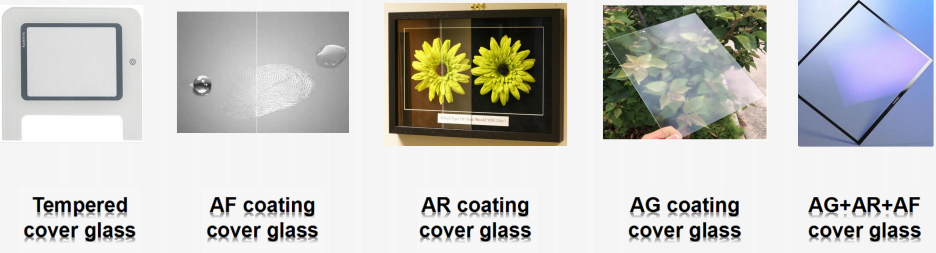
Optical requirements are especially important for touchscreen cover glass, industrial display windows, and electronic control panels. Terms such as anti-glare, anti-reflective, and anti-fingerprint describe different functions and should not be used interchangeably.
Anti-glare (AG) glass reduces the appearance of reflections by changing how light is scattered at the surface. Anti-reflective (AR) glass is designed to reduce surface reflection. Anti-fingerprint (AF) treatment helps reduce visible fingerprints and can improve cleanability, depending on the coating and maintenance conditions.
Tell the supplier which properties matter to your application. If you have measurable requirements, include them rather than relying on a finish name alone.
Consider specifying:
- Light transmittance
- Reflectance or haze requirements
- Gloss or surface appearance
- AG, AR, or AF treatment
- Acceptable optical distortion
- Cleaning and abrasion requirements
A display used under strong ambient lighting may require a different optical balance from a glass panel installed inside a household appliance.
See our anti-glare glass solutions for more information about surface treatment options.
For technical background on optical coatings, the SCHOTT optical coatings overview is a useful external reference.
5. Include Silk-Screen Printing Details
Printed borders, logos, icons, and transparent display windows often form part of the functional design of custom display cover glass.
A drawing should clearly distinguish printed areas from transparent viewing areas. Where appearance is critical, provide artwork or a reference sample so the supplier can assess alignment and visual requirements.
Your RFQ should cover:
- Ink color and color reference
- Black border dimensions
- Logo and icon positions
- Transparent windows and masked areas
- Printing side and orientation
- Required opacity or light transmission in printed regions
- Registration tolerance
- Cosmetic acceptance criteria
For example, an HMI glass panel may need an opaque black border around the active display area, with precise openings for indicator lights or touch controls. The printing layout must be considered together with the glass dimensions and mounting features.
You can learn more about our silk-screen printing for cover glass.
6. Identify Edge Processing, Cutouts, and Mounting Features
The shape of a glass part affects more than its appearance. Edge processing, holes, notches, and cutouts must be reviewed alongside the thickness, dimensions, and strengthening process.
State whether the design requires polished edges, chamfers, rounded corners, countersinks, or other specified features. Identify which dimensions are critical for assembly and which are cosmetic.
For glass intended for a machine enclosure, control panel, or electronic display, include details about how the component will be retained. Adhesive bonding, mechanical clamping, and gasket mounting can impose different design constraints.
Do not assume that a hole or cutout can be added at any stage of production. In many manufacturing routes, machining operations need to be planned before strengthening, and geometry may limit the available process options.
If the cover glass will be bonded to a display, also clarify whether the quotation is for the glass component alone or includes adhesive, OCA, or optical bonding services.
7. Clarify Tolerances and Inspection Requirements
A nominal dimension does not define the full acceptance criteria for a custom glass part. The supplier needs to know how much variation is acceptable and which characteristics will be checked before shipment.
Your RFQ may specify:
- Overall dimensional tolerances
- Hole position and diameter tolerances
- Flatness requirements
- Edge quality
- Printed pattern alignment
- Optical and cosmetic inspection criteria
- Packaging and handling requirements
Avoid applying an unnecessarily tight tolerance to every feature. Identify the dimensions that affect fit, sealing, alignment, or optical performance, and assign requirements according to the assembly design.
If your company uses an inspection standard, drawing notes, or an approved sample, attach it to the RFQ. This gives both sides a clearer basis for evaluating production samples and subsequent batches.
For an overview of inspection considerations, visit our cover glass quality control and inspection page.
8. State the Application and Operating Environment
A supplier can make a better recommendation when the intended use is clear. “Electronic glass panel” is a starting point, but it does not explain the conditions the finished part must withstand.
Include the product category and, where relevant, details such as:
- Indoor or outdoor use
- Exposure to sunlight or strong ambient light
- Temperature range
- Moisture, dust, or cleaning chemicals
- Touchscreen or non-touch display
- Expected mounting method
- Relevant industry or safety requirements
For outdoor equipment, for example, UV exposure, temperature variation, moisture, and readability may influence the specification. For an industrial HMI, operator visibility, repeated cleaning, and integration with the display module may be more important.
If the glass is intended for an industrial control system, see our industrial display glass solutions.
9. Include Quantity, Sampling, and Delivery Information
Pricing for custom glass depends on more than material and dimensions. Processing steps, tooling, printing, surface treatment, inspection, packaging, and order quantity can all affect the quotation.
To help the supplier prepare a useful offer, provide:
- Prototype or sample quantity
- Initial production quantity
- Estimated recurring order volume
- Required sample approval process
- Target delivery date
- Shipping destination
- Packaging requirements
- Any required documentation
If you expect quarterly orders after a successful trial, mention the anticipated production volume as well as the first order quantity. This helps the supplier distinguish a one-off sample project from a recurring OEM program.
If the design is not final, ask the supplier to identify assumptions and quote any major alternatives separately. This makes it easier to compare offers without treating different specifications as equivalent.
10. Confirm Exactly What the Quotation Includes
Two quotations may look similar while covering different scopes of supply. Before comparing prices, confirm whether each supplier is quoting the same finished product and the same acceptance requirements.
Ask the supplier to clarify:
- Glass material and thickness
- Strengthening method
- Machining and edge finish
- Printing and surface treatment
- Inspection scope
- Sample or tooling charges
- Packaging and shipping terms
- Lead time and quotation validity
- Any excluded operations or unconfirmed specifications
If your project requires a bonded display assembly, confirm whether the quotation covers only the cover glass or also includes OCA lamination, optical bonding, or other assembly work.
For a glass-only RFQ, keep the scope explicit. If you need a complete assembly, attach the relevant interface drawings and identify the components that must be supplied.
Custom Cover Glass RFQ Checklist
Before sending your request, check whether you have provided the following information.
Dimensioned drawing or physical sample
Glass material and nominal thickness
Overall dimensions and critical tolerances
Holes, cutouts, edge finish, and corner radius
Strengthening requirements
Optical specifications and surface treatment
Printing artwork and color references
Application and operating environment
Prototype quantity and expected production volume
Inspection, packaging, and delivery requirements
Not every project needs a fully finalized specification before the first discussion. If some details remain open, identify them clearly and ask the manufacturer which information is necessary to proceed.
Request a Custom Cover Glass Quotation
If you are sourcing custom cover glass for an industrial display, HMI control panel, household appliance, or other electronic product, send your drawing, required thickness, estimated quantity, and key performance requirements for an initial review.
Our team can review the proposed specifications, identify information that may need clarification, and discuss available processing options for your project.
Submit your custom cover glass RFQ to discuss your drawings, sample requirements, and OEM production needs.
A complete RFQ does not need to answer every engineering question in advance. It needs to give the supplier enough accurate information to assess the project, identify open issues, and prepare a quotation based on a clearly defined scope.