 +86-13925515590
 kleinma@aliyun.com

What Affects the Cost of Custom Cover Glass?

What Affects the Cost of Custom Cover Glass?
When sourcing custom cover glass for industrial displays, touchscreens, smart appliances or electronic control panels, the unit price is only one part of the purchasing decision. Two glass panels with similar dimensions can have significantly different costs because of their material specifications, machining requirements, surface treatments, printing details and production quantities.
Understanding the main custom cover glass cost factors helps OEM buyers, product engineers and purchasing managers prepare more accurate RFQs, compare supplier quotations and avoid paying for specifications that their applications do not actually require.
This guide explains seven factors that influence the cost of custom glass panels, tempered glass cover lenses and display cover glass, along with practical ways to make a project more cost-effective without compromising essential performance.
1. Glass Material, Dimensions and Thickness
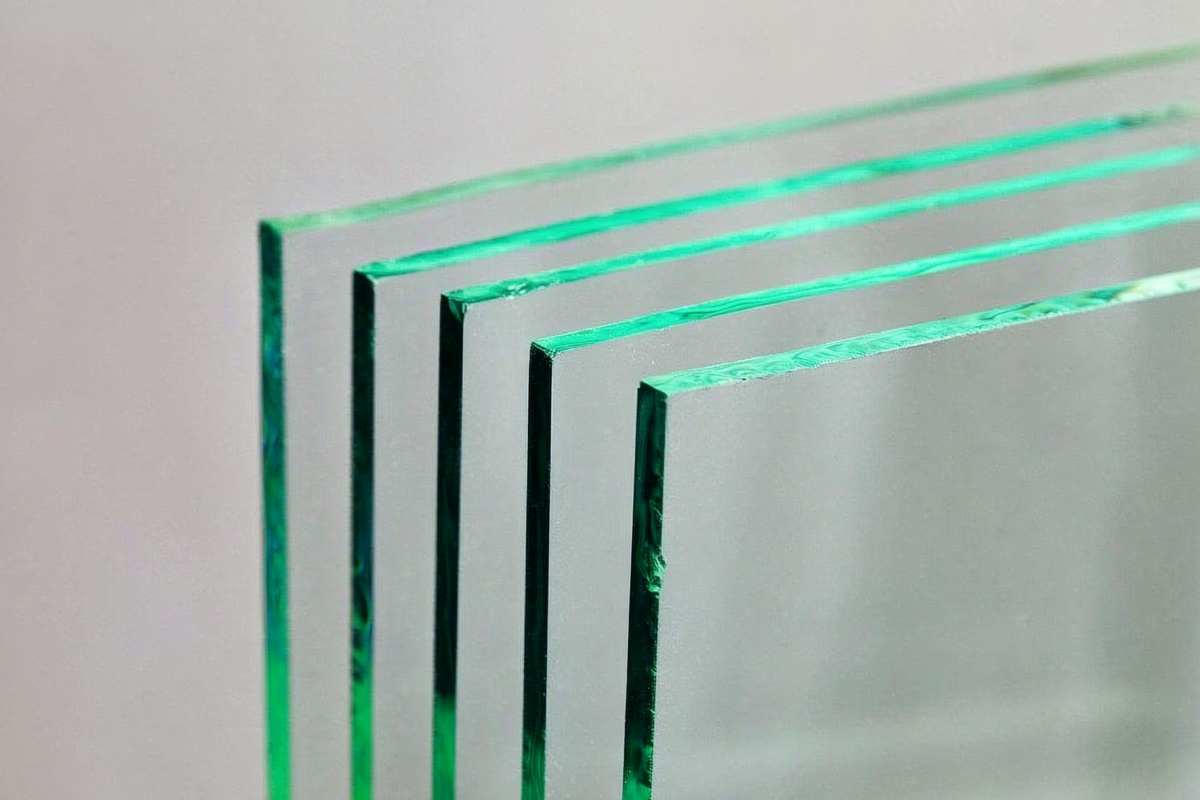
The starting point for any custom glass quotation is the glass specification.
Common material options for electronic cover glass include soda-lime glass and specialty aluminosilicate glass. The appropriate choice depends on the application, required strength, optical performance, thickness, availability and intended manufacturing process.
Glass dimensions and thickness also affect material consumption and production efficiency. Larger panels generally require more material and may need different handling, cutting and inspection arrangements. Very thin glass can require more careful handling, while thicker glass may increase machining time and processing requirements.
For example, a cover glass panel for a compact appliance control interface may have different material and processing requirements from a large industrial touchscreen cover lens.
When requesting a quotation for custom glass panels, specify:
- Overall length, width and nominal thickness
- Glass material or preferred glass grade
- Flatness and dimensional tolerances
- Required strength and optical performance
- Whether the panel has a flat or curved design
If the material grade has not yet been finalized, provide the application and performance requirements so the supplier can evaluate suitable options.
Explore our custom cover glass products for OEM display and electronic applications.
2. CNC Glass Cutting, Drilling and Edge Processing
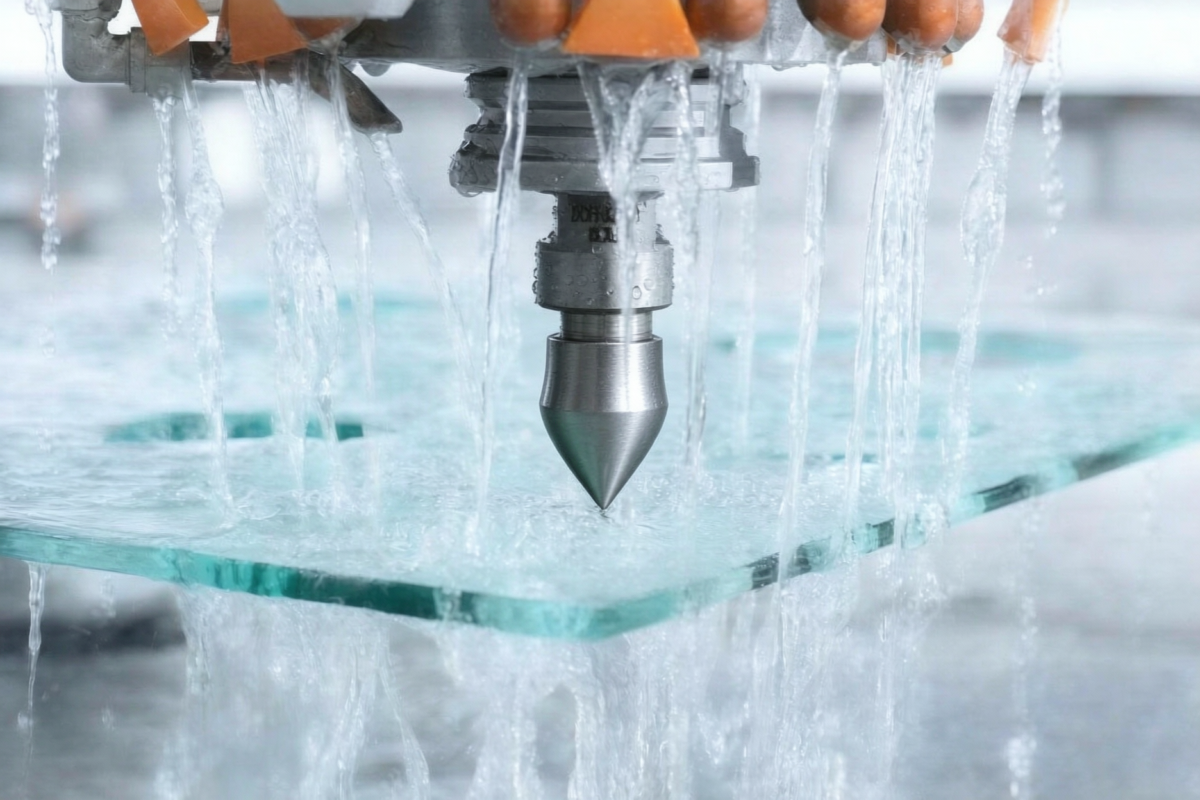
A glass panel with a simple rectangular outline is generally easier to manufacture than a component with multiple holes, slots, notches, curved edges or tight dimensional tolerances.
CNC glass machining may include contour cutting, drilling, slotting, chamfering, edge grinding and polishing. The cost depends on the number and complexity of machining features, the required tolerances, processing time and inspection requirements.
For example, a cover lens with mounting holes near its corners requires additional machining compared with a panel that has only straight edges. Small holes, narrow slots and complex contours may require particular attention to tool selection, edge quality and breakage risk.
Edge finishing also matters. Ground edges, chamfered edges and polished edges serve different design and appearance requirements. The appropriate finish should be defined on the drawing rather than left open to interpretation.
To control CNC glass machining costs:
- Provide a dimensioned drawing with all holes and cutouts.
- Identify critical dimensions and tolerances.
- Specify edge finishing requirements.
- Avoid unnecessarily tight tolerances where the design permits.
- Confirm that the selected hole sizes and edge distances are manufacturable.
Learn more about our glass edge processing and cover glass cutting capabilities.
3. Chemical Strengthening and Thermal Tempering
Glass strengthening is another important factor in the price of tempered glass and custom display cover glass.
Chemical strengthening and thermal tempering are different processes. Chemical strengthening exchanges ions near the glass surface to create a compressive stress layer, while thermal tempering uses controlled heating and rapid cooling to establish a different stress profile.
The appropriate process depends on the glass composition, thickness, dimensions, geometry and required mechanical performance. They should not be treated as interchangeable options.
Chemical strengthening is commonly considered for thin electronic cover glass, while thermal tempering may suit other glass designs and thickness ranges, subject to process limitations.
Additional costs may arise from processing, handling, testing and requirements for strength, flatness or surface quality. Some designs may also require dimensional checks after strengthening.
Before selecting a process, clarify:
- Glass type and thickness
- Required strength or impact performance
- Maximum allowable distortion or flatness deviation
- Edge and hole configurations
- Applicable test methods or acceptance criteria
Avoid specifying the most demanding strengthening requirement by default. Define the actual application risks and performance needs first.
See our chemical strengthening glass and thermal tempering glass capabilities.
4. AG, AR and AF Surface Treatments
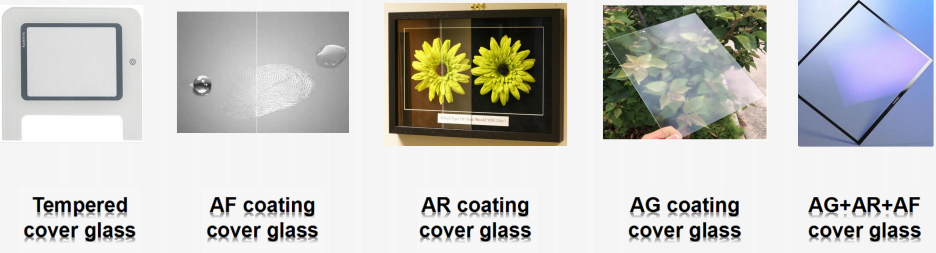
Surface treatments can substantially change the cost of custom cover glass because each treatment serves a different purpose and involves different process requirements.
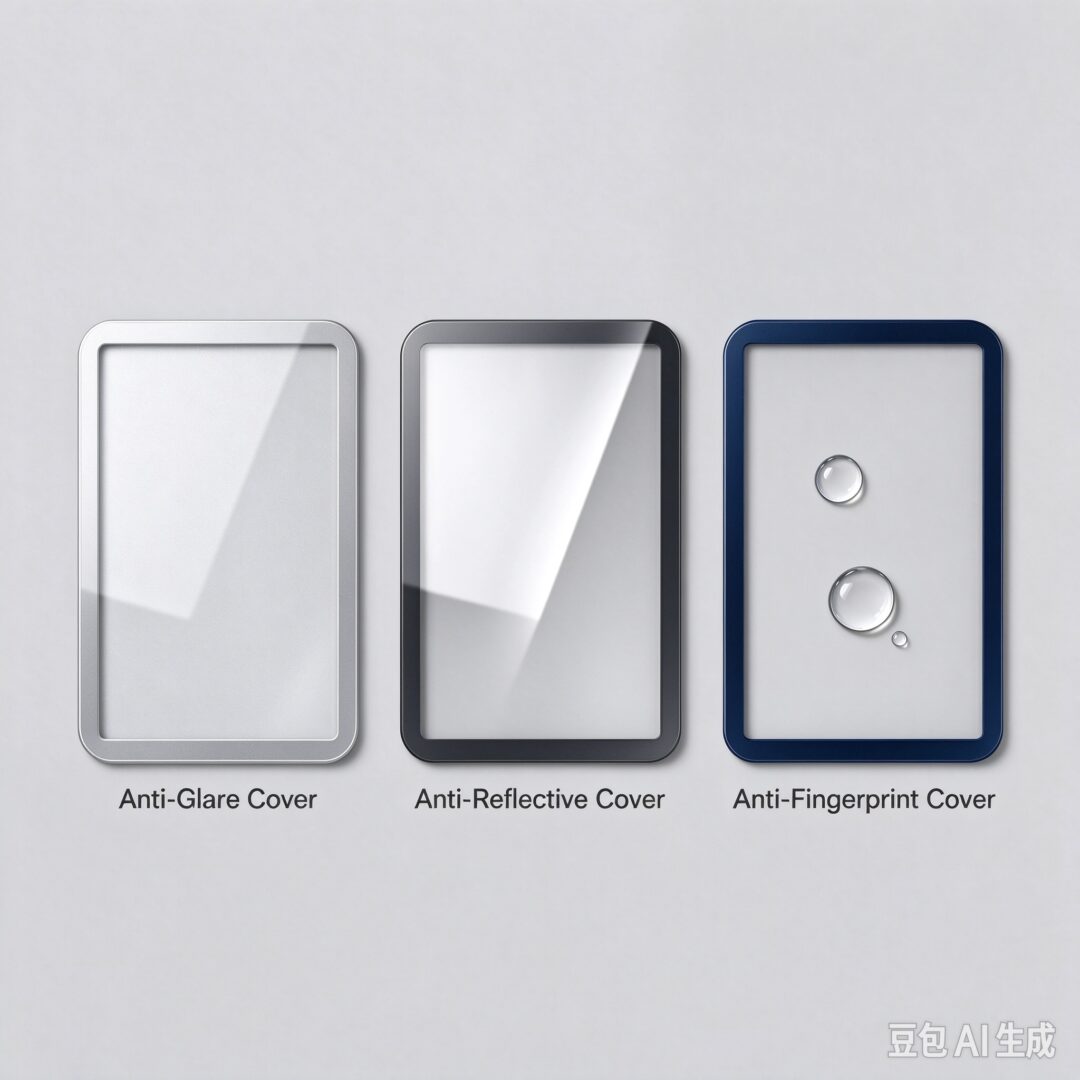
Anti-glare glass (AG) is designed to reduce specular reflections through surface treatment. It is often considered for industrial displays, control panels and interfaces used under challenging lighting conditions.
Anti-reflective glass (AR) uses an optical coating to reduce reflected light and improve light transmission under specified conditions.
Anti-fingerprint glass (AF) uses a surface treatment intended to reduce fingerprint visibility and improve ease of cleaning.
These treatments are not direct substitutes for one another. A project may need one treatment, a combination of treatments or no additional coating at all.
The cost depends on the selected treatment, coated area, glass compatibility, performance requirements, process yield and inspection criteria. Combining multiple treatments may also introduce additional compatibility and process-sequencing considerations.
To obtain a comparable quotation, specify the intended function rather than simply requesting premium glass. Where available, provide measurable targets for reflectance, transmittance, haze, contact angle or other relevant properties.
Review our capabilities for AG coated glass, AR coated glass and AF coated glass.
5. Silk Screen Printing, Black Borders and Custom Graphics

Custom printed glass is widely used in industrial HMI panels, touchscreen interfaces, home appliances and electronic control panels.
Silk screen printing may add black borders, logos, icons, decorative patterns or other functional graphics. The cost depends on the number of colors, print coverage, registration requirements, ink selection, curing process and inspection standards.
A simple single-color border generally involves fewer printing operations than a design with several colors, fine graphics and tight registration requirements.
The printed design can also affect other manufacturing steps. For example, the location of the printed border must be considered when defining the active display area and adhesive bonding layout.
To reduce unnecessary costs:
- Supply vector artwork or a clear production drawing.
- Define colors and color references.
- Mark the active display area and non-print zones.
- Identify critical registration dimensions.
- Confirm ink compatibility with the glass and subsequent processes.
Review our silk screen printing for cover glass capabilities for custom printed glass components.
6. OCA Lamination and Adhesive Bonding
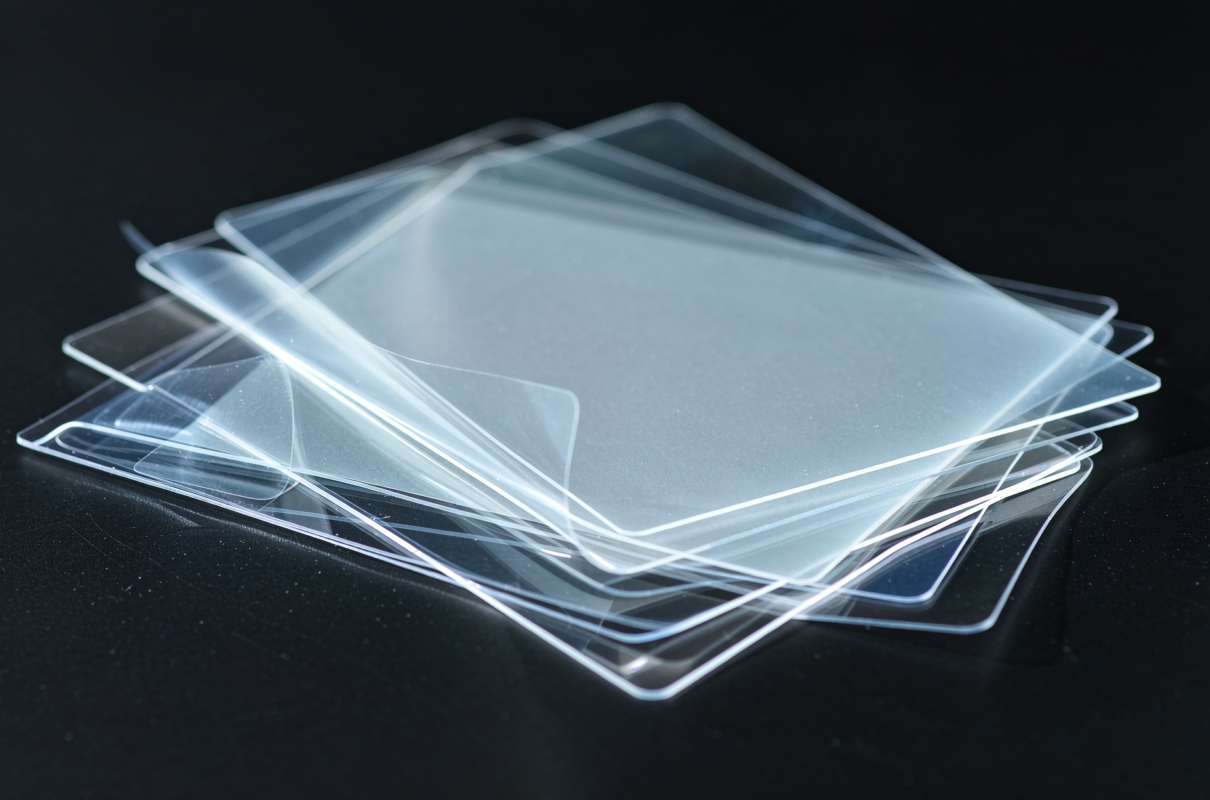
For touchscreen and display assemblies, the quotation may cover only the glass component or may include additional bonding operations. These are different scopes of supply and should be compared separately.
Optically clear adhesive (OCA) is a transparent adhesive film used in optical bonding applications. Depending on the project, the process may involve applying OCA to the cover glass, bonding the glass to a touch sensor or display, or supplying a more complete bonded assembly.
The cost depends on the adhesive specification, thickness, bonding area, component structure, alignment requirements, cleanliness controls and inspection criteria. Bubble control, dust prevention and optical appearance can also affect process requirements.
A quotation for cover glass with pre-applied adhesive should not automatically be compared with one for a fully laminated display assembly. The materials, labor, equipment and inspection scope may be different.
When requesting an OCA lamination quotation, identify:
- Whether you need OCA film application or complete display bonding
- Required adhesive thickness and bonding area
- The cover glass and underlying component dimensions
- Optical appearance and defect acceptance criteria
- Whether the display, touch sensor or other components will be supplied by the buyer
Learn more about our OCA lamination and adhesive bonding services.
7. Order Quantity, Packaging and Quality Requirements
Order quantity has a direct influence on the unit price of custom cover glass.
Engineering review, tooling preparation, process setup, printing preparation and inspection may involve costs that are distributed across the order quantity. Consequently, a larger production order may achieve a lower unit price than a small trial order, although the actual savings depend on the product and manufacturing process.
However, ordering more glass than necessary is not always the most economical choice. For a new design, an initial sample or pilot run can help verify dimensions, appearance, bonding compatibility and assembly fit before a larger order is placed.
Packaging is another cost factor. Individual protective films, separators, foam inserts, custom trays, export cartons and special packing arrangements can affect the final quotation. Large or fragile panels may need additional protection during handling and international transportation.
Quality requirements should also be defined before production. Different projects may require different levels of dimensional inspection, cosmetic inspection, optical testing, strength verification and documentation.
For a more accurate quotation, state the expected quantities for each stage, such as prototype samples, initial production and repeat orders. Also identify any special packaging or inspection requirements.
How to Get an Accurate Custom Cover Glass Quote
A complete RFQ makes it easier for suppliers to evaluate manufacturing feasibility and quote the same scope of work.
Include the following information whenever possible:
- Drawing: PDF drawing with dimensions, tolerances, holes, slots and edge details.
- Glass specification: Material, thickness, dimensions and preferred glass grade.
- Strengthening: Chemical strengthening or thermal tempering requirements, if applicable.
- Surface treatment: AG, AR, AF or other specified optical requirements.
- Printing: Artwork, colors, printed areas and registration tolerances.
- Bonding: OCA specification, bonding area and assembly scope, if required.
- Quantity: Prototype quantity, initial production quantity and estimated repeat demand.
- Quality and packaging: Inspection criteria, cosmetic standards and export packaging requirements.
- Application: The display, device or operating environment in which the glass will be used.
If some details are still under development, provide the available drawing and explain which specifications remain open. A supplier can then identify the information needed to evaluate the project.
You can submit your requirements through our custom cover glass RFQ page to discuss dimensions, processing options and production quantities.
Frequently Asked Questions
What is the biggest factor affecting custom cover glass cost?
There is no single factor for every project. Glass material and dimensions, machining complexity, strengthening, coatings, printing, bonding and order quantity can all affect the final price. The dominant factor depends on the design and required process sequence.
Is chemically strengthened glass more expensive than standard glass?
Chemical strengthening adds a processing step and related handling and inspection requirements. The price difference depends on the glass composition, thickness, dimensions, processing requirements and order quantity.
Does CNC machining increase the cost of glass panels?
Additional holes, slots, complex contours, polished edges and tight tolerances generally increase machining requirements. A drawing with clearly defined critical dimensions helps suppliers identify which features drive cost.
Does a larger order always mean a lower unit price?
Not always, but larger quantities can spread certain setup and preparation costs over more pieces. The actual unit price also depends on material purchasing, production yield, process capacity, packaging and inspection requirements.
Can I reduce the cost of custom cover glass without reducing quality?
Yes. Review unnecessary tight tolerances, simplify non-functional contours, standardize glass thickness where possible, optimize printing complexity and specify only the surface treatments required by the application. Any design change should be checked against mechanical, optical and assembly requirements.
What information is needed for a custom cover glass quotation?
A dimensioned drawing, material and thickness, edge and hole requirements, strengthening and coating specifications, printing artwork, quantity and quality criteria provide a useful starting point. For bonded assemblies, also include adhesive and display stack information.
Request a Custom Cover Glass Quotation
Whether you need custom cover glass for an industrial touchscreen, HMI control panel, smart appliance or electronic display, the most useful quotation starts with a clearly defined specification.
Weiman can review your drawing and discuss relevant glass processing options, including CNC machining, edge finishing, strengthening, surface treatments, silk screen printing and OCA lamination, subject to the requirements of the project.
Send your drawing, specifications and target quantity to request an OEM quotation.