 +86-13925515590
 kleinma@aliyun.com


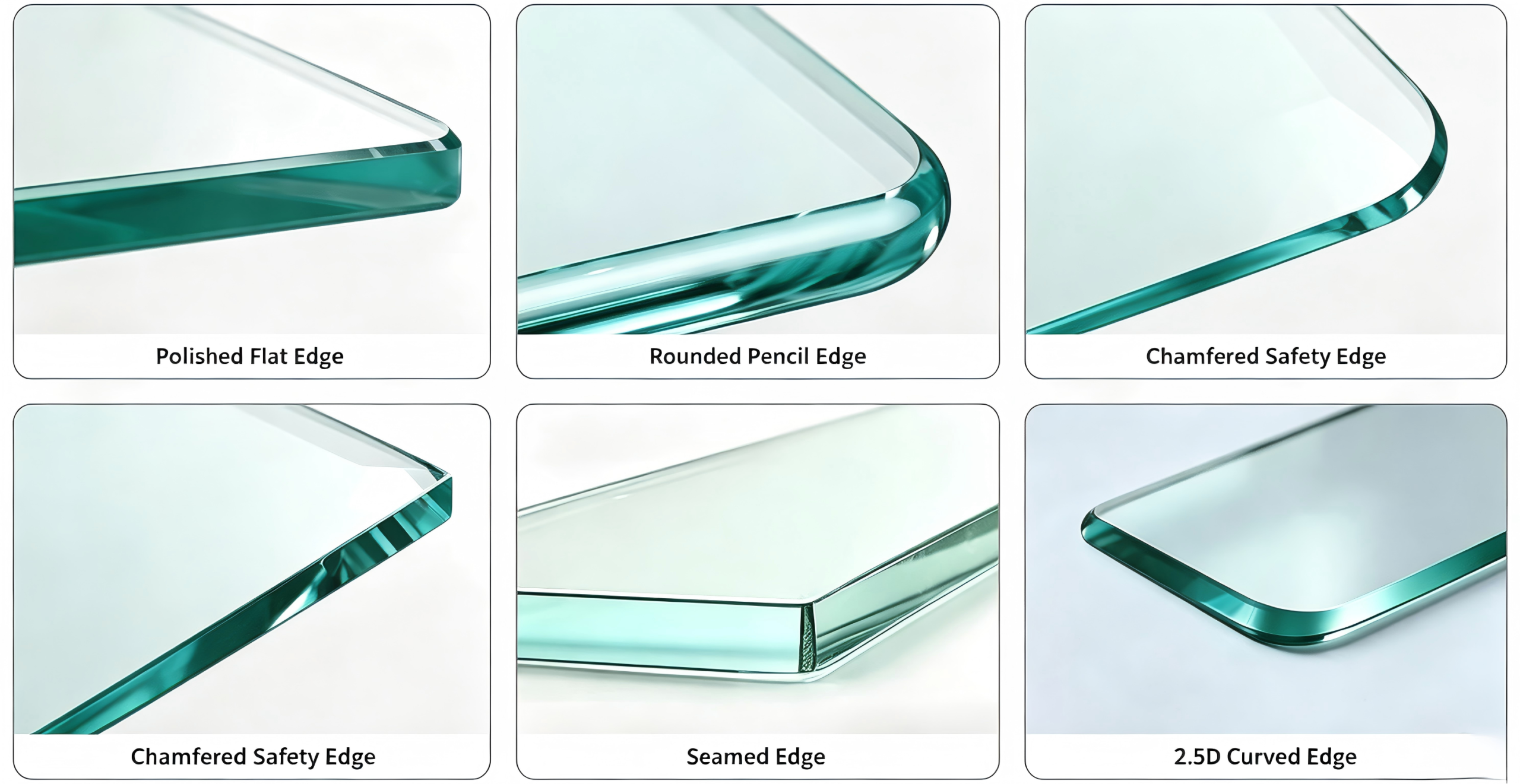
We provide custom glass edge processing for cover glass, display glass, touchscreen glass and optical glass. Our edge processing capabilities include edge grinding, edge polishing, chamfering, beveling and custom edge profiles for different glass shapes and application requirements.
From prototypes to OEM production, we can process glass edges according to customer drawings, dimensions and functional requirements. Edge finishing can be combined with CNC machining, chemical strengthening, printing, coating and other glass processing services to provide complete custom cover glass solutions.

Edge Processing Capabilities
Edge Grinding
Our glass edge grinding process removes sharp or irregular edges after cutting and prepares the glass for further processing or assembly. Edge grinding can be customized according to glass thickness, shape, dimensions and application requirements.
Edge Polishing
Chamfering
Custom glass chamfering creates an angled edge along selected areas of the glass. Chamfer dimensions and locations can be produced according to customer drawings and component requirements.
Beveling
Glass beveling produces a controlled angled edge profile for applications requiring specific mechanical, assembly or appearance characteristics. Beveled edges can be integrated into custom cover glass designs.
Rounded Edge Processing
Custom Edge Profiles
Materials
Our glass edge processing services are available for multiple types of glass used in electronic and industrial applications, including aluminosilicate glass, soda-lime glass, Gorilla Glass and chemically strengthened glass.
Processing parameters can be adjusted according to the glass material, thickness, shape and required edge finish. Customers can provide drawings, samples or specifications for evaluation before production.
- Aluminosilicate Glass
- Soda-Lime Glass
- Gorilla Glass
- Chemically Strengthened Glass
Glass Thickness & Customization
Glass edge processing can be customized for different glass thicknesses, dimensions and component geometries. Processing requirements may include edge type, edge width, chamfer size, bevel angle, corner radius and surface finish.
For OEM projects, customers can provide CAD drawings, technical drawings, samples or dimensional specifications. Our engineering team can review the requirements and determine the appropriate processing method for the application.
How to Specify Glass Edge Finishing for OEM Production
Specifying glass edge finishing correctly helps OEM buyers reduce drawing ambiguity, improve sample approval and maintain consistency in production. For custom cover glass, industrial display glass and optical glass components, edge requirements should be defined alongside glass thickness, overall dimensions and other critical features on the engineering drawing.
Before requesting a quotation, review the following specifications with your glass manufacturer.
1. Define the Required Edge Type
Different applications require different edge finishes. The appropriate option depends on the component design, installation method, visible edge requirements and assembly conditions.
Ground edges: Suitable for applications where a ground finish meets the specified appearance and assembly requirements.
Polished edges: Used when a smoother, more uniform visible edge finish is required.
Chamfered edges: Include a defined chamfer dimension and, where necessary, an angle.
Rounded edges: Specify the required corner radius or edge radius and identify the locations where it applies.
Custom CNC edge profiles: Provide a detailed drawing or cross-sectional view for non-standard edge shapes.
Avoid specifying only “smooth edges” or “polished edges” when the finished part has critical dimensional or cosmetic requirements. Describe the required edge geometry and acceptance criteria as clearly as possible.
2. Specify Chamfer Dimensions and Corner Radius
For chamfered glass edges, indicate the chamfer width and angle on the drawing when these dimensions are important to the design. For rounded edges, identify the required radius and distinguish between rounded corners and a rounded edge profile.
If only selected sides or corners require special finishing, mark each location clearly. This is particularly important for cover glass with mounting holes, cutouts, printed borders or close-fitting housings.
Where dimensions are critical, confirm the applicable tolerances with the manufacturer before sample production. Do not assume that every edge treatment follows the same dimensional tolerance.
3. Include Glass Thickness and Overall Dimensions
Edge finishing must be considered together with the glass thickness and external dimensions. These specifications affect the available edge geometry and the manufacturing sequence.
The engineering drawing should identify:
Glass material and nominal thickness
Overall length and width
Critical dimensional tolerances
Edge type for each side
Chamfer dimensions, edge radius or special profile requirements
Relevant holes, notches and cutouts
For parts requiring CNC machining, see our CNC machining for cover glass page for additional information about custom glass features.
4. Define Edge Appearance and Acceptance Criteria
Terms such as “high quality,” “smooth” and “defect-free” can be interpreted differently unless the requirements are clearly defined. For production orders, specify the acceptable appearance of the finished edge and identify any critical areas that will remain visible after assembly.
Where necessary, agree on the inspection method, measurement locations and acceptance criteria before approving the production sample. Edge chips, scratches and other visible imperfections should be evaluated against the agreed specification rather than an undefined general description.
If the glass will be chemically strengthened or undergo another subsequent process, confirm the manufacturing sequence and inspection requirements with the supplier. Relevant process requirements may vary with the glass material, part geometry and intended application.
5. Confirm the Drawing Before Mass Production
Before placing a repeat order, review the approved sample against the engineering drawing. Confirm the edge profile, dimensions, visible finish and any critical assembly interfaces.
For OEM projects, the quotation request should include the latest drawing revision, required quantity, material, thickness and any special edge finishing instructions. This allows the manufacturer to review the requirements before confirming manufacturability, lead time and pricing.
For further information about post-processing, see our chemical strengthening glass page.
What to Include in a Glass Edge Finishing RFQ
To help prepare a more accurate quotation, provide the following information:
Engineering drawing or sample
Glass material and thickness
Overall dimensions and tolerances
Required edge type and profile
Chamfer dimensions or corner radius, if applicable
Cosmetic and inspection requirements
Estimated order quantity and expected production volume
Need custom glass edge processing for an OEM project? Send your drawing and specifications through our custom cover glass inquiry page so we can review your requirements and discuss a suitable manufacturing approach.
Applications
Custom glass edge processing is used for a wide range of glass components and cover glass applications, including:
Electronic display cover glass
Industrial display glass
Consumer electronics glass
Automotive and transport displays
Camera and imaging glass
Control panel glass
Optical glass components
Edge processing can be combined with cutting, CNC machining, chemical strengthening, screen printing, surface coatings and OCA lamination to meet different OEM component requirements.
Process Flow

Drawing / Sample → Glass Cutting → Edge Processing → CNC Machining → Strengthening → Printing / Coating → Cleaning → Inspection → Packaging
Our edge processing workflow is integrated with other glass manufacturing processes to maintain dimensional consistency throughout production.
Customer drawing or sample review
Glass material and thickness confirmation
Glass cutting
Edge grinding or polishing
Chamfering, beveling or custom edge processing
CNC machining when required
Chemical strengthening or thermal tempering
Printing or surface coating
Cleaning and final inspection
Packaging for shipment
Quality Control
Edge quality is checked throughout the production process to ensure that processed glass meets the required dimensional and appearance specifications.
Inspection can include glass dimensions, thickness, edge geometry, chamfer or bevel dimensions, corner radius, surface condition, edge defects and overall appearance.
For OEM projects, inspection requirements can be defined according to customer drawings, specifications and approved samples.
OEM / Custom Edge Processing
Every cover glass project can have different edge requirements. We support custom OEM and ODM edge processing based on customer drawings, samples and technical specifications.
Customers can specify the glass material, thickness, overall dimensions, edge type, chamfer or bevel dimensions, corner radius and required surface finish.
Our edge processing capability can be combined with other manufacturing processes to produce finished cover glass components ready for assembly.
Request a Custom Glass Edge Processing Quote
Have a custom glass edge requirement?
Send us your drawing, sample specifications or glass dimensions. Our team can review the required edge profile, processing method, glass material and production requirements.
For a faster quotation, please provide:
Glass material
Glass thickness
Overall dimensions
Edge type
Chamfer or bevel requirements
Corner radius
Required quantity
Drawing or sample, if available
Contact us for a custom glass edge processing quotation.
FAQ
What is glass edge processing?
Answer:
Glass edge processing is the machining and finishing of glass edges after cutting. It can include grinding, polishing, chamfering, beveling and custom edge shaping to meet specific dimensional, functional or appearance requirements.
Can you process edges on cover glass?
Answer:
Yes. We provide custom edge processing for cover glass, display glass, touchscreen glass and other electronic glass components. Processing can be customized according to drawings, samples and technical specifications.
What types of edge processing do you provide?
Answer:
Our capabilities include edge grinding, edge polishing, chamfering, beveling, rounded edge processing and custom edge profiles.
Can edge processing be combined with CNC machining?
Answer:
Yes. Edge processing can be combined with CNC machining for projects requiring holes, slots, notches, special contours or other dimensional features.
What information is required for an edge processing quotation?
Answer:
Customers can provide the glass material, thickness, dimensions, edge type, chamfer or bevel requirements, corner radius, quantity and technical drawings or samples.
Can you process chemically strengthened glass?
Answer:
Yes. Edge processing requirements can be evaluated for chemically strengthened glass and other cover glass materials. Processing parameters are selected according to the material, thickness, geometry and required edge finish.