 +86-13925515590
 kleinma@aliyun.com

AG AR AF Coatings for Cover Glass: What’s the Difference?

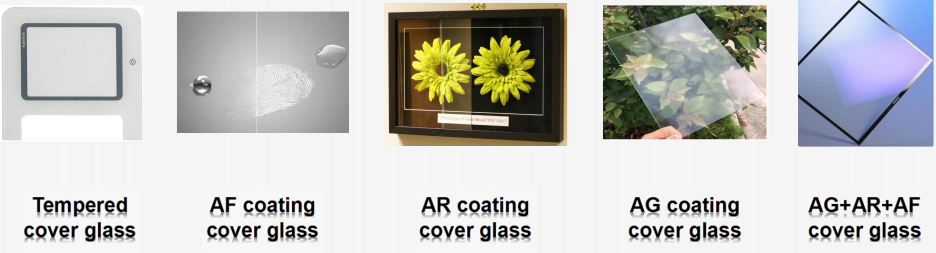
What Are AG AR AF Coatings on Cover Glass?
When a new display project or solution is launched, engineers and design teams often encounter light reflection issues and need to select suitable AG AR AF coatings in cover glass. When buyers and engineers are new to optical glass, the coatings in cover glass industry terms aren’t familiar. Possibly they will search vague keywords like “anti reflection glass” or “non glare glass“, which leads to ambiguous communication with glass OEM.
Custom AG, AR and AF Coated Cover Glass for OEM Applications
For electronic device manufacturers, selecting the right AG, AR or AF coating depends on the display environment, optical requirements, touch performance and durability requirements.
We provide custom AG, AR and AF coated cover glass for OEM applications, including industrial displays, automotive displays, medical equipment, POS terminals, smart home devices, touchscreen panels and other electronic products.
Available options include AG anti-glare glass, AR anti-reflective glass, AF anti-fingerprint glass and combined AG/AF, AR/AF or AG/AR/AF coating solutions. Custom thickness, dimensions, printing, CNC processing, chemical strengthening and prototype production are available.
So let’s focus on the principles, applications and identification methods of AG, AR and AF coatings in cover glass to help you quickly tell their differences and locate the correct OEM.
AG Treatment: Anti-Glare Glass
How Does AG Coating Work?
Under chemical etching or spraying, the smooth glass surface is transformed into a matte texture with tiny uneven particles. The adjusted surface roughness diffuses incident light to achieve anti-glare effects.
AG treatment can be applied on single or double sides of glass. The AG matte side must face outwards during assembly. Lower gloss delivers better light diffusion and less harsh glare.
Where Is AG Glass Used?
AG treatment scatters reflected ambient light to reduce glare and provide a more comfortable viewing experience, it widely used for displays which expose to strong sunlight or bright environments: Outdoor machine screens, ATM machines, POS terminals, medical B-ultrasound monitors, E-readers, gas station displays, subway ticket validator screen etc.
How to Identify AG Glass
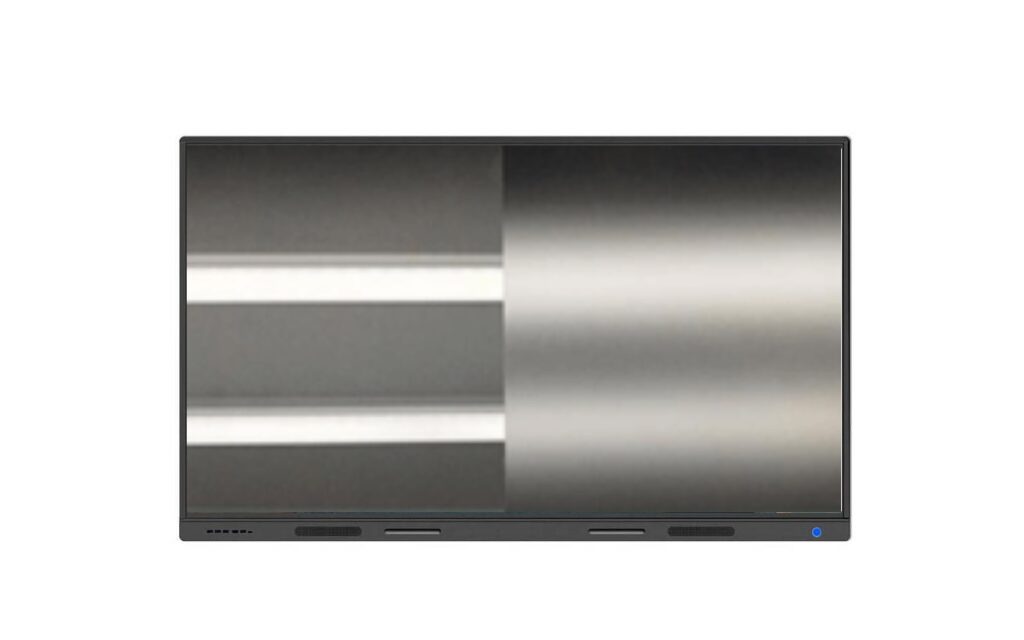
Place the glass under a fluorescent lamp and observe the lamp reflection from front:
Blurred, scattered lamp reflection=AG treated surface
Clear, sharp lamp mirror image=Untreated smooth surface
Non AG VS. AG
AR Coating: Anti-Reflective Glass
What Is AR Coating?
How Does AR Coating Improve Light Transmission?
Where Is AR Glass Used?
How to Identify AR Glass?
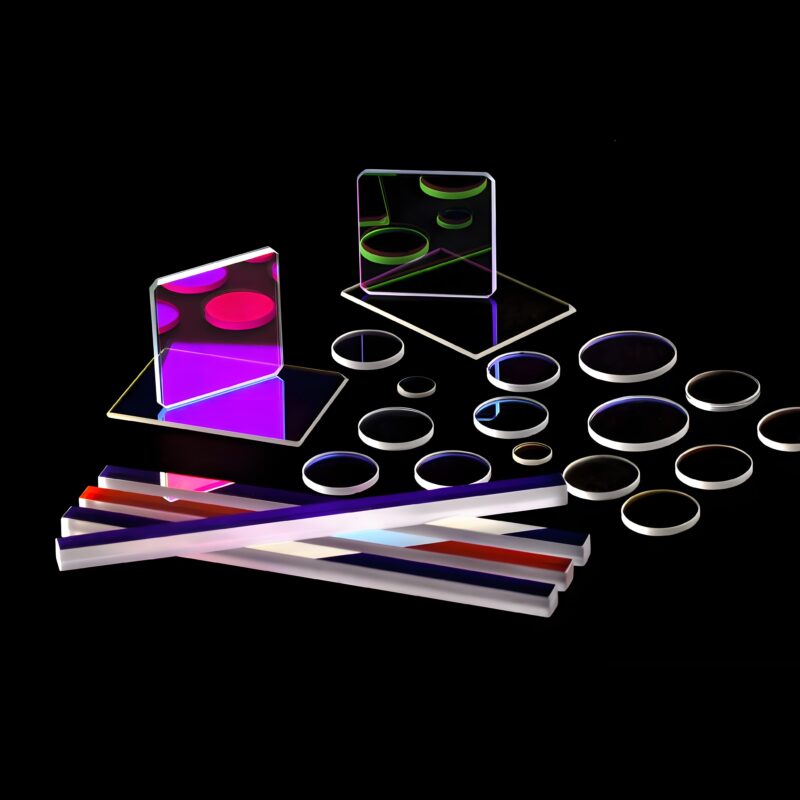
AR coating can be overlaid on AG matte glass for combined anti-glare and high-transmittance performance.
AF Coating: Anti-Fingerprint Glass
What Is AF Coating?
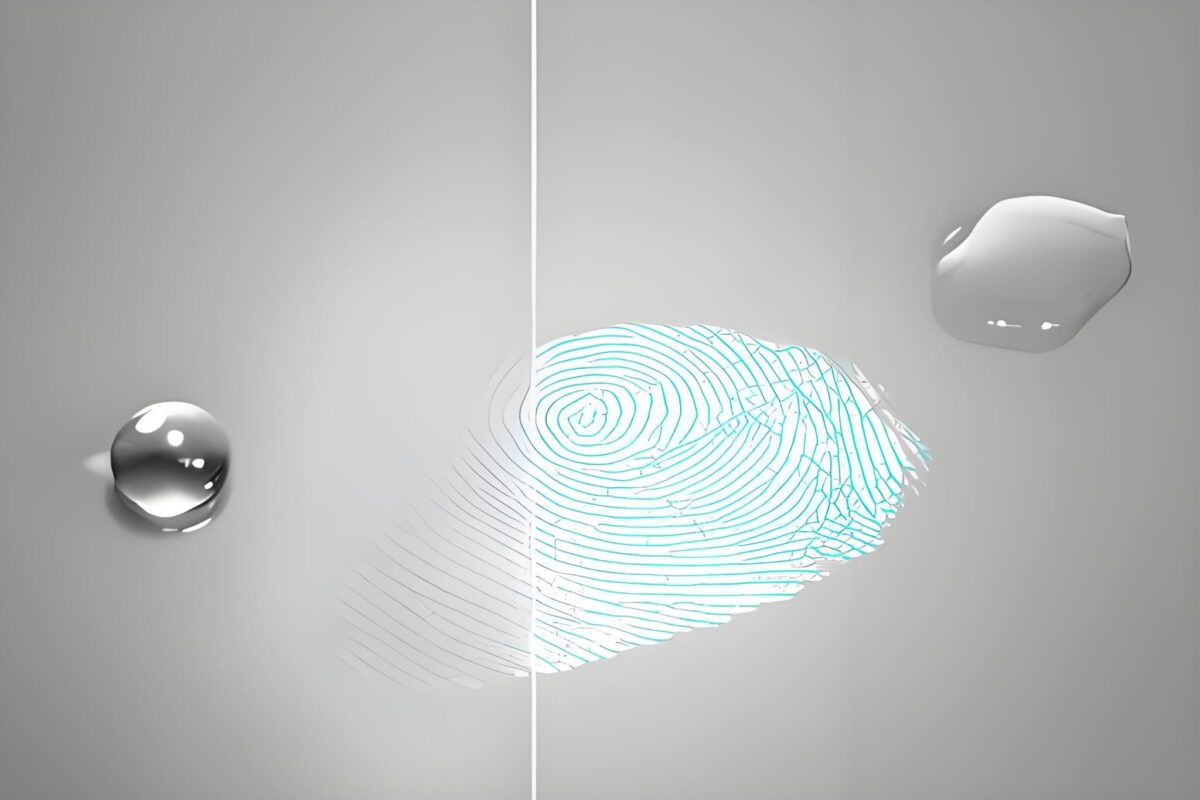
Inspired by the lotus leaf effect, a nano fluorochemical layer coated on glass to form hydrophobic and oleophobic surfaces.
AF coating is only applied on one side as the outermost touch surface.
Benefits of AF Coating
1.Fingerprints, oil stains and water spots can be wiped off effortlessly.
2.Smoother sliding touch feeling with lower friction.
Where Is AF Coating Used?
All touchscreen cover glass including mobile phones, tablets, vehicle central control screens, medical devices, industrial touch panels and smart home touch displays.
How to Test AF Coating
Water drop test: Water beads up and rolls freely without spreading on AF-coated surface. And test the water drop angle.
Oil pen test: Oil ink cannot adhere firmly and wipes away easily on AF coating.
AG AR AF Coatings: What Is the Difference?
| Coating | Main Function | Surface | Typical Applications |
|---|---|---|---|
| AG | Reduce glare | Matte/textured | Outdoor displays |
| AR | Reduce reflection | Optical coating | HD displays |
| AF | Resist fingerprints | Hydrophobic/oleophobic | Touchscreens |
Can AG AR AF Coatings Be Combined?
AG + AF
AR + AF
AG + AR + AF
How to Choose the Right Cover Glass AG AR AF Coatings
Outdoor / high-brightness viewing environment: Choose AG coatings in cover glass
Indoor scenes requiring high definition and minimal light loss: Choose AR coatings in custom cover glass
Frequently touched panels prone to fingerprints: AF coating is mandatory
Outdoor high-definition touch devices: AG + AF or AR + AF may be selected depending on the optical and surface requirements. AG + AR + AF can also be considered for specialized applications.
AG AR AF Coatings Comparison
| Feature | AG | AR | AF |
|---|---|---|---|
| Main purpose | Reduce glare | Reduce reflection | Reduce fingerprints |
| Surface | Micro-textured | Optical thin film | Nano hydrophobic layer |
| Light transmission | May slightly decrease | Increases effective transmission | Minimal effect |
| Touch feel | Matte | Smooth | Very smooth |
| Fingerprint resistance | Low | Low | High |
| Outdoor readability | Excellent | Good | Good |
| Touchscreen use | Common | Common | Very common |
| Typical application | Industrial / outdoor | HD displays | Touch displays |
AG AR AF Coating Specifications for Custom Cover Glass
| Parameter | Custom Options |
|---|---|
| Glass Material | Aluminosilicate / Soda Lime Glass |
| Thickness | 0.3–3.0 mm |
| AG Treatment | Single-side / Double-side |
| AR Coating | Single-side / Double-side |
| AF Coating | Outer surface |
| Light Transmittance | Application dependent |
| Haze | Custom |
| Reflectance | Custom |
| Surface Finish | Glossy / Matte |
| Printing | Silk Screen |
| Edge Processing | Polished / Beveled |
| CNC Processing | Available |
| Chemical Strengthening | Available |
| Prototype | Available |
| Mass Production | Available |
NAG AR AF Coated Cover Glass For Different Applications
| Application | Recommended Coating | Main Requirement |
|---|---|---|
| Outdoor Display | AG / AG + AF | Reduce glare |
| Automotive Display | AR / AF / AR + AF | Optical clarity + touch |
| Medical Display | AR / AG + AR | High visibility |
| POS Terminal | AF / AR + AF | Fingerprint resistance |
| Industrial Touchscreen | AG + AF | Glare + touch |
| Smartphone / Tablet | AR + AF | Optical clarity + fingerprint resistance |
| Smart Home Display | AR + AF | Clear display + easy cleaning |
Need Custom AG, AR or AF Cover Glass?
We provide customized cover glass solutions with AG, AR and AF surface treatments for industrial displays, automotive displays, medical devices, touchscreens and other electronic applications.
Our OEM services include custom glass thicknesses, dimensions, CNC machining, chemical strengthening, silk screen printing, optical coatings and surface treatments.
Send us your drawings or requirements to discuss the appropriate glass material and surface treatment for your application.
Request a Quote for Custom Cover Glass
AG AR AF Coatings: FAQs
Q1:What is the difference between AG and AR glass?
A1:AG treatment scatters reflected light to reduce glare, while AR coating reduces surface reflection and improves effective light transmission.
Q2:What is the difference between AR and AF coating?
A2:AR coating reduces reflection and improves light transmission, while AF coating provides a hydrophobic and oleophobic surface that makes the glass easier to clean.
Q3:Can AG and AR coatings be applied to the same cover glass?
A3:Yes. AG and AR can be combined on the same cover glass when the application requires both glare reduction and improved optical transmission.
The final coating design should be optimized according to the required haze, reflectance and transmittance.
Q4:Can AF coating be added to AR glass?
A4:Yes. AF can be applied over AR coating as an outermost surface layer.
The AF layer provides fingerprint and oil resistance, while the coating stack should be designed and tested for adhesion and durability.
Q5:Can cover glass have AG, AR and AF coatings together?
A5:Sure, For outdoor high-definition touch devices, AG + AF or AR + AF may be selected depending on the optical and surface requirements.
AG + AR + AF can also be considered for specialized applications, but the final coating combination should be evaluated based on surface texture, reflectance, haze and transmittance requirements.
Q6:Which coating is best for outdoor displays?
A6:All of them coatings strongly recommend but AG takes first place, because it can scatter the light to avoid glare when view the screen.
Q7:Which treatment is best for touchscreen cover glass?
A7:For cover glass, AF coating is the preferable choice to reduce dirt and easy clean to keep premium appearance.
Q8:Can AG, AR and AF treatments be customized for OEM applications?
A8:Yes, AG(gloss, haze, roughness, visible light transmittance), AR(transmittance in different spectral bands), AF(Electroplating / spray).