 +86-13925515590
 kleinma@aliyun.com

PCAP Touchscreen Cover Glass

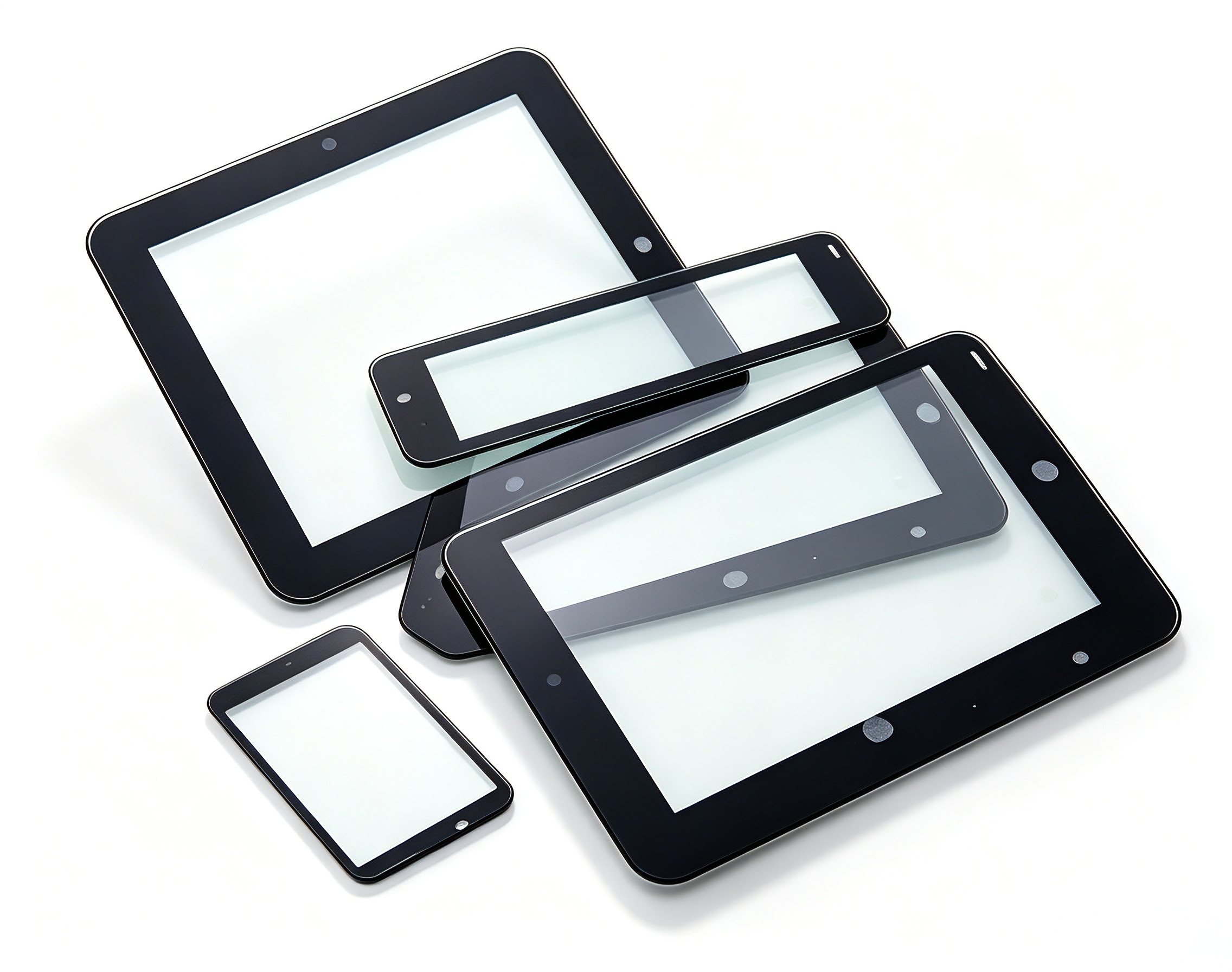
PCAP touchscreen cover glass is an important structural and functional component in projected capacitive touch displays. It protects the touch sensor and display module while allowing users to interact with the screen through the glass surface.
For OEM equipment manufacturers, selecting cover glass involves more than choosing a material and thickness. Glass thickness, dielectric properties, surface treatment, printing design and assembly conditions can all influence touchscreen performance.
This guide explains the main design considerations when specifying custom PCAP touchscreen cover glass.
1. How Cover Glass Works with a PCAP Touch Sensor
Projected capacitive (PCAP) technology detects changes in capacitance when a finger approaches or touches the screen. The cover glass sits above the sensor electrodes and acts as a protective dielectric layer.
Unlike a mechanical button, the touchscreen does not require direct electrical contact between the finger and the sensor.
However, the glass layer affects the capacitive coupling between the finger and sensor. An unsuitable cover thickness or assembly structure may reduce touch sensitivity or create inconsistent response.
According to Microchip’s technical application guidance, the covering material and its thickness are important factors in capacitive touch sensor performance.
Technical reference: https://ww1.microchip.com/downloads/en/AppNotes/01250a.pdf
2. Select the Appropriate Glass Thickness
Glass thickness should be determined together with the touchscreen controller, sensor design and mechanical structure.
Common custom cover glass thickness options include:
- 0.55 mm
- 0.7 mm
- 1.0 mm
- 1.5 mm
- 2.0 mm
- 2.5 mm
- 3.0 mm
These are possible manufacturing options, not universal PCAP compatibility specifications.
Thicker glass may provide greater mechanical protection, but it can also reduce the capacitive signal received by the sensor. The touchscreen designer may need to adjust electrode geometry, controller settings or sensor sensitivity.
For this reason, the final thickness should be verified through module testing rather than selected only according to mechanical strength.
3. Glass Material and Surface Characteristics
The substrate should be selected according to the product’s mechanical, optical and cost requirements.
Aluminosilicate Glass
Aluminosilicate glass is commonly considered for applications requiring thin cover glass, chemical strengthening and improved mechanical performance.
Soda Lime Glass
Soda lime glass can be a practical option for applications where cost efficiency, optical clarity and suitable mechanical performance are priorities.
The final selection depends on thickness, dimensions, strengthening requirements and application conditions.
Explore our aluminosilicate glass options and soda lime glass materials.
4. Surface Treatment and Touch Performance
Surface treatments can improve the user experience, but their optical and touch characteristics should be evaluated together.
Anti-Glare (AG): AG treatment diffuses reflected light and can improve screen visibility in bright environments. However, the surface texture may influence image clarity and visual appearance.
Anti-Reflective (AR): AR coatings reduce surface reflection and can improve display contrast under certain lighting conditions.
Anti-Fingerprint (AF): AF coatings help reduce visible fingerprints and make frequently touched glass easier to clean.
The appropriate treatment depends on display brightness, ambient lighting, viewing distance and user interaction requirements.
See our AR, AG and AF coating options.
5. Printed Borders and Sensor Openings
PCAP cover glass may require black borders, logos, icons and transparent display windows.
The printed pattern must be coordinated with the active sensor area and display dimensions.
Important design information includes:
- Active display area
- Visible viewing area
- Sensor electrode location
- Black border width
- Logo and icon positions
- Camera or sensor openings
- Printing alignment requirements
The artwork and mechanical drawing should be reviewed together before production. Otherwise, a visually acceptable printed border may cover part of the active display or interfere with the intended viewing area.
Learn more about custom silk screen printing for cover glass.
6. Assembly and Optical Bonding Considerations
The glass-to-sensor assembly method should be considered during product development.
Air gaps, adhesive thickness, bonding materials and assembly tolerances can affect optical appearance and touch response.
For projects using optical bonding, the adhesive system should be evaluated for compatibility with the glass, sensor and display module.
The complete assembly should be tested for touch response, display uniformity, bubbles, contamination and environmental reliability.
7. What OEM Buyers Should Provide
To evaluate a custom PCAP touchscreen cover glass project, buyers should prepare:
- Glass dimensions and thickness
- Glass material preference
- 2D technical drawing
- Active display and sensor dimensions
- Required holes and cutouts
- Printing artwork
- AR, AG or AF requirements
- Bonding or assembly method
- Prototype and production quantities
If the touch controller or sensor specification is available, providing it can help the engineering team evaluate the cover glass design more effectively.
Frequently Asked Questions
Does thicker cover glass affect PCAP touch sensitivity?
It can. Greater cover thickness can reduce capacitive coupling. Actual performance depends on the sensor design, controller and complete assembly.
Can chemically strengthened glass be used for PCAP touchscreens?
Yes. Suitable chemically strengthened glass can be used as PCAP cover glass, provided its thickness, geometry and surface characteristics meet the project requirements.
Can PCAP cover glass have AG or AF treatment?
Yes. AG and AF treatments can be evaluated according to optical, touch and durability requirements.
Can the glass be customized with holes and printed borders?
Yes. Custom dimensions, CNC openings, polished edges and silk screen printing can be specified according to approved drawings.
Request a Custom PCAP Cover Glass Quote
Developing a new touchscreen product?
Send us your glass drawing, thickness, sensor dimensions, printing artwork and estimated quantity.
WM Cover Glass can review your requirements for customized touchscreen glass processing, including cutting, CNC machining, strengthening, printing and surface treatments.