 +86-13925515590
 kleinma@aliyun.com

AR Coating for Glass: How to Specify Reflectance, Transmission, and Durability


AR coating for glass is widely used in electronic displays, industrial touchscreens, human-machine interface (HMI) panels, optical windows, and other applications where unwanted reflections can affect visibility.
When light strikes an uncoated glass surface, some of the incident light is reflected rather than transmitted. Under bright ambient lighting, these reflections can make displayed information harder to read and reduce the apparent contrast of an electronic display.
An anti-reflection (AR) coating is designed to reduce surface reflection through optical thin-film engineering. However, choosing the right coating involves more than asking for a low reflectance value. Buyers must also consider the wavelength range, coating configuration, viewing conditions, color appearance, substrate material, durability, and inspection method.
For OEM engineers and purchasing teams, defining these requirements early helps align the cover glass specification with the needs of the finished display assembly.
This guide explains nine essential considerations when specifying AR coating for custom cover glass, including how to compare optical performance, select a coating configuration, and prepare a practical manufacturing request.
1. What Is AR Coating for Glass?
An anti-reflection coating is a thin optical layer, or a stack of layers, applied to a glass surface to reduce reflected light.
The coating works by controlling the optical properties of the surface layers. Reflections from different interfaces can interfere with one another, reducing the net reflected light over the coating’s intended operating range.
The performance depends on factors such as the refractive indices and thicknesses of the coating layers, the substrate, the wavelength of light, and the angle at which light reaches the surface.
AR coatings are used in applications including:
- Industrial display cover glass
- Touchscreen monitors and HMI panels
- Outdoor electronic displays
- Optical windows and sensor cover glass
- Imaging and measurement equipment
- Electronic instruments requiring improved viewing clarity
The correct coating design depends on the application. An AR coating intended for a visible-light display may not provide the required performance for a near-infrared sensor window.
For OEM projects, the intended wavelength range and optical requirements should be defined before the coating specification is finalized.
2. How Does an Anti-Reflection Coating Work?
When light passes from air into glass, part of the light is reflected at the interface because air and glass have different refractive indices.
For ordinary glass with a refractive index around 1.5, the reflection at an air-glass interface is approximately 4% under near-normal incidence, assuming a typical uncoated surface and negligible absorption.
An AR coating introduces one or more thin-film layers designed to reduce this reflection through optical interference and refractive-index control.
A simple single-layer coating can be optimized for a particular wavelength and optical condition. Multilayer designs offer more flexibility to control reflection over a broader wavelength range or under different optical requirements.
Actual performance depends on the complete coating design. It should not be assumed that every AR coating produces the same reflectance or transmission.
For an accessible explanation of the underlying technology, see Corning’s overview of anti-reflective glass.
For a custom cover glass project, the important question is not simply whether the glass has an AR coating, but whether its measured optical performance meets the requirements of the finished product.
3. Single-Sided vs. Double-Sided AR Coating
One of the first decisions in specifying AR coating for glass is whether the coating should be applied to one surface or both.
Single-Sided AR Coating
A single-sided AR coating treats one designated surface of the glass.
This configuration may be suitable when reflection from a particular interface is the primary concern, or when the assembly design requires only one coated surface.
Before specifying single-sided AR, confirm:
- Which surface receives the coating
- Whether the coated surface faces the user or the inside of the assembly
- The reflection requirement for the coated surface
- The optical behavior of the uncoated surface
- Whether the coating remains accessible for cleaning and handling
The surface designation should be clear on the drawing or technical specification. Otherwise, the coating may be applied to the wrong side for the intended assembly.
Double-Sided AR Coating
A double-sided AR coating treats both designated glass surfaces.
This may be appropriate when reflections from both air-glass interfaces need to be reduced. However, the actual improvement depends on the coating design, substrate properties, and measurement conditions.
Double-sided coating also introduces additional manufacturing and inspection considerations, including the protection of coated surfaces during handling and the need to verify performance on both sides where required.
Which Configuration Should OEM Buyers Choose?
There is no universal rule that double-sided AR is always necessary or that single-sided AR is sufficient.
The correct configuration depends on the optical path, the number of interfaces, the surrounding materials, the viewing environment, and the target performance.
If the cover glass will be bonded to another component, the design team should also consider whether the relevant interface is exposed to air or is in contact with an adhesive or another material. An AR coating optimized for an air-glass interface may not perform identically when that interface is bonded.
4. Specify Reflectance and Transmittance Separately
Reflectance and transmittance are related, but they are not interchangeable specifications.
Reflectance
Reflectance describes the proportion of incident light reflected by a surface or optical component under defined measurement conditions.
For display cover glass, lower reflectance can help reduce visible reflections from the treated surface. However, the specification must clarify whether the target applies to one surface, both surfaces, or the complete glass component.
Transmittance
Transmittance describes the proportion of incident light that passes through the glass or optical component under the specified measurement conditions.
High transmission is often desirable when the cover glass sits in front of a display, sensor, or imaging system.
However, transmission is also influenced by the substrate, absorption, surface condition, and other optical effects. An AR coating does not eliminate absorption within the glass.
Why Both Values Matter
A purchasing specification that states only “high transparency” or “low reflection” leaves room for different interpretations.
For a more useful specification, define:
- Required reflectance and whether it is per surface or for the complete component
- Required transmittance and its measurement range
- Relevant wavelength range
- Measurement geometry and angle of incidence
- Whether the values are minimums, maximums, or averages
- The test method and acceptance criteria
For visible-light electronic displays, the wavelength range may cover much of the visible spectrum. Other applications may require a narrower band or performance extending into near-infrared wavelengths.
The correct range should be selected according to the actual display or sensor requirements rather than copied from a generic AR glass datasheet.
5. Single-Layer vs. Multilayer AR Coatings
The number and design of coating layers affect the optical performance that can be achieved.
Single-Layer AR Coating
A single-layer coating uses one principal optical film to reduce reflection.
Its performance is generally optimized around a selected optical range and design condition. It may be appropriate where the requirements are relatively straightforward and the optical performance can be achieved with a simpler coating design.
The actual result depends on the refractive index and thickness of the film, the substrate, and the intended wavelength.
Multilayer AR Coating
A multilayer AR coating uses multiple thin films with selected optical properties.
The additional design flexibility can support lower reflection across a wider wavelength range or help manage performance under more demanding optical conditions.
However, multilayer coatings are not automatically superior for every application. The coating should be evaluated against the actual requirements, including optical performance, color appearance, durability, manufacturing feasibility, and cost.
What Should You Ask the Supplier?
Rather than requesting a specific number of coating layers without a functional reason, specify the required optical performance and ask the supplier to confirm a suitable coating design.
A useful request may include the wavelength range, reflectance target, transmission target, viewing angle, substrate material, and required durability.
The supplier can then evaluate whether the proposed coating architecture is appropriate for the application.
6. Understand AR Coating Color and Appearance
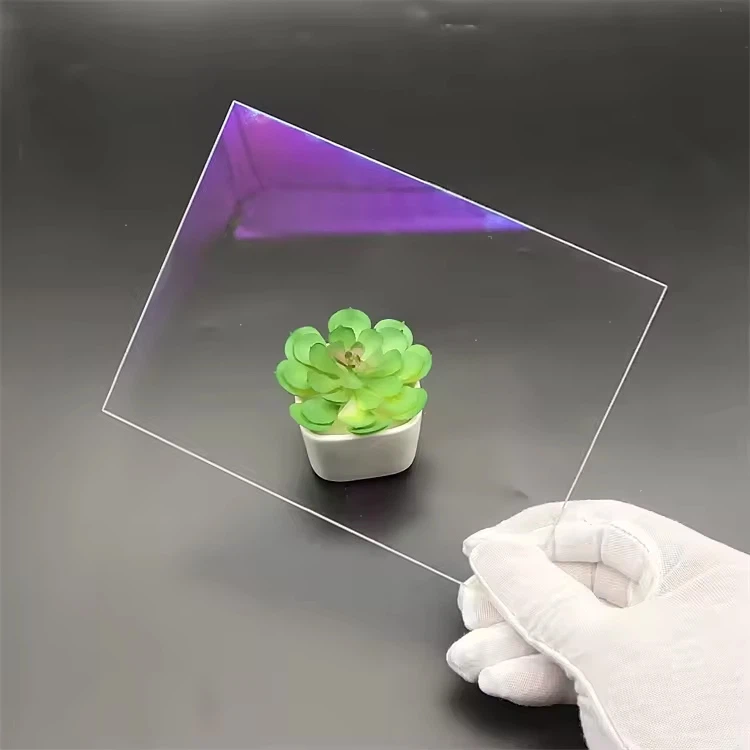
AR-coated glass may show a residual color when viewed or illuminated at different angles. This appearance can result from the coating’s spectral reflectance characteristics.
A visible residual color does not automatically mean that the coating is defective. Conversely, a coating that appears nearly colorless under one lighting condition does not necessarily meet the required optical performance.
For electronic displays, color appearance may matter when multiple panels are installed side by side or when the cover glass is used in a product with strict visual consistency requirements.
Relevant specifications may include:
- Residual reflection color
- Color consistency between parts or batches
- Visual appearance under defined lighting
- Performance at specified viewing angles
- Differences between coated and uncoated surfaces
If color uniformity is important, define the evaluation method and acceptance criteria before mass production.
For multi-panel equipment, evaluating representative samples under the intended lighting conditions can help identify visual differences that might not be apparent in a standard office environment.
7. AR vs. AG vs. AF: Choose the Right Surface Treatment
AR, AG, and AF are often discussed together, but they perform different functions.
AR: Anti-Reflection
AR coating is designed to reduce optical reflection through thin-film engineering.
It is useful when unwanted reflections from the glass surface interfere with display readability, optical transmission, or viewing quality.
AG: Anti-Glare
Anti-glare treatment changes the way light is scattered or diffused at the surface. Depending on the surface texture and treatment, it can reduce the visibility of sharp reflected images.
However, scattering may also affect haze, image sharpness, and the appearance of fine display details. These effects should be evaluated for the intended application.
AF: Anti-Fingerprint
Anti-fingerprint treatment is generally intended to reduce the adhesion or visibility of fingerprints and make the surface easier to clean.
It does not perform the same optical function as AR, and it should not be treated as a substitute for an anti-reflection coating.
Can AR, AG, and AF Be Combined?
Some cover glass designs combine two or more treatments to balance reflection, glare, and fingerprint resistance.
The suitability of a combined treatment depends on the coating sequence, substrate, surface properties, and intended manufacturing process. Compatibility should be confirmed for the actual product construction.
For industrial displays, the decision should start with the main problem to solve: specular reflection, diffuse glare, fingerprints, or a combination of these issues.
Explore our AG-coated glass information for related surface-treatment considerations.
8. Evaluate AR Coating Durability and Environmental Compatibility
Optical performance is only one part of an AR coating specification. The coating must also remain suitable for the product’s expected handling, cleaning, and operating environment.
Durability requirements may vary considerably between an indoor industrial control panel, an outdoor display, a medical instrument, and an optical sensor window.
Before approving a coating, consider the following factors.
Abrasion and Cleaning
If the surface will be cleaned frequently, define the expected cleaning agents, wiping method, and service conditions.
Coating durability should be assessed using an agreed test method and acceptance criteria. Do not assume that a hardness rating alone guarantees resistance to every type of abrasion or cleaning chemical.
Adhesion and Coating Integrity
The coating should remain adherent and free from unacceptable damage under the agreed conditions.
Where relevant, define how coating defects, peeling, discoloration, or changes in optical performance will be evaluated after testing.
Temperature and Humidity
Products used outdoors or in industrial environments may face temperature cycling, moisture, or other environmental exposure.
The required qualification tests should reflect the actual service conditions. A generic statement such as “durable AR coating” is not an adequate substitute for defined testing.
Chemical Compatibility
Cleaning chemicals, oils, solvents, and other substances may affect coating performance.
Identify the expected substances and confirm compatibility with the coating supplier. If the final product uses additional surface treatments, evaluate the complete surface system rather than testing the AR layer in isolation.
9. Prepare a Practical AR Coating Specification for OEM Production
A clear specification helps the glass manufacturer understand the optical target and the conditions under which the finished product will be accepted.
Include the following information when requesting a quotation for custom AR-coated cover glass.
Glass and geometry
- Glass material and nominal thickness
- Overall dimensions and shape
- Edge finishing, holes, cutouts, and other machining features
- Chemical strengthening or thermal processing requirements, if applicable
Coating configuration
- Single-sided or double-sided AR
- Identification of the coated surface or surfaces
- Any required coating combination, such as AR with AG or AF
- Compatibility requirements for the final assembly
Optical performance
- Reflectance target and how it is defined
- Transmittance target
- Required wavelength range
- Measurement angle and test method
- Residual color or color-uniformity requirements, where relevant
Durability and quality
- Cleaning and chemical exposure requirements
- Abrasion or adhesion testing, where applicable
- Environmental qualification requirements
- Inspection records and batch traceability
- Acceptance criteria for coating defects and optical variation
Production and assembly
- Intended application and viewing environment
- Whether the cover glass will be bonded to another component
- Required surface orientation
- Prototype quantity and anticipated production volume
- Packaging and handling requirements
Not every project needs every item. The specification should focus on characteristics that affect the product’s function and acceptance.
For complex optical applications, agree on the measurement method before production. A reflectance result is meaningful only when the measurement conditions and the definition of the reported value are understood by both parties.
Common Mistakes When Ordering AR-Coated Cover Glass
Requesting “AR Coating” Without a Performance Target
The term AR describes the function of a coating, not a complete optical specification. Different designs can produce different reflectance and transmission results.
Confusing Peak Transmission with Average Transmission
A peak value describes performance at a particular wavelength or narrow range. It should not be interpreted as the average transmission across the full visible spectrum.
Ignoring the Coated Surface Orientation
Single-sided AR requires clear identification of the coated side. The correct orientation depends on the optical path and assembly design.
Treating AR and AG as the Same Technology
AR primarily reduces reflection through optical interference, while AG uses surface scattering or diffusion to manage glare. The two may produce different effects on image clarity and haze.
Selecting the Lowest Reflectance Without Considering Other Requirements
A low reflectance target may be desirable, but it should be evaluated alongside transmission, color appearance, durability, manufacturing feasibility, and cost.
Omitting Inspection Conditions
Different measurement geometries and wavelength ranges can produce different reported values. Specify the test conditions and acceptance criteria to avoid misunderstandings.
Custom AR-Coated Cover Glass for Electronic Displays
AR coating selection should be based on the optical and mechanical requirements of the finished assembly. Glass material, dimensions, coating configuration, surface treatment, and durability requirements should be evaluated together.
WM Cover Glass supports custom cover glass requirements for electronic display and touchscreen applications. OEM buyers can provide a drawing and technical specifications so that the relevant manufacturing requirements can be reviewed before production.
Explore our Custom Cover Glass and Industrial Display Glass pages for related product information.
Request a Quote for AR-Coated Cover Glass
When contacting us, provide your glass drawing, dimensions, thickness, required AR configuration, optical performance targets, and intended application.
If the reflectance target or coating design has not yet been finalized, describe the display or optical system and the operating environment. The requirements can then be reviewed before a manufacturing specification is agreed.
Visit our Contact Us page to discuss your OEM cover glass project.
Frequently Asked Questions
What is AR coating for glass used for?
AR coating reduces unwanted surface reflection and can improve the viewing clarity of electronic displays, optical windows, sensors, and other applications where reflected light affects performance.
Is single-sided or double-sided AR coating better?
Neither configuration is universally better. The choice depends on which glass surfaces are exposed to air, the optical path, the required reflectance, and the design of the complete assembly.
Does AR coating increase glass transmittance?
An AR coating can reduce reflection and thereby increase the proportion of incident light transmitted through the coated optical component. The actual transmission also depends on substrate absorption, the coating design, and the measurement conditions.
What is the difference between AR and AG glass?
AR coating uses optical thin films to reduce reflection. AG treatment uses surface scattering or diffusion to manage glare. The two treatments can affect image appearance differently and may be combined when the application requires both functions.
Can AR coating be combined with AF coating?
Some designs combine anti-reflection and anti-fingerprint treatments. Compatibility depends on the specific coating system, processing sequence, substrate, and required optical performance. Confirm the proposed construction with the manufacturer.
How should AR coating reflectance be specified?
Define the reflectance target, wavelength range, measurement angle, coated surface, and test method. Clarify whether the requirement applies to one surface or the complete glass component.
Does AR coating guarantee better outdoor display readability?
AR coating can reduce certain surface reflections, but outdoor readability also depends on display brightness, ambient illumination, AG treatment, viewing angle, display contrast, and the overall optical construction.
What information is needed for an AR-coated cover glass quotation?
Provide the glass drawing, dimensions, thickness, material, single-sided or double-sided coating requirement, optical targets, durability requirements, and intended application. Include any required AG or AF treatments and assembly details.