 +86-13925515590
 kleinma@aliyun.com

Cover Glass for Automotive Displays: An OEM Guide

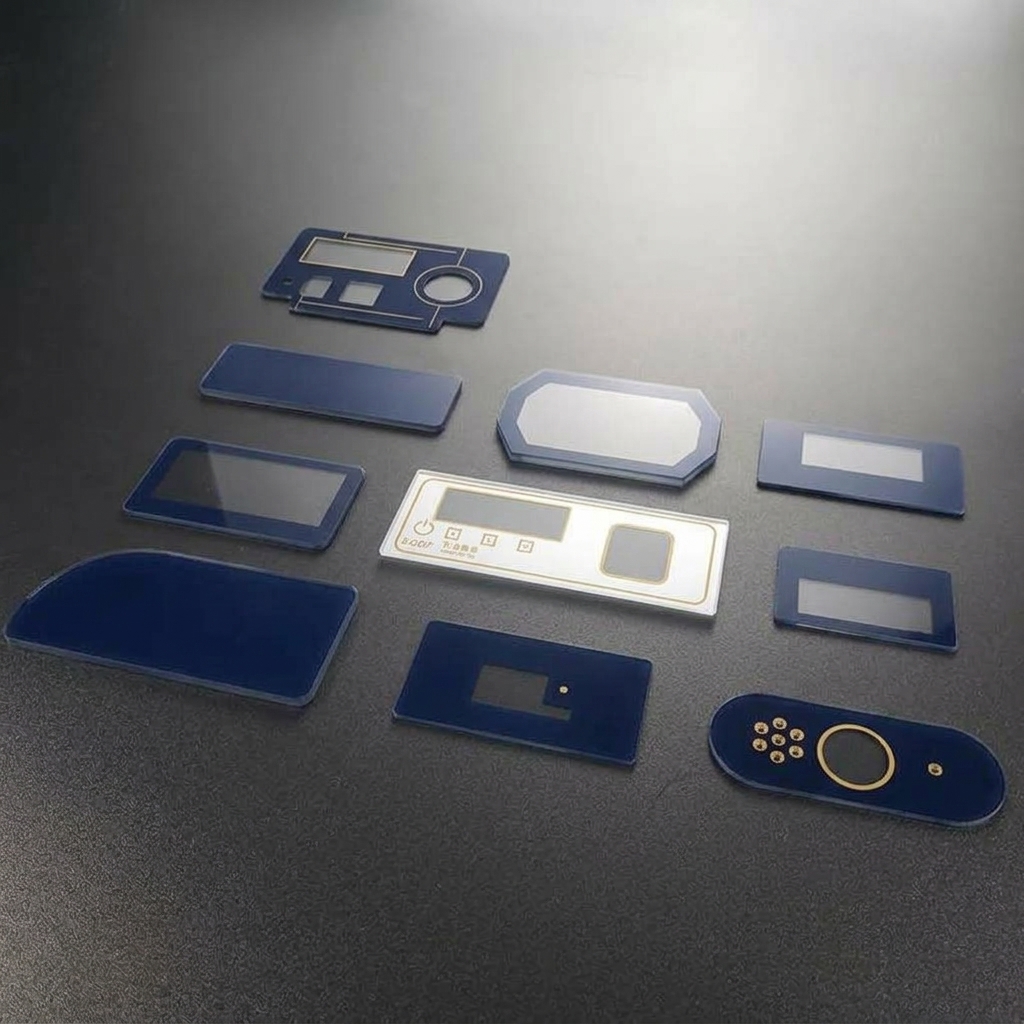
Cover Glass for Automotive Displays: An OEM Guide to Material, Strengthening, Coatings and Custom Processing
Automotive displays are becoming larger, more integrated, and more important to the driving experience. Center displays, digital instrument clusters, passenger displays, rear-seat screens, and other vehicle interfaces all require a protective glass layer that can maintain visibility, touch performance, and durability over long-term use.
Cover glass for automotive displays is therefore more than a protective panel. The glass material, thickness, surface treatment, optical performance, edge processing, printing, and bonding method all need to match the design of the complete display assembly.
For OEMs and display manufacturers, the right cover glass for automotive displays should be selected according to the vehicle environment, display structure, touch requirements, and appearance specifications rather than thickness alone.
What Is Cover Glass for Automotive Displays?
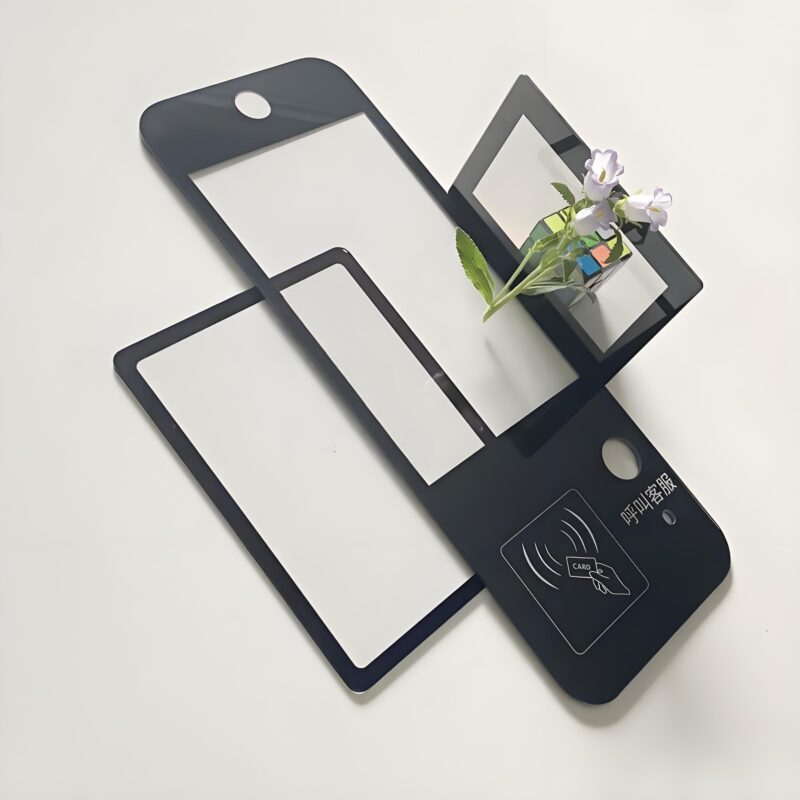
Cover glass for automotive displays is a glass panel installed over an LCD, OLED, or touch display to protect the display module and provide the outer visual and touch interface.
Automotive applications can include:
- Center-stack and infotainment displays
- Digital instrument clusters
- Vehicle HMI touchscreens
- Passenger displays
- Rear-seat entertainment displays
- Control panels
- Smart cockpit displays
- Commercial vehicle displays
- Bus and railway information displays
Compared with conventional electronic display glass, cover glass for automotive displays may need to meet more demanding requirements for durability, optical clarity, surface appearance, environmental exposure, and long-term reliability.
For OEM projects, the glass can be customized according to the display structure, including thickness, dimensions, shape, holes, edge profile, printing, strengthening, coatings, and bonding requirements.
Key Requirements of Cover Glass for Automotive Displays
A vehicle display operates in a different environment from many consumer electronic devices. Direct sunlight, temperature changes, vibration, repeated touch, fingerprints, and cleaning can all affect the performance of the display surface.
The main considerations include:
1. Mechanical Strength
The cover glass for automotive displays needs sufficient mechanical strength for the intended display structure and application.
Chemical strengthening can be used to increase surface strength and improve resistance to damage. Thermal tempering is another option for applications where the glass design and thickness are suitable.
The appropriate strengthening method depends on the glass material, thickness, geometry, and required performance.
2. Optical Clarity
Automotive displays need to remain readable in different lighting conditions.
Important optical considerations can include:
- Light transmission
- Reflection
- Haze
- Surface uniformity
- Color appearance
- Coating performance
The cover glass should be evaluated together with the display module and optical bonding structure rather than as an isolated component.
3. Anti-Glare and Anti-Reflection Performance
Reflections from sunlight and vehicle interior lighting can reduce display readability.
Depending on the application, automotive display glass may use:
AG (Anti-Glare) to diffuse reflected light and reduce visible glare.
AR (Anti-Reflection) to reduce surface reflection and improve display visibility.
AF (Anti-Fingerprint) to reduce fingerprints, oil marks, and smudging on frequently touched surfaces.
In some designs, different surface treatments may be combined to achieve the required balance between visibility, touch feel, appearance, and durability.
4. Surface Durability
Automotive displays can be touched repeatedly during the vehicle’s service life. The surface therefore needs appropriate resistance to scratches, fingerprints, cleaning chemicals, and everyday contact.
Surface performance depends on the glass substrate, strengthening process, coating system, and final application environment.
5. Temperature and Environmental Conditions
Automotive components may experience substantial temperature changes during operation and storage.
The cover glass design should therefore consider:
- Temperature variation
- Thermal cycling
- UV exposure
- Humidity
- Vibration
- Mechanical stress
- Long-term surface stability
These requirements should be defined together with the display module and vehicle application rather than using a single universal specification.
Which Glass Materials Can Be Used for Automotive Displays?
The glass material should be selected according to the required strength, optical performance, thickness, size, processing method, and cost.
Aluminosilicate Glass
Aluminosilicate glass is commonly considered when high surface strength and chemical strengthening capability are important.
It can be suitable for automotive touchscreen and display applications where the design requires a relatively thin but durable cover glass.
The final performance depends on the specific glass grade and strengthening process.
Soda-Lime Glass
Soda-lime glass can be considered for applications where a more economical glass solution is required and the display structure allows a thicker glass profile.
It can also be processed with cutting, CNC machining, printing, strengthening, and surface treatment according to the project requirements.
Specialty Chemically Strengthened Glass
For demanding automotive display applications, OEMs may specify specialty glass designed for chemical strengthening.
For example, AGC describes chemically strengthened specialty glass for vehicle displays, combining strength with optical and surface-treatment technologies for automotive applications.
The final selection should be based on the complete technical specification rather than the material name alone.
What Thickness Should Automotive Display Cover Glass Be?
There is no single thickness that is suitable for every automotive display.
The required thickness depends on:
- Display size
- Glass material
- Flat or curved structure
- Mounting method
- Edge design
- Required mechanical strength
- Bonding structure
- Vehicle application
- Weight requirements
For example, a large display integrated into a vehicle dashboard may require a different glass structure from a smaller instrument cluster.
For OEM projects, it is better to determine thickness after reviewing the display dimensions, glass material, mechanical structure, and required performance.
Flat vs. Curved Automotive Display Glass
Modern vehicle interiors increasingly integrate displays into the dashboard rather than treating the screen as a separate component.
This creates demand for customized shapes, including:
- Flat cover glass
- 2.5D glass
- Curved glass
- Complex-shaped glass
- Large-format display cover glass
Curved cover glass can help create a more integrated dashboard appearance, but it also introduces additional considerations for forming, dimensional accuracy, optical performance, bonding, and inspection.
AGC, for example, has developed curved cover glass for automotive displays in addition to flat designs.
CNC Processing for Automotive Display Glass
Automotive display cover glass is rarely limited to simple rectangular cutting.
OEM drawings may require:
- Custom outer dimensions
- Rounded corners
- Holes
- Slots
- Sensor openings
- Camera openings
- Notches
- Special edge profiles
- Polished edges
CNC processing allows these features to be manufactured according to the display design.
At Weiman, custom automotive display cover glass can be processed with CNC cutting, drilling, edge processing, and other secondary operations according to customer drawings.
Silk Screen Printing and Black Borders
Black borders and decorative printing are frequently integrated into automotive display cover glass.
Silk screen printing can be used for:
- Black borders
- Logos
- Icons
- Functional markings
- Decorative patterns
- Areas used to hide display components
Printing specifications should be considered together with the glass dimensions, coating system, bonding process, and final appearance requirements.
Optical Bonding for Automotive Displays
Cover glass is normally part of a larger display assembly.
Optical bonding or adhesive lamination can be used to connect the cover glass with the display or touch module.
A suitable bonding structure can help reduce the air gap between layers and improve the visual performance of the display.
For automotive applications, the bonding system should also be evaluated for environmental durability and compatibility with the glass, coating, display module, and operating conditions.
How to Choose AG, AR or AF Coatings?
Choosing a coating should start with the actual problem that needs to be solved.
| Requirement | Possible Surface Treatment |
|---|---|
| Reduce visible glare | AG |
| Reduce surface reflection | AR |
| Reduce fingerprints and oil marks | AF |
| Improve outdoor readability | AG / AR |
| Improve touch-surface cleanliness | AF |
| Reduce multiple surface problems | AG + AR + AF combination |
The best coating is not necessarily the one with the lowest reflection or highest haze.
Automotive OEMs should evaluate the complete optical system, including display brightness, viewing angle, reflection, haze, color, touch performance, and surface appearance.
AGC also describes automotive cover glass solutions using anti-reflection and anti-fingerprint technologies to improve visibility and usability.
Automotive Display Cover Glass Manufacturing Process
A typical custom automotive display glass project may include the following stages:
1. Drawing and Specification Review
The OEM provides drawings, dimensions, material requirements, thickness, tolerances, coating specifications, printing requirements, and quantity.
2. Glass Material Selection
The appropriate aluminosilicate, soda-lime, or other specified glass substrate is selected.
3. Cutting and CNC Processing
The glass is cut and machined to the required dimensions, holes, slots, corners, and edge geometry.
4. Edge Processing
Edges can be ground, polished, chamfered, or otherwise processed according to the assembly requirements.
5. Chemical Strengthening or Thermal Tempering
The selected strengthening process is applied according to the material, thickness, geometry, and performance requirements.
6. Silk Screen Printing
Black borders, logos, icons, or decorative patterns can be printed when required.
7. AR / AG / AF Surface Treatment
Optical or functional coatings can be applied according to the required display environment and surface performance.
8. Cleaning and Inspection
The finished glass is inspected for dimensional accuracy, surface quality, appearance, and other specified requirements before packaging and shipment.
Quality Inspection for Automotive Display Cover Glass
Quality control is especially important for automotive display projects because a glass panel may need to maintain stable dimensions and optical performance throughout the production process.
Typical inspection items can include:
- Glass dimensions
- Thickness
- Flatness
- Edge quality
- Hole and cutout dimensions
- Surface defects
- Printing quality
- Coating appearance
- Optical performance
- Strengthening performance
- Final cleanliness
The exact inspection plan should be established according to the customer’s drawing and technical specification.
For more information about our inspection approach, see our Quality Inspection page.
Custom Automotive Display Cover Glass from Weiman
Weiman provides custom cover glass solutions for automotive and transportation displays, including vehicle touchscreens, digital instrument clusters, dashboard displays, and other transportation interfaces.
Our capabilities include:
- Custom glass cutting
- CNC machining
- Hole and cutout processing
- Edge processing
- Chemical strengthening
- Thermal tempering
- Silk screen printing
- AR coating
- AG coating
- AF coating
- Optical bonding and adhesive lamination
- Custom packaging
Available material options include aluminosilicate and soda-lime glass, with custom thickness, dimensions, shapes, and surface treatments according to project requirements.
You can also review our Cover Glass for Automotive Displays application page for more information about automotive and transportation display solutions.
What Should You Provide When Requesting Cover Glass For Automotive Displays?
To receive a more accurate quotation and engineering evaluation, OEM buyers should provide as much of the following information as possible:
- Glass dimensions
- Glass thickness
- Glass material or preferred glass brand
- Flat or curved design
- Holes and cutouts
- Edge requirements
- Chemical strengthening or tempering requirements
- AG / AR / AF coating requirements
- Silk screen printing artwork
- Display or touch module information
- Required quantity
- Prototype or mass-production requirements
A CAD drawing or existing sample is particularly useful for custom automotive display glass projects.
FAQ
What glass is used for automotive displays?
Cover glass for automotive displays can use aluminosilicate, soda-lime, or other specialty glass materials depending on the required strength, thickness, optical performance, and processing requirements.
Is cover glass for automotive display chemically strengthened?
Chemical strengthening is commonly considered when high surface strength is required, particularly for thinner display cover glass. The appropriate strengthening method depends on the glass material and application.
Can automotive display cover glass be curved?
Yes. Custom curved and complex-shaped cover glass can be produced for suitable automotive display designs. The forming, dimensional tolerance, optical performance, and bonding structure need to be evaluated during engineering.
Can you provide AG, AR and AF coatings?
Yes. AG, AR, and AF surface treatments can be specified according to the display environment and required optical and surface performance.
Can cover glass for automotive displays be customized?
Yes. Custom dimensions, thicknesses, shapes, holes, edge processing, printing, strengthening, coatings, and other processing requirements can be produced according to OEM drawings and specifications.
Can cover glass for automotive displays support touchscreen applications?
Yes. Cover glass for automotive displays can be designed for touchscreen assemblies and integrated with touch modules through suitable bonding and lamination processes.
Request a Custom Automotive Display Glass Quote
If you are developing a vehicle touchscreen, digital instrument cluster, center display, or other automotive HMI, send us your drawing or basic glass requirements.
We can review the material, thickness, dimensions, processing, strengthening, coating, printing, and bonding requirements and recommend a suitable custom cover glass for automotive displays solution.