 +86-13925515590
 kleinma@aliyun.com

How to Choose the Right Cover Glass for Industrial Displays

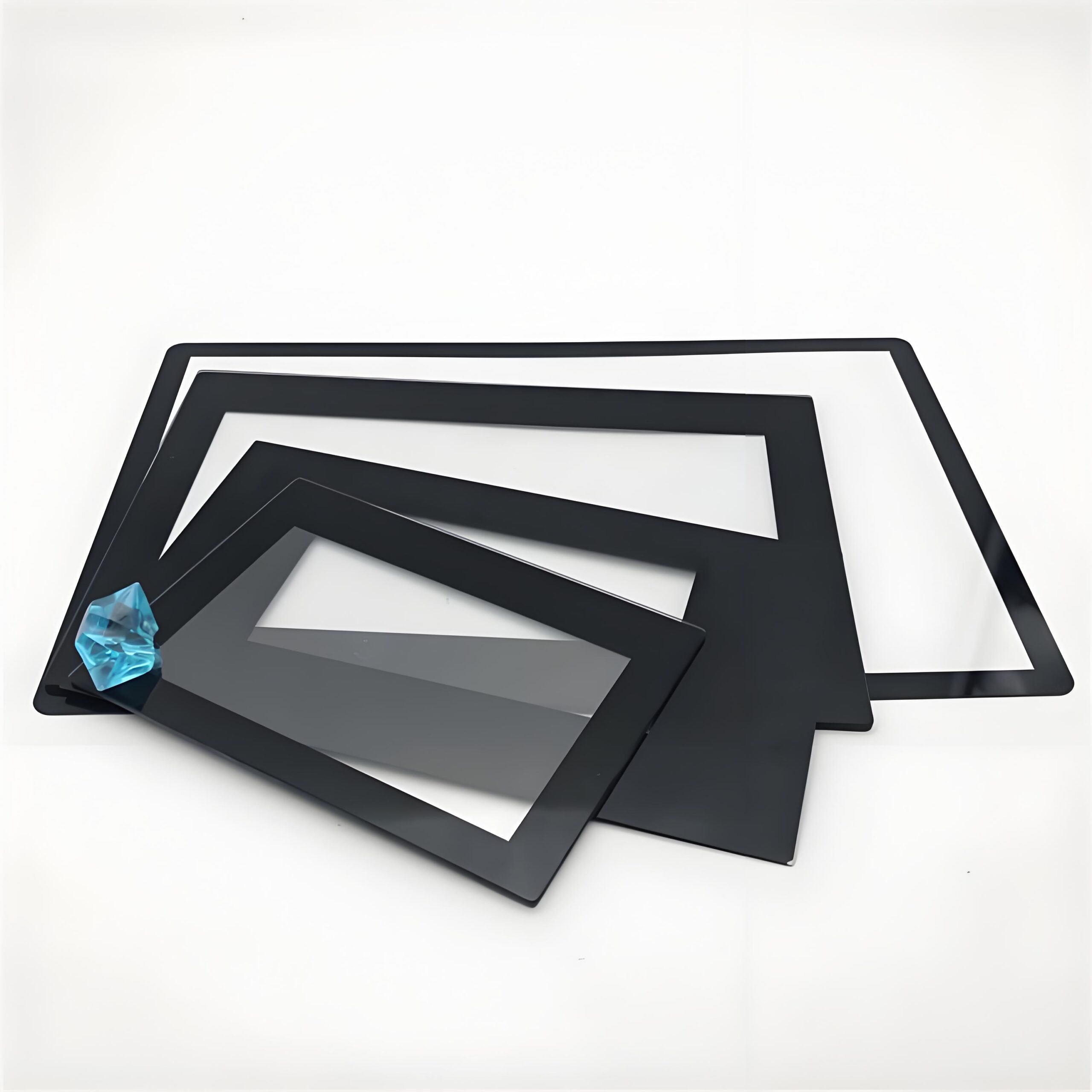
The industrial displays used in environments where a standard consumer touchscreen may not provide enough protection. Control panels, HMIs, factory equipment, medical systems, transportation displays, kiosks and outdoor terminals can be exposed to impact, scratches, dust, moisture, cleaning chemicals, temperature changes and frequent touch interaction.
For these applications, choosing the right industrial display cover glass requires more than selecting a thickness. The glass material, strengthening method, surface treatment, edge design, holes, printing and bonding method all need to match the actual operating environment.
This guide explains the key factors OEM engineers and purchasing teams should consider when selecting custom cover glass for industrial displays.
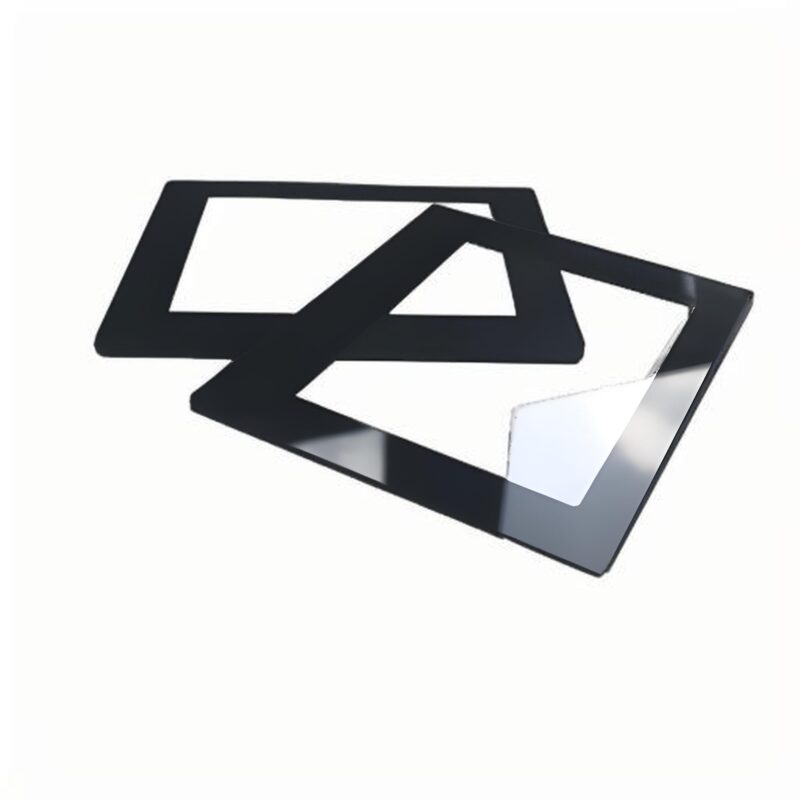
1. Start With the Industrial Display Cover Glass Operating Environment
The first step is to define where the display will be used.
An indoor industrial control panel may have very different requirements from an outdoor kiosk or an EV charging station.
Consider the following conditions:
- Indoor or outdoor installation
- Impact and drop risk
- Frequency of touch interaction
- Use of gloves
- Dust and moisture exposure
- Cleaning chemicals
- Oil, coolant or industrial fluids
- UV exposure
- Temperature changes
- Vibration
- Direct sunlight
- Viewing distance and viewing angle
For example, a factory HMI may need good scratch resistance, chemical resistance and easy cleaning, while an outdoor display may require additional attention to glare, reflection, temperature and weather exposure.
Defining the environment first helps prevent over-specifying or under-specifying the cover glass.
2. Choose the Right Industrial Display Cover Glass Material
Different applications can use different glass materials.
Common options for custom industrial display cover glass including:
Soda Lime Glass
Soda lime glass can be a cost-effective option for applications where the required strength and environmental conditions can be met.
It can be processed into custom shapes and combined with printing, coatings and other finishing processes depending on the project requirements.
Aluminosilicate Glass
Aluminosilicate glass is often considered when higher strength and thin-glass performance are required.
It is commonly used in demanding electronic display and touchscreen applications.
Chemically Strengthened Glass
Chemically strengthened glass can provide improved resistance to damage through an ion-exchange strengthening process.
Corning explains that ion exchange creates a compressive stress layer near the glass surface, helping the glass resist damage propagation.
For industrial displays, chemically strengthened glass can be considered when the design requires a relatively thin cover while maintaining improved mechanical performance.
3. Select the Appropriate Industrial Display Cover Glass Thickness
Thickness should be selected according to the display size, support structure, impact requirements, touch stack and installation method.
Common thickness options may include:
- 0.7 mm
- 1.0 mm
- 1.5 mm
- 2.0 mm
- 3.0 mm
- Custom thicknesses according to material availability and project requirements
A thicker glass is not automatically the best solution.
For example, a thin chemically strengthened cover glass may be suitable for one compact touchscreen, while a larger industrial display may require a different thickness and support structure.
When specifying thickness, consider:
- Display size
- Glass dimensions
- Supported or unsupported edges
- Cutouts and holes
- Mounting method
- Impact requirements
- Touch sensor structure
- Optical bonding
- Overall product weight
The final thickness should therefore be validated with the complete display assembly rather than selected independently.
4. Consider Chemical or Thermal Strengthening
Strengthening is an important consideration for industrial cover glass.
Chemical Strengthening
Chemical strengthening uses an ion-exchange process to create compressive stress near the glass surface.
It is particularly useful when a project requires relatively thin glass with enhanced resistance to scratches, impacts and crack propagation.
Thermal Tempering
Thermal tempering heats the glass and then rapidly cools it to create a different stress structure.
The appropriate strengthening method depends on the glass material, thickness, geometry and performance requirements.
For custom OEM projects, the strengthening process should be selected together with the glass material and final dimensions.
5. Choose the Right Surface Treatment: AG, AR or AF
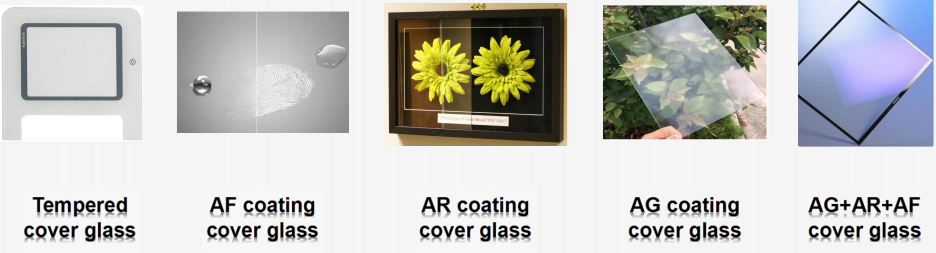
Surface treatment can significantly affect the viewing and cleaning experience of an industrial display.
AG — Anti-Glare
AG treatment reduces the visual impact of reflected light by diffusing reflections.
It can be useful for:
- Industrial HMIs
- Control panels
- Outdoor equipment
- Kiosks
- Transportation displays
However, AG should not be selected simply because “more matte is better.”
The haze, surface texture and viewing conditions should be evaluated with the actual display.
AR — Anti-Reflective
AR coating is designed to reduce surface reflection and improve optical performance.
It can be useful for displays exposed to strong ambient lighting or applications where image clarity and contrast are important.
AF — Anti-Fingerprint
AF coating helps reduce fingerprints and makes the surface easier to clean.
It can be particularly useful for frequently touched displays such as:
- Industrial HMIs
- Medical equipment
- Self-service terminals
- Transportation systems
- Control interfaces
In some applications, a combination such as AG + AF or AR + AF may be considered.
The correct combination should be validated on the actual display rather than selected only from a glass specification sheet.
6. Consider CNC Machining and Custom Cutouts
Industrial display cover glass rarely consists of a simple rectangle.
Depending on the equipment design, the glass may require:
- Mounting holes
- Camera openings
- Sensor windows
- Slots
- Rounded corners
- Custom edge profiles
- Recesses
- Beveled edges
- Precision dimensions
CNC machining can be used to process these custom geometries according to engineering drawings.
The position and size of holes and cutouts should be reviewed carefully because they can affect the mechanical reliability of the finished glass.
7. Don’t Ignore Edge Processing
The glass edge is another important part of an industrial display design.
Possible edge-processing options include:
- Seamed edges
- Ground edges
- Polished edges
- Beveled edges
- Custom edge profiles
The appropriate edge finish depends on the mounting structure, appearance requirements, handling requirements and application environment.
For OEM projects, edge requirements should be included in the drawing rather than left as an unspecified manufacturing detail.
8. Add Silk Screen Printing When Required
Industrial display cover glass may also require decorative or functional printing.
Common requirements include:
- Black borders
- Logos
- Icons
- Buttons
- Scale markings
- Functional indicators
- Decorative patterns
Silk screen printing can be integrated with custom cover glass manufacturing.
The OEM drawing should specify the printing area, color requirements, dimensions, alignment tolerance and cosmetic acceptance criteria.
9. Consider Optical Bonding
For demanding industrial displays, cover glass should not always be considered independently from the display stack.
The final assembly may include:
Cover Glass → OCA/Optical Adhesive → Touch Sensor → Display
Optical bonding can help reduce the air gap between layers and may improve readability and optical performance under certain conditions.
However, bonding compatibility, adhesive selection, thermal expansion and assembly tolerances should be evaluated together with the display manufacturer or assembly partner.
10. Match the Glass to the Application
Different industrial applications may require different combinations of material, thickness and surface treatment.
| Application | Key Considerations |
|---|---|
| Industrial HMI | Impact resistance, touch performance, AG/AF |
| Factory Control Panel | Chemical resistance, durability, easy cleaning |
| Medical Equipment | Cleanability, optical clarity, AF |
| Outdoor Kiosk | Glare, reflection, weather exposure, durability |
| EV Charging Display | Impact, outdoor visibility, bonding |
| Transportation Display | Vibration, durability, optical performance |
| Agricultural Equipment | Dust, moisture, impact and cleaning |
| Self-Service Terminal | Touch interaction, AF, scratch resistance |
There is no single cover glass specification that is ideal for every industrial display.
11. What Should You Include in an OEM Industrial Display Cover Glass RFQ?
When requesting a quotation, providing detailed technical information can make the quotation process faster and more accurate.
An OEM RFQ should ideally include:
- Glass material
- Glass thickness
- Finished dimensions
- Tolerance
- Corner radius
- Hole and cutout dimensions
- Edge processing
- Strengthening requirements
- Surface treatment
- Printing requirements
- Optical requirements
- Adhesive or bonding requirements
- Annual or monthly volume
- Prototype quantity
- Packaging requirements
- Engineering drawing
If you already have a drawing, sending the drawing together with the application information is usually the most efficient way to start the project.
12. Work With a Manufacturer That Can Handle the Complete Process
Industrial display cover glass often requires several manufacturing steps rather than simple glass cutting.
Depending on the project, the manufacturing process may include:
Glass Cutting → CNC Machining → Edge Processing → Strengthening → Silk Screen Printing → Cleaning → AR/AG/AF Treatment → Inspection → Packaging
Working with a supplier that can coordinate multiple processes can simplify project management and reduce communication between different vendors.
For custom industrial display projects, manufacturing capabilities should be evaluated together with quality control, dimensional inspection, optical inspection and production consistency.
Conclusion
Choosing the right cover glass for an industrial display requires a balance between mechanical protection, optical performance, touch functionality, environmental conditions and manufacturing requirements.
Instead of selecting glass based only on thickness or hardness, OEM engineers should evaluate the complete application:
Environment → Material → Thickness → Strengthening → Surface Treatment → Machining → Printing → Bonding → Inspection

For custom industrial display projects, industrial display cover glass provides custom glass processing including precision cutting, CNC machining, edge processing, chemical strengthening, silk screen printing and AR, AG and AF surface treatments.
If you have an industrial display drawing or industrial display cover glass specification, you can send the requirements for an OEM quotation.
Request a Custom Cover Glass Quote →