 +86-13925515590
 kleinma@aliyun.com

EV Charger Cover Glass: 7 Design Requirements for Outdoor Charging Displays

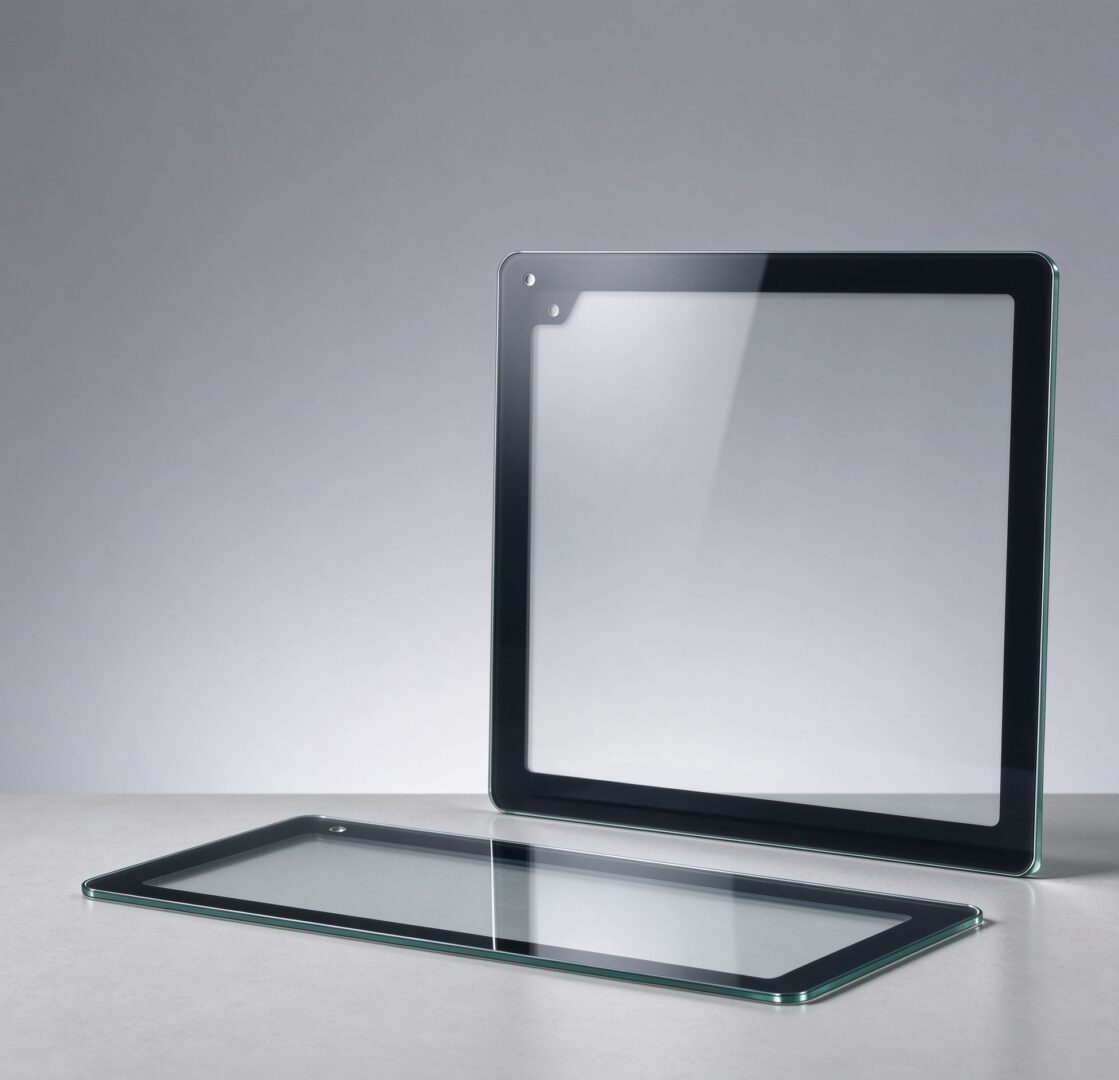
Electric vehicle charging stations are increasingly equipped with interactive displays for payment, charging status, user instructions and system monitoring. These interfaces need a protective glass surface that remains readable and fits the mechanical design of the charging equipment.
Selecting EV charger cover glass involves more than choosing a piece of strengthened glass. Outdoor charging equipment may be exposed to direct sunlight, temperature changes, rain, dust, frequent touching and accidental impact. The glass, surface treatment, printed areas and mounting structure must work together.
For EV charger manufacturers and OEM purchasing teams, the following seven considerations are worth confirming before ordering custom outdoor display glass.

1. Control Screen Reflections Under Outdoor Lighting
Screen readability is one of the first issues to evaluate when designing an outdoor charging station.
A display installed in a parking lot or roadside location may receive direct sunlight or reflected light from nearby vehicles and buildings. Even when the LCD or touchscreen itself has sufficient brightness, reflections from the front glass can make information difficult to read.
Two surface treatments are commonly considered:
- Anti-Glare (AG) Glass: Uses a diffusing surface to reduce distracting reflections. The surface texture and haze level should be selected according to the display and viewing requirements.
- Anti-Reflective (AR) Glass: Uses an optical coating to reduce surface reflection while maintaining high light transmission.
AG and AR do not produce the same optical effect. A high-haze AG surface may affect image sharpness, while an AR coating may be more appropriate when maintaining a clear, glossy appearance is important.
For a new EV charging display, evaluate the actual glass together with the display module under representative lighting conditions.
WM provides customized AR, AG and AF cover glass solutions for different electronic display requirements.
2. Select the Right Glass Material and Strengthening Process
The appropriate glass material depends on the required dimensions, thickness, mechanical performance and production process.
Common options include:
- Soda-Lime Glass: A practical option for projects balancing cost, availability and general display requirements.
- Aluminosilicate Glass: Worth evaluating when a thinner glass design or specific mechanical performance is required.
- Chemically Strengthened Glass: Uses ion exchange to create surface compression and improve resistance to mechanical damage.
- Thermally Tempered Glass: Can be considered for suitable thicker glass designs requiring thermal strengthening.
There is no single material that fits every EV charging station.
The final decision should consider the glass dimensions, edge geometry, installation structure and expected mechanical loading. For chemically strengthened glass, the required surface compression and depth of layer should be defined according to the selected substrate and project specification.
For additional material information, see Corning’s overview of Gorilla Glass.
3. Define Glass Thickness and Dimensional Tolerances
The glass thickness should be determined by the mechanical design rather than selected simply because a particular thickness is commonly available.
Before production, confirm:
- Overall length and width
- Glass thickness and thickness tolerance
- Corner radius
- Flatness requirements
- Mounting dimensions
- Distance between the glass and display module
- Required dimensional tolerances
A cover glass that fits the external dimensions but does not match the mounting structure can create assembly difficulties.
The tolerance requirements should distinguish between overall dimensions, hole positions, edge profiles and other critical features. If the glass is bonded to a display, flatness and bonding geometry should also be reviewed.
WM supports customized dimensions and machining according to customer drawings through its cover glass manufacturing capabilities.
4. Consider CNC Machining and Mounting Features
An EV charging station display may require more than a simple rectangular glass panel.
Depending on the product design, the glass may include:
- Mounting holes
- Sensor openings
- Camera windows
- Custom notches
- Rounded corners
- Irregular external profiles
- Special edge finishes
These features should be included in the original engineering drawing.
Hole position and edge condition are particularly important when the glass is fixed inside a metal or plastic housing. An opening that is incorrectly positioned can interfere with the mounting structure or internal components.
CNC machining, edge grinding and polishing should be reviewed together with the glass material and strengthening sequence.
For customized machining, see WM’s CNC machining and cover glass processing capabilities.
5. Specify Printed Borders, Logos and Functional Markings
Printed areas are often an important part of an EV charger interface.
A custom cover glass panel may include:
- Black decorative borders
- Brand logos
- Charging status symbols
- Payment interface markings
- Indicator windows
- Light-blocking printed areas
The printing artwork should be supplied in an approved vector or production-ready format whenever possible.
OEM buyers should confirm the printing side, viewing direction, color references, dimensions, opacity, registration tolerance and unprinted optical windows.
The position of the printed border also matters when the glass will be bonded to a display. The printed step and bonding area must be compatible with the selected adhesive structure.
A production sample should be reviewed before approving a large order, especially when the glass includes multiple colors or precise graphic alignment.
6. Review Sealing and Bonding as Part of the Complete Assembly
Outdoor charging equipment needs protection against environmental exposure, but the glass panel alone does not establish the protection rating of the finished device.
The mounting frame, gasket, adhesive, enclosure design and assembly process all contribute to the final result.
For example, the IEC 60529 IP Code classifies degrees of protection provided by electrical equipment enclosures. It should not be interpreted as a standalone waterproof rating for an individual glass sheet.
Before approving an outdoor display design, confirm:
- Gasket dimensions and compression
- Adhesive type and bonding area
- Glass-to-housing interface
- Expected temperature and humidity
- Water and dust protection requirements for the complete enclosure
- Compatibility between coatings, printing and bonding materials
For display assemblies requiring optical bonding, WM also provides OCA lamination and adhesive bonding.
7. Establish Inspection Requirements Before Mass Production
A custom EV charger cover glass project should have clear inspection requirements before the first production batch.
Depending on the design, inspection may include:
- Glass thickness and overall dimensions
- Hole and cutout positions
- Edge condition
- Surface scratches and chips
- Printing position and color appearance
- Coating appearance
- Optical appearance
- Cleanliness and packaging
The acceptance criteria should be agreed between the buyer and manufacturer. A general visual inspection standard may not be sufficient for a display with specific optical or printed requirements.
For further details, see WM’s Cover Glass Quality & Inspection process.
What Should You Include in an EV Charger Cover Glass RFQ?
When contacting a custom glass manufacturer, providing the following information helps reduce unnecessary clarification during quotation.
| Information | What to Provide |
|---|---|
| Application | EV charger touchscreen or display |
| Glass material | Soda-lime, aluminosilicate or specified material |
| Thickness | Required thickness and tolerance |
| Dimensions | Length, width, radius and drawing |
| Machining | Holes, notches, openings and edge finish |
| Surface treatment | AG, AR, AF or clear surface |
| Printing | Artwork, colors, borders and logos |
| Bonding | OCA, adhesive tape or other assembly method |
| Quantity | Prototype quantity and estimated production demand |
| Inspection | Appearance, dimensions and optical requirements |
A 2D drawing, CAD file or physical sample is especially useful when the glass includes complex mounting features.
Frequently Asked Questions
What glass is suitable for EV charger displays?
Soda-lime and aluminosilicate glass are possible options. The selection depends on the required thickness, dimensions, strengthening process, optical performance and mechanical design.
Is anti-glare glass necessary for outdoor EV chargers?
Not in every application. AG can help diffuse reflections, while AR can reduce surface reflection. The choice should be based on actual lighting conditions and display readability.
Can EV charger cover glass include printed logos and icons?
Yes. Custom silk-screen printing can be considered for logos, borders, symbols and other functional markings according to approved artwork and process requirements.
Can a manufacturer supply custom-shaped charging station glass?
Yes. Custom cutting, CNC machining, drilling, edge processing, strengthening, printing and coatings can be combined according to the approved drawing and manufacturing requirements.
Request Custom EV Charger Cover Glass
WM Cover Glass supports OEM projects requiring customized glass dimensions, materials, CNC machining, strengthening, printing, coatings and bonding.
If you are developing an EV charging station or outdoor touchscreen, send us your drawing, glass thickness, quantity and required surface treatment.