 +86-13925515590
 kleinma@aliyun.com

Beyond the Screen: How Automotive Display Glass 3MM Below Enhances Durability, Clarity, and Driver Safety

Global Trends Of Automotive Display Glass
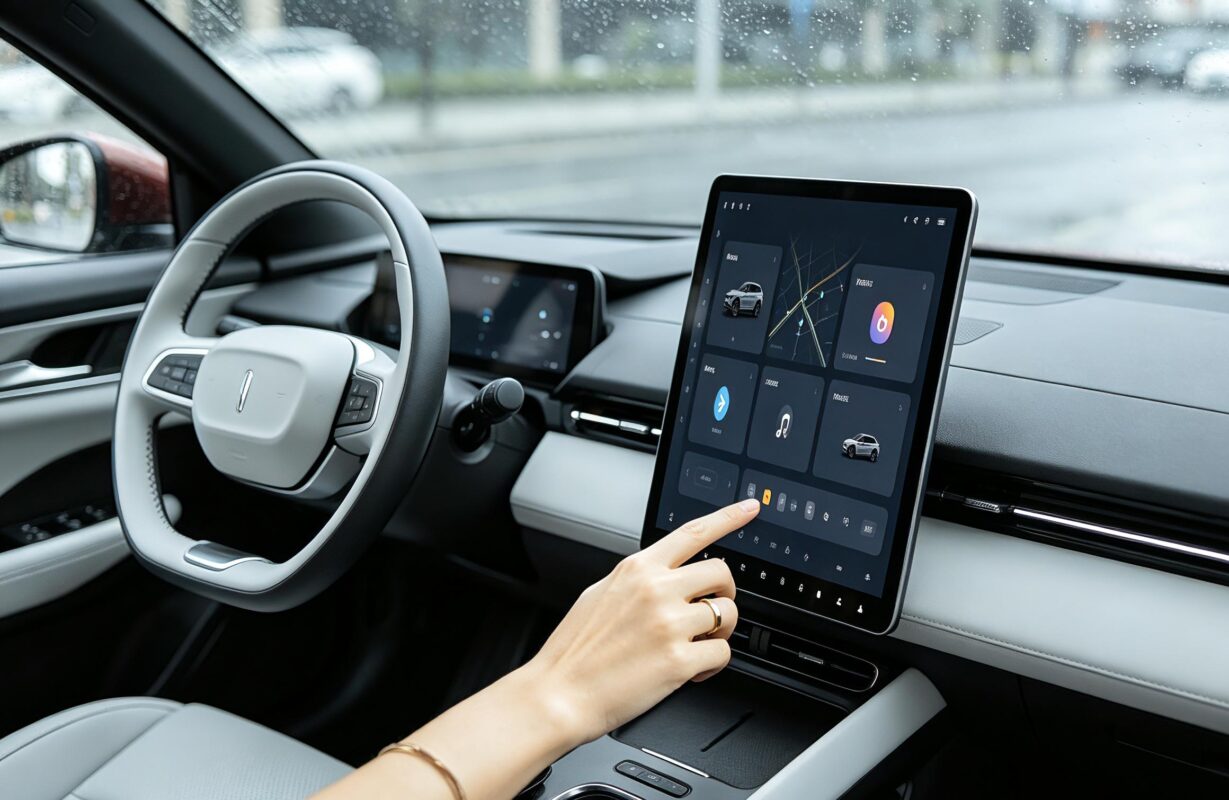
Nowaday, the full cabin screenization already widely applied in modern vehicles, covering instrument clusters, central control displays, passenger side screens, rear seat screens, HUD and invisible ceriling displays.
Many people mistakenly thought automotive display glass is merely thickened smartphone glass. Actually, automotive grade requirements far exceed those for consumer electronics glass.
Now, the changing surrounding auto industry like smart driving, electrification and connected vehicles are changing the definition of automotive displays. For years’ development, the display cover glass is trending towards to larger sizes, increasingly complex shapes and also functionalities.
For years of automotive displays development, various of features added to them over time, they’re becoming larger and more complicate in shapes. So safety design of automotive display cover glass is playing important role in it. This arcticle tells the trends and technologies for automove cover glass.
Till the year 2026, the global market for automotive cover glass is keeping increase and expects to reach USD3.385 billion by the year 2032 under the rise of electric vehicles and the demand for smarter cockpits.
Especially in Indian market, the cover glass for automotive is growing rapidly since the modernization from traditional button into display screen.
Basic Information About Automotive Display Glass
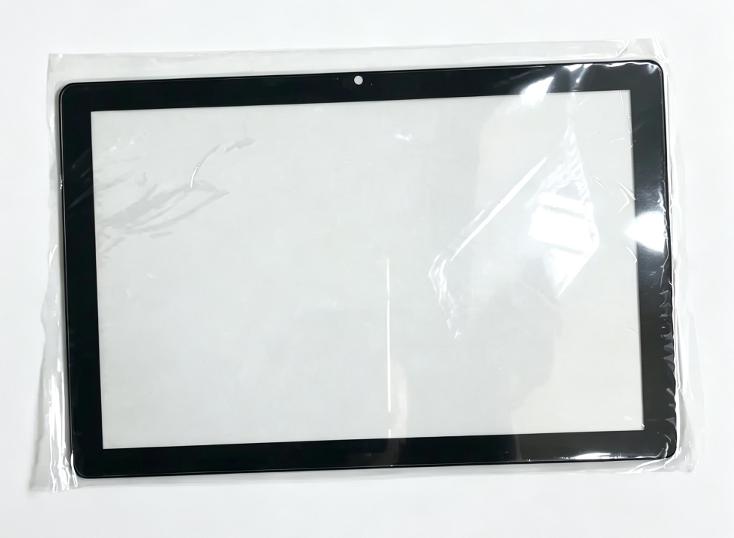
Application: Vehicle display screen cover lens(Not screen itself)
Core Purposes: protect screen, touch, optimize optical display and improve decorative textures.
Mainstream substrate classification:
Soda lime glass: Low cost, entry level models.
Aluminosilicate: Mainstream midde to high end models, high hardness, temperature durability and strength.
Why Automotive Display Glass Different From Regular Cover Glass?
Core difference: Car grade vs. Consumer electronics glass
1.Extreme temperature tolerance:
Automotive operating conditions involve cyclic temperature shifts from -40℃ to 85℃. The glass must resist thermal expansion and contraction without cracking or deforming.
2.Higher grade safety requirements
It needs to withstand vehicle vibration, jolts and hard object impacts and comply with automotive standards for impact resistance and fragment splatter prevention.
3.Custom tailored optical performance
Low reflection under strong sunlight, no whitening under solar exposure, low haze and high light transmittance are required.
4.Long term durability
Vehicles have an 8-15 years’ service life, far longer than the 2-3 years’ replacement cycle of smartphones.
Coatings
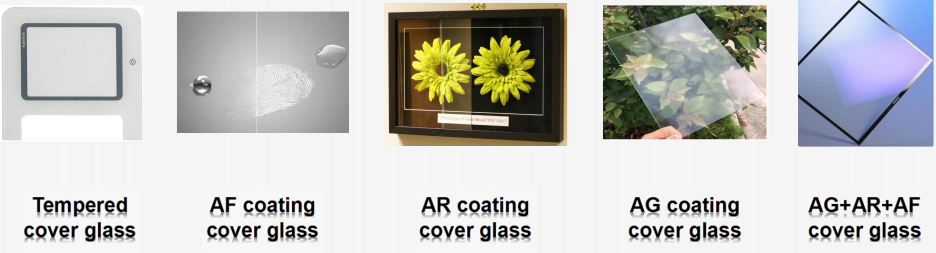
AR(Anti Reflection) Coating: Improves light transmittance for clearer display, prevents dim screen under sunlight.
AG(Anti Glare) Coating: Matte finish to eliminate reflections, avoiding glare and unreadable screen under direct sunlight.
AF(Anti Fingerprint) Coating: Hydrophobic & oleophobic, fingerprint resistant, withstands frequent wiping, ideal for heavy touch operations.
For high end vehicle models adopt composite coating combining AG, AR and AF functions.
Automotive Display Glass Main Form Factor Classification (Aligned with Current New Vehicle Trends)
2D Flat Glass: Traditional application for central control screens and instrument clusters.
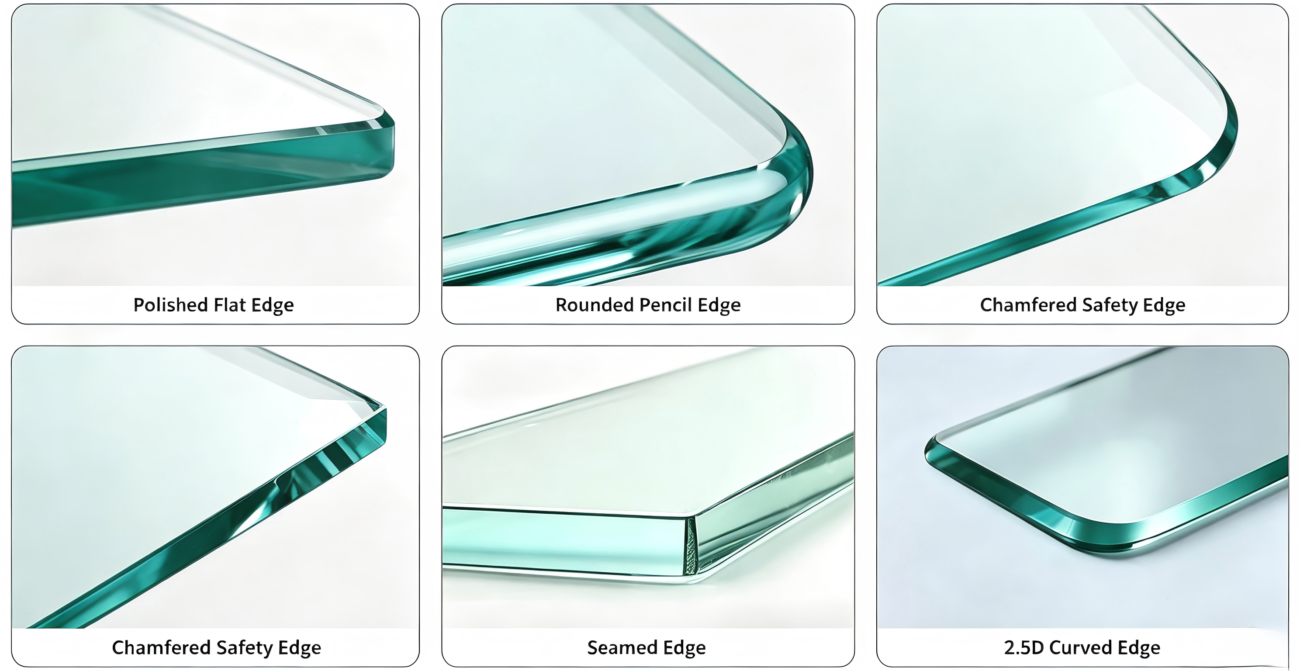
2.5D Curved Edge Glass: Widely adopted in mass production vehicles. Features rounded edges for improved tactile feel.
3D Curved Glass: Enables one piece floating screens and through type displays, serving as a key element to elevate interior premium perception.
Special shaped / Extra large Custom Glass: For triple screen setups and integrated cockpit displays.
Automotive Display Glass Production Processes

Cutting:The display cover glass substrate cut from big sheet into specific sizes / shapes.
CNC processing: Edging, slot and hole drilling processes, together edge polish will be done.
Chemical strengthening: Through ion exchange, the glass strengthened(soda lime glass 6H, aluminosilicate 8H).
Coatings: AF(Spray / electroplating(regular)), AG(acid etching(regular), lamination or print), AR(single side or double sides depends on light transmittance requirements).
Silk screen print(Black border).
Bonding.
Vehicle grade reliable test.
FAQ
Q1:Is the automotive display glass lens thicker the better?
A1:No, automotive grade glass relies on tempering stress performance and optical quality. Ultra-thin yet high-strength glass is the current industry trend.
Q2:Vehicle glass and phone glass are interchangeable?
A2:No, they differ completely in temperature resistance range, safety standards and long term vehicle grade durability requirements.
Q3:The foggier the AG anti-glare effect in automotive display glass the better?
A3:No, excessive AG matte treatment causes blurry visuals and reduced display resolution, sacrificing viewing clarity.