 +86-13925515590
 kleinma@aliyun.com


How to Select the Right Haze Level for Anti-Glare Glass

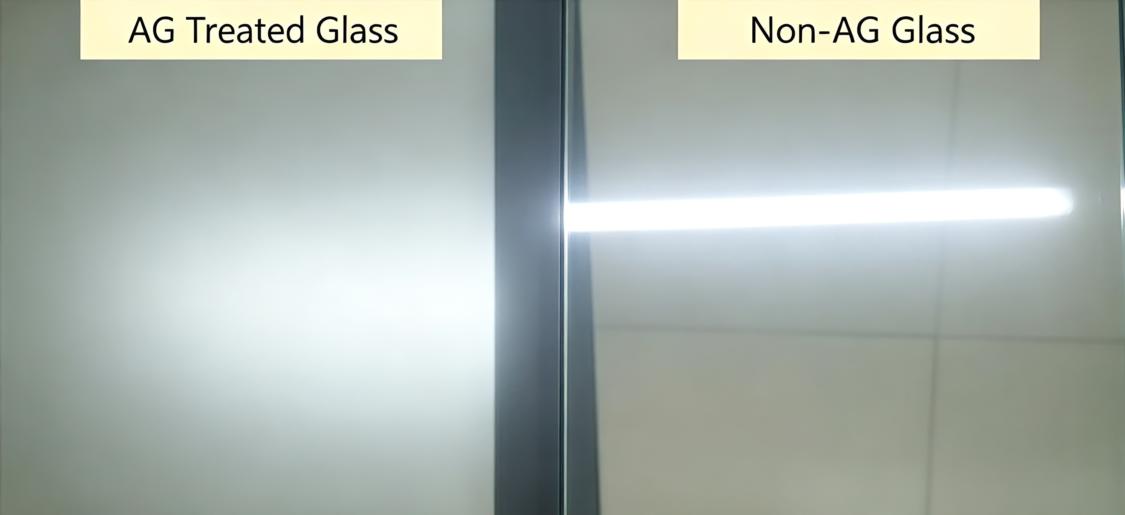
How to Choose Anti-Glare Glass Haze: 5 Key Specifications
An LCD display can have sufficient brightness and resolution yet remain difficult to read under overhead lighting, near windows, or in outdoor environments. In many cases, the problem is not the display module itself but the way ambient light interacts with the front cover glass.
Anti-glare LCD cover glass is designed to diffuse reflected light, making mirror-like reflections less distracting to the user. It is widely considered for industrial monitors, HMI panels, self-service terminals, commercial displays, and other electronic equipment used under changing lighting conditions.
However, specifying anti-glare glass involves more than requesting a matte surface. Haze, gloss, light transmission, image clarity, and touch performance must work together. A surface that reduces visible reflections effectively may also soften small text or introduce unwanted sparkle if its optical characteristics are poorly matched to the display.
For OEM engineers and purchasing teams, the following five specifications provide a practical starting point.
Haze and luminous transmittance are important optical parameters when evaluating light-scattering materials. ASTM D1003 describes a standard method for measuring these properties in transparent plastics; for cover glass projects, the applicable glass test method and agreed inspection criteria should be confirmed with the supplier. See the ASTM D1003 standard for background on haze and luminous transmittance measurement.
1. Haze: How Much Light Diffusion Does the Display Need?
Haze describes the proportion of transmitted light that is scattered away from the direct transmission path under a defined measurement method. For anti-glare glass, it is one of the parameters used to characterize the degree of light diffusion.
A higher haze value generally indicates stronger light scattering. This can help make reflected images less distinct, but it may also affect the apparent sharpness of the display behind the glass.
For example, an industrial controller displaying large status indicators and simple operating instructions may tolerate a different optical balance from a diagnostic instrument showing fine lines, small characters, or detailed measurements.
Before specifying haze, consider:
- Display content: Small text, fine graphics, and detailed readings usually require careful control of scattering.
- Viewing distance: A panel viewed from several meters away may have different clarity requirements from a close-range touchscreen.
- Lighting conditions: Indoor equipment under ceiling lights has different needs from a display exposed to direct sunlight.
- Display technology: LCD pixel structure, polarizers, and the distance between the glass and display can affect the perceived result.
Do not assume that higher haze always means better anti-glare performance. Compare samples using the actual display module whenever possible.
2. Gloss: Choosing the Right Matte Appearance
Gloss measures the amount of light reflected in a defined geometry and is commonly expressed in gloss units (GU). For anti-glare glass, gloss provides a useful indication of surface appearance and how strongly the surface produces concentrated reflections.
A lower gloss value generally corresponds to a more matte appearance. Nevertheless, two glass samples with similar gloss readings may look different because their surface textures and scattering characteristics are not identical.
When selecting a gloss level, evaluate the glass under the lighting conditions in which the finished equipment will operate.
For industrial HMI cover glass, for example, operators may need to read the same screen throughout a work shift. Excessive mirror-like reflection can be distracting, but an overly diffuse surface can reduce the crisp appearance of fine interface elements.
Ask the supplier to identify the proposed gloss specification, measurement method, and acceptable tolerance. If the project has an approved reference sample, use it as part of the acceptance criteria.
3. Light Transmission and Display Clarity
Light transmission is another important consideration when developing anti-glare LCD cover glass.
The display image passes through the cover glass before reaching the user’s eyes. The optical properties of the finished glass, its surface treatment, and the complete display stack all contribute to the final viewing experience.
A useful evaluation should include more than a single transmission figure. Depending on the application, the engineering team may also need to examine haze, color appearance, sparkle, contrast, and text readability.
This matters particularly for:
- Industrial displays showing detailed operating data
- Medical and laboratory equipment with small on-screen characters
- POS terminals and self-service kiosks
- Instrument displays used under strong ambient lighting
- Outdoor electronic equipment exposed to changing light conditions
If the equipment must remain readable in bright environments, anti-glare treatment is only one part of the solution. Display brightness, cover-glass reflection, the optical bonding structure, and the viewing angle may also influence performance.
For more information about available surface-treatment options, see our AR, AG & AF coatings for custom cover glass.
4. Surface Treatment: Anti-Glare Is Not the Same as Anti-Reflective
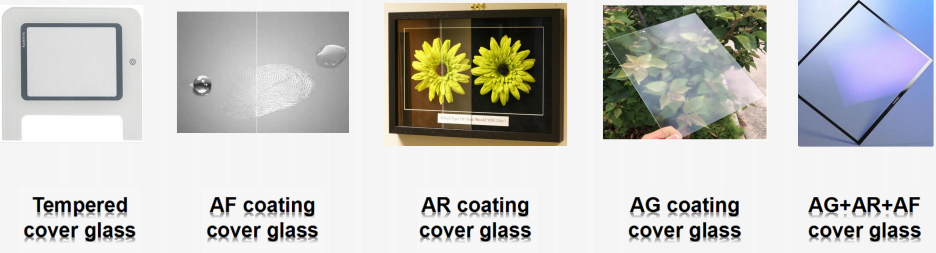
Anti-glare (AG) and anti-reflective (AR) treatments address different optical problems.
AG treatment diffuses reflected light so that reflected objects and light sources become less distinct. It is commonly produced by controlled surface texturing, including chemical etching.
AR treatment is designed to reduce the amount of light reflected from a surface through an optical coating or other suitable optical design.
The distinction is important when selecting cover glass for a particular display.
An AG surface may be suitable when reflections from overhead lighting or surrounding objects are distracting. AR treatment may be worth evaluating when reducing surface reflection is a priority. Depending on the application, a combined approach may also be considered.
Anti-fingerprint (AF) treatment addresses another issue: fingerprints, oil residue, and smudges left during regular handling. AG does not automatically provide the same oil-repellent properties as AF.
The correct specification depends on the environment, cleaning routine, touch frequency, optical requirements, and expected service life. Avoid treating AG, AR, and AF as interchangeable terms on a purchase order.
For a broader explanation of the differences, consult our guide to AR, AG, and AF surface treatments.
5. Touch Compatibility and Finished-Part Requirements
An anti-glare glass sample may look acceptable on a workbench but behave differently when assembled into a touchscreen product. For this reason, optical evaluation should be combined with mechanical and functional verification.
For projected capacitive touchscreens, the finished stack-up and touch-controller configuration should be checked to confirm reliable operation. The surface treatment, glass thickness, bonding materials, and display construction should be considered together.
Before production, define the following requirements:
- Glass dimensions and thickness: Provide the finished outline and nominal thickness.
- Edge processing: Specify polished edges, chamfers, radii, or other drawing requirements.
- Cutouts and mounting features: Identify holes, notches, and dimensional tolerances.
- Silk-screen printing: Mark black borders, logos, icons, and transparent viewing areas on the drawing.
- Strengthening: Confirm whether chemical strengthening or another strengthening process is required.
- Optical acceptance: Identify the haze, gloss, transmission, and visual appearance criteria relevant to the application.
- Assembly and touch testing: Verify the finished component with the intended display and touch system.
These details help reduce the risk of approving an optical sample that cannot meet the mechanical or functional requirements of the final product.
Where possible, evaluate a production-representative sample rather than relying on a small, untreated glass coupon.
Which Applications Can Benefit from Anti-Glare LCD Cover Glass?

The suitability of AG glass depends on the operating environment and display content rather than the product category alone.
Industrial HMI panels: Equipment operators may work beneath overhead lights or near reflective metal surfaces. Controlled glare diffusion can make interfaces more comfortable to view.
Commercial monitors and POS terminals: Retail lighting and nearby windows can produce distracting reflections on glossy cover glass.
Self-service kiosks: Users approach the display from different angles, so both reflection control and readable interface text matter.
Outdoor electronic displays: Strong ambient light can affect screen visibility. AG may help diffuse reflected images, although outdoor readability also depends on display brightness, weather protection, and the complete optical design.
Test and measurement equipment: Fine text, graphs, and numerical readings make the balance between glare control and image clarity especially important.
Not every display requires an anti-glare surface. In some applications, a clear polished surface or a different optical treatment may better suit the image-quality requirements.
What Information Should You Send for an Anti-Glare Glass RFQ?
A useful quotation request should give the supplier enough information to evaluate both the glass processing and the optical requirements.
Include the following wherever available:
- Application and operating environment
- Display type, screen size, and intended viewing distance
- Glass drawing, overall dimensions, and thickness
- Required AG treatment and target haze or gloss, if already defined
- Light transmission and visual clarity requirements
- Chemical strengthening, edge processing, holes, and cutouts
- Silk-screen printing artwork and viewing-area dimensions
- Touchscreen and bonding requirements
- Prototype quantity and estimated production volume
- Required inspection criteria and any approved reference sample
If the optical parameters have not yet been finalized, explain the application and provide a display sample or reference specification. The supplier can then discuss feasible options for sample evaluation rather than choosing a haze or gloss value without enough context.
Develop Custom Anti-Glare LCD Cover Glass for Your Display
Choosing anti-glare glass is a balancing exercise: reflections must be controlled without compromising the clarity, touch response, or appearance required by the finished product.
Weiman supports custom cover glass projects with processing options that can be evaluated according to the product drawing, glass substrate, surface treatment, printing layout, and application requirements.
Explore our anti-glare LCD cover glass product to review the product direction.
For a project quotation, send your drawing, glass dimensions, thickness, application details, optical targets, and estimated order quantity through our contact page. If the required AG parameters are still under development, include the display model and lighting conditions so that the initial discussion can focus on the actual application.
Frequently Asked Questions
Does higher haze always provide better anti-glare performance?
No. Higher haze generally means greater light scattering, but excessive scattering can reduce perceived image sharpness. The suitable value depends on display content, viewing distance, ambient lighting, and the complete display structure.
What is the difference between AG glass and AR glass?
AG treatment diffuses reflected light, making mirror-like reflections less distinct. AR treatment aims to reduce surface reflection. The two approaches work differently and should be selected according to the optical requirements.
Can anti-glare glass be used with a touchscreen?
Yes, it can be used in touchscreen designs. However, the finished glass, bonding structure, touch technology, and controller should be evaluated together to confirm acceptable touch performance and image quality.
Can anti-glare cover glass also have a black border?
A black silk-screen border may be incorporated when the glass design and manufacturing process permit it. The drawing should identify the printed areas, viewing window, logo positions, and dimensional tolerances.
What should be specified when ordering custom AG cover glass?
At minimum, provide the drawing, dimensions, thickness, application, surface-treatment requirements, and order quantity. Where available, also specify haze, gloss, transmission, strengthening, edge finish, printing, and inspection criteria.