 +86-13925515590
 kleinma@aliyun.com


Glass Packaging for International Shipping

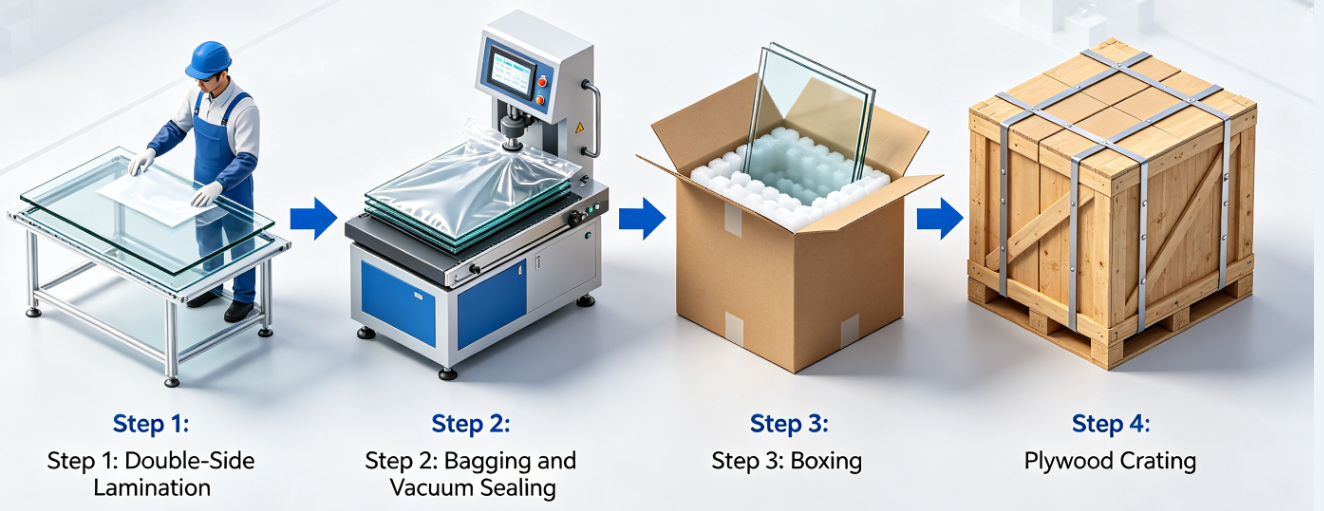
Glass Packaging for Shipping: How to Protect Custom Cover Glass During Export
Packaging is an important part of custom cover glass manufacturing, especially for products shipped internationally.
Even when glass panels meet their dimensional and appearance requirements before shipment, unsuitable packaging can lead to scratches, edge damage, breakage or contamination during transportation.
For OEM buyers, packaging requirements should be discussed before mass production rather than left until the final shipping stage.
This guide explains the main packaging considerations for custom cover glass exported to overseas customers.
1. Why Glass Packaging Matters
Cover glass is a precision component with visible surfaces and processed edges.
During storage and transportation, products may experience:
- Vibration
- Impact
- Stacking pressure
- Movement inside cartons
- Humidity changes
- Dust and contamination
- Handling damage
These risks can affect both the appearance and usability of the finished glass.
Packaging should therefore protect the glass surfaces, edges and overall product geometry throughout the transportation process.
2. Protect the Glass Surface
The visible surface of cover glass needs protection against direct contact with other glass panels and packaging materials.
Depending on the product and surface treatment, protection options may include:
Protective Film
A suitable protective film can help reduce surface scratches and contamination during handling.
The film should be compatible with the glass surface and any coating or printing requirements.
Adhesive residue and removal behavior should be considered before selecting a film.
Interleaving Materials
Soft interleaving materials can help prevent direct contact between individual glass pieces.
The material should be clean, compatible with the glass surface and suitable for the expected storage period.
Individual Separation
For products with strict cosmetic requirements, individual separation can reduce friction and contact between panels.
The packaging design should prevent movement during transportation.
3. Pay Attention to Edge Protection
Glass edges and corners can be vulnerable to impact.
CNC-machined openings, polished edges and irregular shapes may require additional protection.
Possible protective measures include:
- Edge protectors
- Corner protection
- Foam separators
- Custom-cut cushioning
- Individual compartments
For glass panels with holes, notches or complex shapes, packaging should provide support without creating concentrated pressure around fragile areas.
Learn more about our glass edge processing capabilities.
4. Choose Suitable Inner Packaging
Inner packaging should hold the glass securely and reduce movement inside the outer carton.
Possible materials include:
EPE foam: Can be cut into customized shapes to separate and support glass components.
Foam sheets: Can provide cushioning between layers or around the perimeter.
Paper-based separators: Can be used where their surface properties and cleanliness are suitable for the glass.
Custom trays: Can organize individual components and reduce direct contact.
The best solution depends on the glass dimensions, weight, quantity and transportation conditions.
5. Select the Appropriate Outer Packaging
Outer packaging should protect the inner package from external handling and stacking conditions.
Common options include:
Corrugated Cartons
Suitable for some smaller and lighter glass components when combined with appropriate inner protection.
Reinforced Cartons
Can provide additional structural support for heavier or more demanding shipments.
Wooden Crates
May be considered for larger, heavier or more fragile shipments requiring additional external protection.
The choice should be based on the package dimensions, gross weight, shipment method and expected handling conditions.
6. Prevent Movement During Transportation
A package should be designed so that the glass cannot move excessively inside the container.
Important considerations include:
- Proper internal spacing
- Secure cushioning
- Suitable stacking strength
- Protection around corners
- Load distribution
- Clear handling instructions
Excessive pressure should not be applied directly to the glass surface.
For shipments containing multiple sizes or shapes, separate compartments may be preferable to placing all products together.
7. Packaging for Different Surface Treatments
Different cover glass finishes may require different packaging considerations.
AR-coated glass: Protect the coated surface from contact, contamination and unsuitable cleaning materials.
AG glass: Avoid packaging materials that may leave marks or residues on the textured surface.
AF-coated glass: Use compatible protective materials and avoid unapproved adhesive contact with the functional surface.
Printed cover glass: Protect the printed areas against abrasion and unwanted contact.
The packaging method should be evaluated together with the glass processing and cleaning requirements.
8. What OEM Buyers Should Specify
When placing an order for custom cover glass, buyers should clarify:
- Product dimensions and thickness
- Quantity per package
- Individual or bulk packaging preference
- Protective film requirements
- Surface and edge protection
- Inner packaging material
- Outer carton or crate requirements
- Shipping method
- Destination and handling conditions
- Labeling and identification requirements
For high-value or fragile shipments, buyers may also request packaging evaluation or transportation testing appropriate to the shipping route.
ISTA provides information about transport packaging performance testing and test procedures:
https://ista.org/test_procedures.php
The applicable test should be selected according to the product, package and distribution environment rather than assuming one test is suitable for every shipment.
9. Packaging Inspection Before Shipment
Packaging should be checked before the finished goods leave the manufacturing facility.
A packaging inspection may include:
- Product quantity
- Protective film condition
- Separation between glass panels
- Edge and corner protection
- Internal cushioning
- Carton condition
- Package labeling
- Shipping marks
- Gross weight and package dimensions
Photographs of the finished package can also help document the shipment condition before dispatch.
Frequently Asked Questions
Should cover glass be individually packaged?
It depends on the product size, surface finish, cosmetic requirements and transportation conditions. Individual separation can reduce direct contact and handling damage.
Can protective film be applied to AR or AF glass?
It may be possible, but film and adhesive compatibility should be evaluated for the specific coating and storage conditions.
Are wooden crates necessary for all glass shipments?
No. The packaging method should be selected according to product dimensions, weight, quantity and transportation risk.
Can packaging requirements be customized?
Yes. OEM buyers can specify individual packaging, protective materials, carton requirements and shipping labels according to their project.
Discuss Packaging Requirements for Your Custom Cover Glass
Looking for a custom cover glass supplier that can review both manufacturing and export packaging requirements?
Send us your product dimensions, quantity, surface treatment requirements and preferred shipping method.
WM Cover Glass can discuss suitable product protection and packaging arrangements for customized glass orders.