 +86-13925515590
 kleinma@aliyun.com


How to Specify Optical Requirements for Custom Cover Glass

Custom Cover Glass Optical Specifications
When sourcing custom cover glass for an electronic product, specifying the glass thickness and dimensions is only part of the engineering process. Optical requirements are equally important, particularly for products that rely on display visibility, image sensing, touch interaction or controlled light transmission.
Terms such as light transmittance, haze, reflectance and optical clarity are often used in glass specifications. However, these values do not describe the same property. A cover glass can have high visible light transmittance but still produce unwanted reflections, color shifts or visual distortion.
For OEM buyers and product engineers, the key is to define measurable optical requirements before requesting samples or production quotations.
This guide explains the optical parameters worth specifying, how to define their test conditions and what information a glass manufacturer needs to evaluate a custom project.
1. Total Light Transmittance vs. Spectral Transmittance
Light transmittance describes the proportion of incident light that passes through a glass sample. It is one of the first parameters buyers consider when selecting cover glass for displays and optical devices.
However, a single transmittance percentage does not always provide enough information.
Total visible light transmittance
This value describes the amount of visible light transmitted through the sample, usually expressed as a percentage. It is useful for comparing glass materials and checking general optical performance.
Spectral transmittance
Spectral transmittance shows how much light passes through the glass at different wavelengths. Instead of providing one percentage, it produces a wavelength-dependent curve.
This distinction matters when the glass is used with optical sensors, cameras, infrared components or displays with specific color requirements.
For example, a cover glass intended for a standard touchscreen may primarily require visible-range transmittance data. A camera window or sensor cover may need additional wavelength-specific information.
When preparing a specification, identify:
- Required wavelength range, such as 400–700 nm for a defined visible-light evaluation
- Minimum or target transmittance
- Whether the value is an average, weighted value or wavelength-specific result
- Whether the measurement applies to bare glass or the finished coated and printed component
Do not use a visible-light average as a substitute for spectral performance when the application depends on a specific wavelength.
2. Haze: Understanding Light Scattering
Haze describes the portion of transmitted light that is scattered away from the direct viewing direction under a defined measurement method.
It is an important parameter for transparent cover glass used in LCD displays, touchscreens and optical windows.
A high-haze surface can make displayed content appear less sharp, particularly when fine text, small icons or detailed images are viewed through the glass.
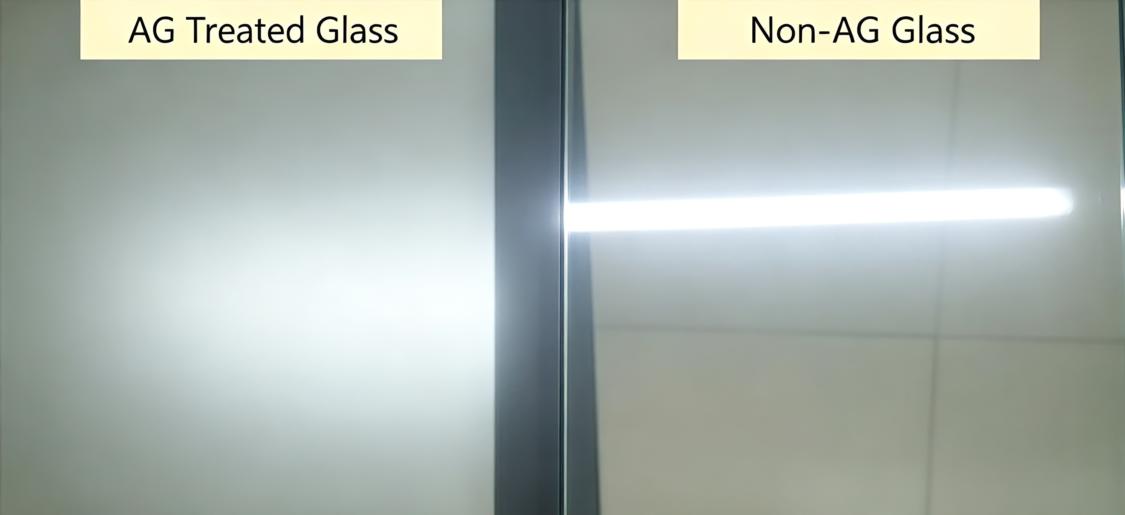
However, low haze is not automatically the right target for every application. Anti-glare glass intentionally uses surface texture to diffuse reflected light, which changes the optical appearance.
For clear cover glass, buyers may specify a maximum haze value. For anti-glare glass, the target should be determined together with surface texture, gloss and display readability.
When defining a haze requirement, specify:
- Maximum or target haze percentage
- Test method and instrument
- Measurement location
- Whether the glass has an AG treatment
- Whether testing applies before or after strengthening and coating
For reference, ASTM D1003 covers haze and luminous transmittance measurement for transparent plastics. It should not automatically be treated as a complete glass test specification. Confirm a suitable measurement method for the actual glass substrate and agreed test setup.
This distinction helps avoid disagreements when different laboratories use different measurement geometries.
3. Surface Reflectance and Optical Coating Requirements
Even when glass has good light transmission, reflections from its front and rear surfaces can affect display readability.
Reflectance becomes particularly important for devices used under strong indoor lighting, near windows or outdoors.
For an OEM cover glass project, it is useful to distinguish between:
Uncoated glass reflectance
The natural reflection associated with the glass surfaces and refractive index.
AR-coated glass reflectance
Anti-reflective coatings are designed to reduce surface reflection over a specified wavelength range and incidence angle.
AG surface reflection and scattering
Anti-glare treatment changes the way incident light is reflected and scattered. Its performance should be considered together with haze and surface appearance.
When requesting AR-coated cover glass, do not simply write “low reflection.” Specify:
- Maximum reflectance or target reflectance
- Wavelength range
- Single-sided or double-sided coating
- Angle of incidence
- Whether reflectance is measured on one surface or the complete glass component
- Whether the requirement applies to the coated finished part
For example, a requirement of “reflectance below 1%” is incomplete unless the wavelength range, measurement geometry and calculation basis are defined.
Learn more about our AR, AG and AF coating solutions.
4. Color Consistency and Neutral Appearance
A glass sample may appear transparent when viewed individually but show a noticeable color difference when installed in a finished electronic product.
This can happen because of the glass substrate, thickness, coating design, printing ink or the combination of these factors.
Color consistency is especially relevant when cover glass is used across multiple production batches or installed beside other display components.
For projects with strict appearance requirements, consider specifying:
- Color coordinates or an agreed color measurement method
- Measurement illuminant and observer conditions
- Measurement geometry
- Reference sample or approved color standard
- Acceptable variation between production batches
- Whether the measurement is taken through bare glass or the finished component
If the product includes a black silk-screen border, the transparent viewing area and printed area should be evaluated separately.
A visual master sample can also help establish an acceptable appearance, but it should not replace measurable requirements where color consistency is critical.
5. Optical Distortion, Flatness and Surface Quality
Optical quality is not determined by transmittance alone.
A glass component can transmit sufficient light while still producing image distortion because of uneven thickness, surface irregularities, poor flatness or unsuitable mounting conditions.
This is important for camera windows, optical sensors and displays that require consistent image appearance.
Consider the following requirements:
Flatness: Defines how much the glass surface may deviate from the specified reference plane.
Thickness variation: Controls differences in glass thickness across the component.
Wedge or parallelism: Relevant when the two glass surfaces must maintain a controlled angular relationship.
Surface defects: Scratches, pits, bubbles, inclusions and coating defects may affect appearance or optical performance.
Image distortion: For camera and optical applications, assess whether the finished glass introduces unacceptable image displacement, double images or other visual artifacts.
These parameters should be selected according to the optical system. A protective display cover and a precision camera window do not necessarily require the same inspection criteria.
For applications involving imaging equipment, see our Camera Glass solutions.
6. Specify Optical Requirements After Coating and Printing
One common specification problem occurs when optical requirements are defined for bare glass but production acceptance is performed on a finished component.
Additional processes can change the final optical result.
For example:
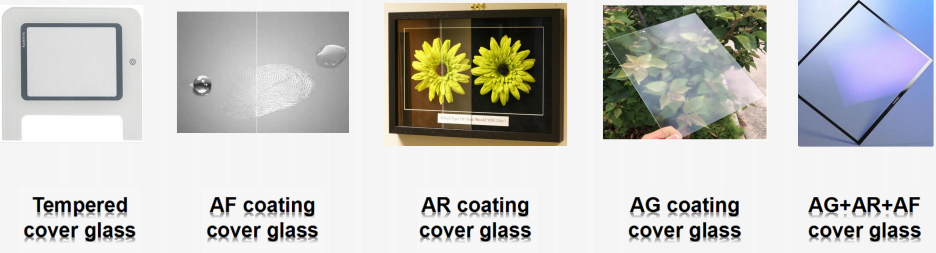
- AR coating can change surface reflectance and spectral transmission.
- AG treatment can increase haze and alter image appearance.
- AF coating can change surface characteristics and contact behavior.
- Silk-screen printing can reduce light transmission in printed regions.
- Chemical strengthening and thermal processing may affect the final appearance depending on the material and process.
For this reason, define whether each optical requirement applies to:
- The original glass substrate
- The processed but uncoated glass
- The coated glass
- The complete printed and coated cover lens
For most OEM acceptance specifications, the finished component should be the primary reference whenever the optical performance of the assembled part is what matters.
You can also review our Glass Materials page to compare material options and their suitability for different cover glass applications.
7. Define the Optical Test Conditions Before Sampling
Two suppliers can report different optical results even when they use similar glass materials. The reason may be differences in test equipment, sample preparation, measurement geometry or calculation methods.
A useful optical specification should therefore define more than the target number.
| Test item | Information to specify |
|---|---|
| Light transmittance | Percentage, wavelength range and calculation basis |
| Spectral transmittance | Wavelength range and measurement interval |
| Haze | Target value, method and measurement location |
| Reflectance | Wavelength range, angle and coated surfaces |
| Color | Color coordinates, illuminant and observer |
| Flatness | Tolerance and measurement reference |
| Surface quality | Defect type, inspection area and acceptance criteria |
| Sample condition | Bare, strengthened, coated or printed glass |
Relevant technical references include ASTM D1003, which addresses haze and luminous transmittance of transparent plastics, and SCHOTT’s technical information on optical glass transmittance, which discusses wavelength-dependent transmission and measurement.
The selected method must be appropriate for the actual glass material and product construction. A test method for plastics should not be assumed to apply directly to glass without checking its scope.
8. What Should OEM Buyers Include in a Cover Glass RFQ?
A clear RFQ helps manufacturers evaluate the project more accurately and reduces unnecessary sample revisions.
Before requesting a quotation, prepare the following information:
| Specification | Information required |
|---|---|
| Application | LCD display, touchscreen, camera window or optical device |
| Glass material | Aluminosilicate, soda-lime or other specified material |
| Dimensions | Length, width, diameter and cutout details |
| Thickness | Nominal thickness and tolerance |
| Transmittance | Target value and wavelength range |
| Haze | Maximum or target percentage |
| Reflectance | Target value and coating requirements |
| Color | Reference sample or color coordinates |
| Surface treatment | AR, AG, AF or untreated |
| Printing | Black border, logo or other printed areas |
| Quantity | Prototype, pilot batch and estimated production volume |
| Inspection | Test method and acceptance criteria |
If your project requires additional mechanical performance, include chemical strengthening requirements such as surface compressive stress (CS) and depth of layer (DOL).
For manufacturing details, visit our custom cover glass manufacturing capabilities.
Conclusion: Specify the Finished Glass, Not Just One Optical Number
A successful custom cover glass specification should describe how the finished component is expected to perform, rather than relying on a single transmittance or haze value.
For standard electronic displays, visible transmittance, haze and surface reflectance may be the main optical considerations. For camera windows and optical sensors, spectral transmission, color, flatness and image distortion may require closer attention.
The most effective approach is to define the application, select the relevant optical parameters, agree on test conditions and confirm acceptance criteria before sample production.
Need custom cover glass for your next OEM project?
Send us your technical drawing, glass dimensions, material requirements, optical specifications and estimated quantity. We can review the manufacturing requirements and evaluate a suitable cover glass solution for your application.
Contact our team for a custom cover glass quotation.
Frequently Asked Questions
What optical properties should be specified for custom cover glass?
The most common requirements include visible light transmittance, spectral transmittance, haze, surface reflectance, color consistency and surface quality. Camera and sensor applications may also require flatness, wedge and image distortion limits.
Is higher light transmittance always better?
Not necessarily. The correct target depends on the display or optical system. Reflection, haze, color shift and spectral response can also affect final performance.
What is the difference between haze and reflectance?
Haze describes the scattering of transmitted light, while reflectance describes the light returned from a surface. They measure different optical behaviors and should not be used interchangeably.
Should optical specifications be measured before or after coating?
For final product acceptance, measurements should generally be defined on the finished coated and printed component if that is the part supplied to the customer. Bare-glass measurements can still be useful for incoming material control.
Can AR, AG and AF treatments be combined?
Some combinations can be developed, depending on the coating system, surface structure and manufacturing sequence. Compatibility and optical performance should be confirmed through technical review and sample testing.