 +86-13925515590
 kleinma@aliyun.com


How to Specify AG Glass for Industrial Displays

How to Specify AG Glass for Industrial Displays
Industrial displays are often installed in environments where lighting conditions are difficult to control. Overhead factory lights, windows, sunlight and nearby equipment can create reflections that make screen information harder to read. For HMI panels, machine interfaces and industrial touchscreens, this can affect how easily operators read information and interact with the equipment.
Anti-glare (AG) glass is one option for addressing this problem. However, selecting AG glass is not simply a matter of asking for a matte surface or choosing the highest haze value. The surface texture, gloss, haze, optical clarity, light transmission and touch requirements all influence the final display performance.
For OEM buyers and display engineers, a well-defined AG glass specification should describe how the glass needs to perform in the actual device, rather than relying on a coating name alone.
This guide explains the main factors to consider when specifying AG glass for industrial displays, including the information that should be included in an RFQ.
1. Understand How Anti-Glare Glass Works
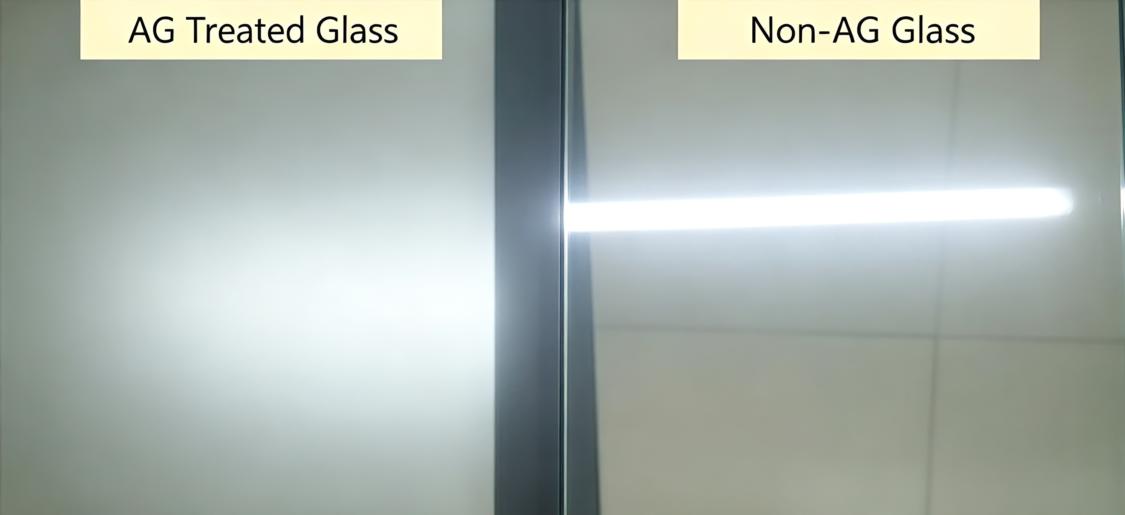
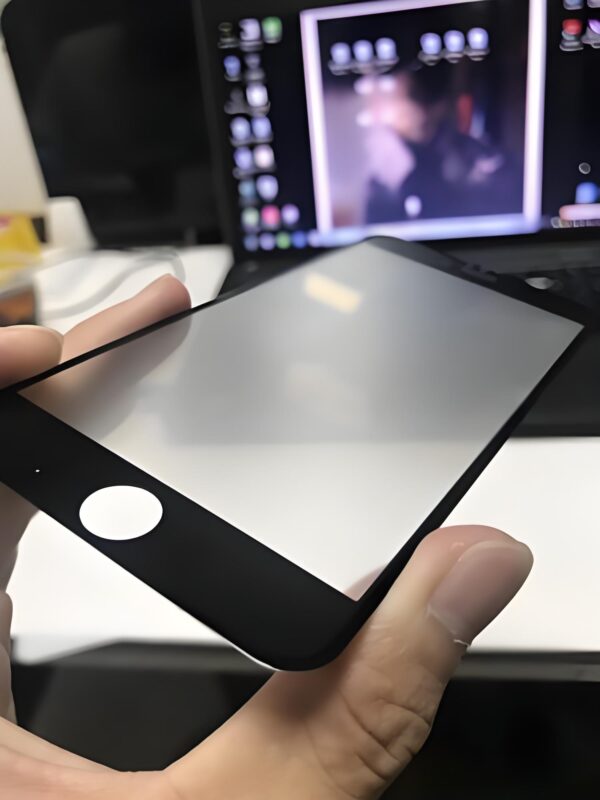
Anti-glare glass reduces the visual impact of reflected light by diffusing reflections across a textured surface.
Depending on the manufacturing process, the anti-glare effect may be produced through acid etching or another surface-texturing treatment. The resulting surface changes how incident light is reflected, making strong, sharp reflections less distracting.
However, diffusing reflected light is not the same as eliminating reflection.
This distinction matters when selecting glass for industrial equipment. An AG surface may improve viewing comfort under overhead lighting, but excessive surface diffusion can also make displayed text, fine lines and detailed graphics appear less sharp.
The correct specification should balance glare reduction with image clarity.
It is also important to distinguish AG from AR glass:
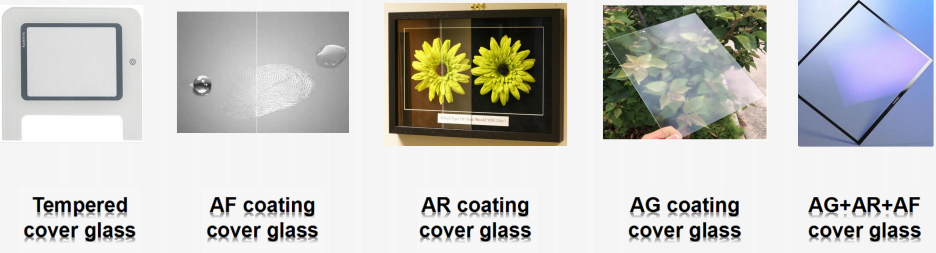
- AG (Anti-Glare): Uses surface diffusion to make reflected light less visually distracting.
- AR (Anti-Reflective): Uses an optical coating to reduce the amount of light reflected from the glass surface.
- AF (Anti-Fingerprint): Reduces fingerprint adhesion and makes the surface easier to clean.
These treatments address different problems. Some industrial display projects may benefit from combining more than one treatment, but compatibility and optical performance should be evaluated together.
2. Specify Haze According to Display Requirements
Haze is one of the most frequently discussed parameters when purchasing AG glass.
It describes the proportion of transmitted light that is scattered away from the direct transmission direction under a defined measurement method. A higher haze value generally indicates stronger light diffusion, although the visual result also depends on surface structure and measurement conditions.
For industrial displays, the objective is not necessarily to achieve the highest possible haze.
Consider the following situations:
- A machine control panel displaying large icons and basic operating information may tolerate a more noticeable matte appearance.
- An industrial monitor showing detailed drawings, small text or technical diagrams may require higher image clarity.
- A high-resolution touchscreen may be more sensitive to surface texture and visible sparkling effects.
A suitable haze value should therefore be selected according to the display resolution, viewing distance, content and lighting environment.
When requesting a quotation, specify the target haze range rather than simply writing “AG finish required.”
Also confirm whether the haze measurement applies to the complete glass sample or the AG-treated surface, and identify the measurement method and instrument conditions.
3. Check Gloss and Surface Texture
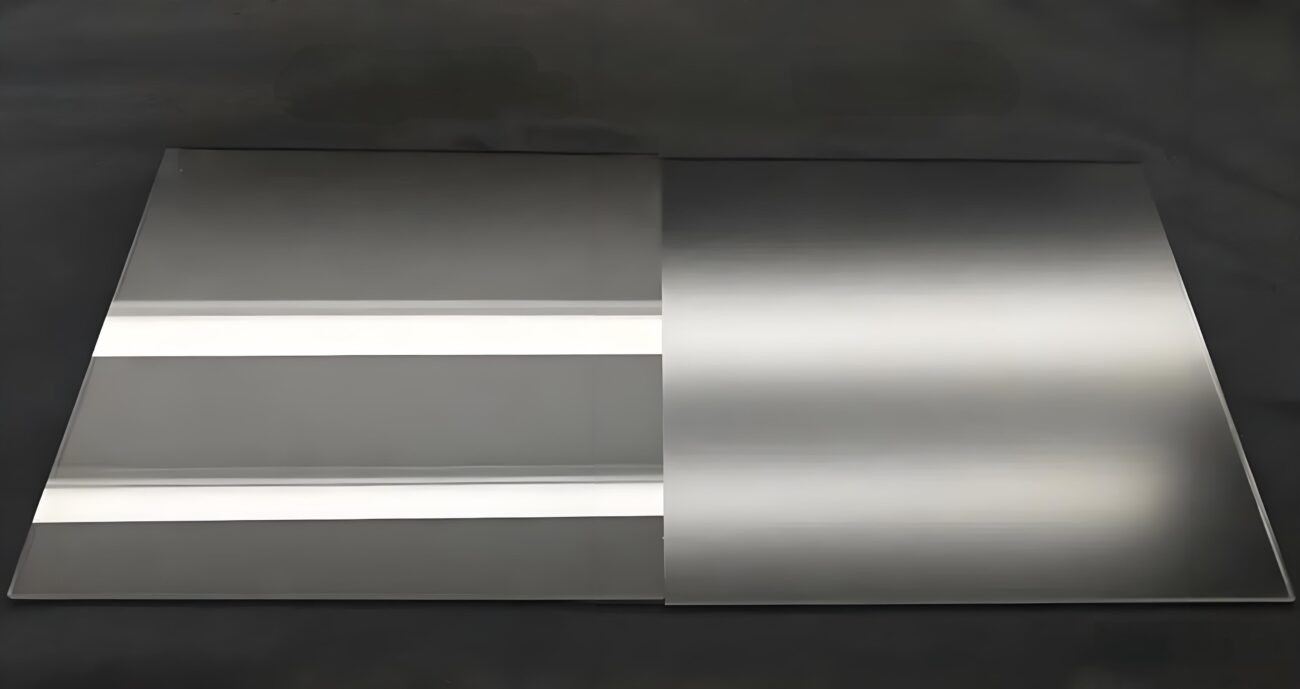
Gloss is another important parameter for comparing AG glass samples.
In general, a lower gloss value indicates a more matte-looking surface and stronger visual diffusion under the specified measurement geometry. However, gloss alone cannot describe the complete optical performance of the glass.
Two AG samples with similar gloss readings may still look different when installed over the same display.
Surface texture, haze, clarity and the distribution of scattered light can all contribute to the difference.
For industrial display applications, buyers should consider:
Viewing appearance: Does the screen remain clear when viewed from the normal operating position?
Surface uniformity: Is the matte effect consistent across the entire glass panel?
Texture visibility: Are there visible irregularities, patches or sparkling effects?
Lighting conditions: Does the selected finish perform acceptably under the actual factory or outdoor lighting?
If the glass is used on a large control panel, uniformity becomes particularly important. A surface that looks acceptable in a small sample may show noticeable differences across a larger panel.
For this reason, buyers should request representative samples and assess the actual display assembly before confirming mass-production specifications.
4. Confirm Light Transmittance and Display Clarity
Light transmittance and clarity should be evaluated together with haze and gloss.
Light transmittance describes how much incident light passes through the glass. Clarity relates more closely to how sharply objects or displayed images can be seen through the material.
An AG surface is designed to scatter light, so selecting a stronger anti-glare effect without considering clarity can reduce the sharp appearance of the display.
This is especially important for:
- Industrial monitoring screens
- Precision measurement equipment
- CNC machine control interfaces
- High-resolution HMI panels
- Equipment displaying small characters and technical graphics
When specifying AG glass, avoid using a general requirement such as “high transparency.” Instead, request measurable optical requirements and define the test conditions.
It is also worth checking the optical performance of the complete assembly. The display module, bonding adhesive, glass substrate and surface treatment can all influence the final appearance.
A glass sample measured separately may not provide the same visual result as the finished touchscreen assembly.
5. Select the Correct AG Surface for Touchscreen Operation
Many industrial displays combine protective hmi cover glass with a capacitive touchscreen.
In these applications, the glass must provide suitable optical performance while allowing reliable touch operation.
The AG surface can change the tactile feel of the panel. A rougher texture may feel different from a fine matte surface, particularly when operators frequently use their fingers or a stylus.
Before selecting the surface finish, consider:
- Whether the display uses projected capacitive (PCAP) touch technology
- Whether operators use bare fingers, gloves or a stylus
- Whether the equipment requires multi-touch operation
- Whether the glass is bonded to a touch sensor
- Whether the complete assembly maintains acceptable touch response
AG glass should not automatically be assumed to cause touch problems. However, the final design needs to be tested with the actual touch sensor and controller.
For applications using thick cover glass, special gloves or a particular touch controller, sample testing is especially important.
If the equipment is used continuously during production, operators should also evaluate whether the surface texture feels comfortable during repeated interaction.
6. Consider Glass Material, Thickness and Mechanical Requirements
Optical performance is only one part of an industrial touchscreen cover glass specification.
The glass must also meet the mechanical and structural requirements of the equipment.
Common material options include soda-lime glass and aluminosilicate glass. The appropriate choice depends on the required thickness, mechanical performance, processing conditions, cost and intended application.
The following points should be confirmed:
Glass material
Identify the preferred glass type or provide the mechanical and optical requirements for material selection.
Glass thickness
Specify the nominal thickness and permitted tolerance. Thickness should be considered together with the mounting structure, bonding method and mechanical loading.
Chemical strengthening
For applications requiring improved resistance to mechanical damage, chemical strengthening may be considered where the glass composition and thickness are suitable.
Edge finishing
Specify whether edges need to be ground, polished, chamfered or finished according to another drawing requirement.
CNC machining
Identify all mounting holes, slots, notches and other openings. Their dimensions and positions should be clearly shown on the technical drawing.
Screen printing
If the panel requires a black border, logo or functional markings, provide the artwork, print side, color reference and clear display-area dimensions.
These details should be confirmed before the AG treatment and final production sequence are agreed upon.
7. Evaluate the Operating Environment
Industrial equipment may operate under conditions that differ considerably from consumer electronics.
Before approving an AG glass specification, consider where the equipment will be installed and how it will be used.
| Operating condition | Specification consideration |
|---|---|
| Factory lighting | Reflection diffusion and display clarity |
| Direct sunlight | AG performance and possible need for AR |
| Frequent touch operation | Surface feel and cleaning requirements |
| Dusty environment | Surface cleaning and maintenance |
| Chemical cleaning | Chemical compatibility of the glass and treatment |
| Outdoor installation | UV exposure, temperature and moisture |
| Continuous operation | Long-term optical and surface consistency |
For example, an indoor HMI panel installed below factory lighting may require a different AG finish from an outdoor industrial monitoring display exposed to direct sunlight.
AG alone does not guarantee sunlight readability. Display brightness, AR treatment, viewing angle, contrast and the enclosure design should also be evaluated.
Where cleaning chemicals are used regularly, request compatibility information for the actual cleaning agents rather than assuming every surface treatment has the same chemical resistance.
8. What Should Be Included in an AG Glass RFQ?
A complete RFQ helps manufacturers assess the project more accurately and reduces unnecessary clarification during sample development.
For custom AG cover glass, buyers should prepare the following information:
| Specification | Information to provide |
|---|---|
| Application | HMI, industrial monitor, machine control panel or other equipment |
| Glass material | Soda-lime, aluminosilicate or preferred grade |
| Thickness | Nominal thickness and tolerance |
| Dimensions | Length, width, outline and dimensional tolerances |
| Surface treatment | AG, AG + AF or other required combination |
| Haze | Target value or acceptable range |
| Gloss | Target value or acceptable range |
| Clarity | Optical clarity requirement |
| Light transmittance | Required visible light transmittance |
| Surface side | One-side or two-side treatment |
| Touch system | PCAP, resistive or non-touch |
| Edge processing | Ground, polished, chamfered or custom |
| Printing | Black border, logo, openings and artwork |
| Strengthening | Chemical strengthening or other requirement |
| Quantity | Prototype quantity and estimated production demand |
If some optical parameters have not yet been finalized, provide the display module, intended lighting conditions and reference samples. A manufacturer can then help evaluate suitable surface options.
For repeat production, it is also useful to agree on the inspection method, sampling plan, acceptable appearance limits and reference sample before mass production begins.
9. Why AG Glass Samples Should Be Evaluated on the Actual Display
A specification sheet is useful, but it cannot fully predict how AG glass will look in every display application.
The same surface finish can produce different visual impressions depending on the display brightness, pixel density, viewing distance, ambient lighting and installation angle.
A practical sample evaluation should include:
- Install the AG glass over the intended display module.
- Check screen readability under normal operating lighting.
- Inspect text, icons, fine lines and detailed graphics.
- View the screen from the expected operating angles.
- Test touch response using the intended fingers, gloves or stylus.
- Inspect surface uniformity under different lighting conditions.
- Evaluate cleaning performance using the specified cleaning procedure.
For projects with strict optical requirements, record the approved sample’s optical values and appearance as a reference for subsequent production batches.
This creates a clearer acceptance basis than relying on descriptions such as “matte,” “fine AG” or “high anti-glare performance.”
Conclusion: Specify Performance, Not Just an AG Finish
Selecting AG glass for industrial displays requires more than choosing a matte surface. Haze, gloss, clarity, light transmittance, touch operation, glass thickness and operating conditions should all be considered together.
For OEM buyers, the most effective approach is to define the display’s actual operating requirements first, then establish measurable optical and mechanical specifications for the glass.
At WM Cover Glass, we provide custom cover glass manufacturing for industrial displays, HMI panels and touchscreen equipment. Available processing options include CNC machining, edge finishing, silk-screen printing, chemical strengthening and AG, AR and AF surface treatments, subject to project requirements.
Whether you are developing a new industrial control panel or replacing an existing display cover, our team can review your drawings, glass specifications and surface treatment requirements.
Need custom AG glass for an industrial display?
Send us your technical drawing, required glass thickness, target optical parameters, surface treatment and estimated quantity. We can review your requirements and discuss a suitable OEM cover glass solution.