 +86-13925515590
 kleinma@aliyun.com


Glass Packaging for Shipping: Protecting Custom Glass

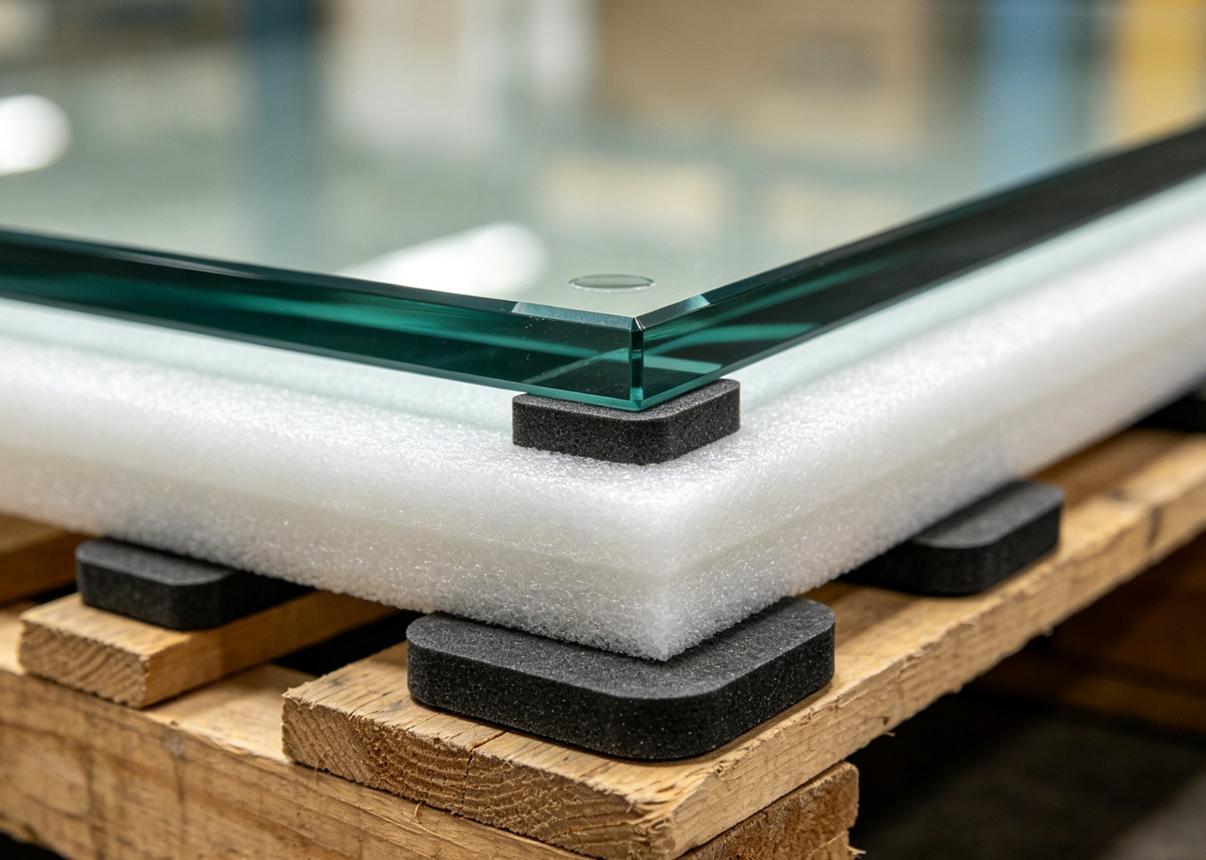
Glass packaging for shipping is an important consideration when purchasing custom cover glass, display panels, and other precision glass components from overseas manufacturers.
A glass panel may pass dimensional, surface, and appearance inspections before leaving the factory, but poor packaging can still result in scratches, chipped edges, cracks, or breakage during transportation.
For OEM buyers, packaging should be discussed before mass production. The correct protection method depends on glass thickness, panel dimensions, edge condition, order quantity, and transportation method.
Here are seven practical points to consider when planning packaging for custom glass components.
1. Protect the Glass Surface Separately
The first priority is preventing direct contact between glass surfaces.
Dust particles, small glass fragments, and friction between adjacent panels may create scratches during handling and transportation.
Depending on the glass surface and coating requirements, protective materials may include:
- PE protective film.
- Non-abrasive interleaving materials.
- Clean paper or suitable separators.
- Customized protective sheets.
The protective material must be compatible with the glass surface.
For example, a glass component with an AF coating may require particular attention to the protective material and its contact surface. Adhesive residue should also be considered when selecting protective films.
2. Give Extra Protection to Glass Edges and Corners
Glass edges and corners are vulnerable areas during transportation.
Even when the main surface remains undamaged, a small edge chip may affect the component’s usability or create a crack initiation point.
Suitable protective measures may include:
- Foam edge protectors.
- Corner cushioning.
- Individual separators.
- Rigid support structures.
Protection should cover the entire perimeter, especially around holes, cutouts, narrow sections, and irregular shapes.
3. Prevent Glass-to-Glass Contact
Direct contact between individual glass panels should be avoided during shipment.
When several components are packed together, movement and vibration can cause repeated friction or impact.
Each panel should have a suitable separation layer. For high-value or highly finished components, individual packaging may be more appropriate than placing multiple pieces in one bundle.
The separation method should also prevent protective materials from shifting during transportation.
4. Select Packaging According to Glass Size and Thickness
A packaging method suitable for small electronic cover glass may not be appropriate for large industrial display panels.
Buyers should consider:
- Glass length and width.
- Nominal thickness.
- Individual panel weight.
- Number of pieces per package.
- Edge and corner geometry.
- Required loading and unloading method.
Thin, large-format glass may require additional support to limit movement and localized pressure.
For heavier panels, rigid packaging and suitable internal restraints become more important.
The objective is to keep each panel stable without applying excessive pressure to the glass.
5. Consider the Transportation Method
International shipments may involve several transportation stages, including factory handling, container loading, port operations, air freight, and final delivery.
Each stage introduces different handling and movement risks.
Packaging for courier shipments may differ from packaging for consolidated sea freight or palletized cargo.
For larger orders, buyers should confirm:
- Whether cartons or wooden crates are required.
- Whether pallets will be used.
- How packages will be secured.
- Whether stacking is permitted.
- Whether special handling labels are necessary.
The packaging design should reflect the actual shipping route rather than only the conditions inside the factory.
6. Check Moisture, Cleanliness, and Packaging Materials
Glass components with optical coatings, printed surfaces, or bonding areas require attention to cleanliness.
Before packing, glass should be free from processing residue and loose particles.
Suitable cleaning and drying procedures help reduce the risk of contamination being trapped inside the package.
Learn more about our Ultrasonic Cleaning Process.
For international shipping, moisture protection may also be necessary depending on the packaging materials, route, and storage environment.
However, moisture protection should not replace proper cleaning, drying, and material compatibility checks.
7. Define Packaging Inspection Before Shipment
Packaging should be included in the agreed quality requirements, not left entirely to the shipping department.
A practical pre-shipment inspection may include:
- Protective film condition.
- Separator placement.
- Edge and corner protection.
- Carton or crate condition.
- Internal movement restrictions.
- Package identification and quantity labels.
- Photographic records before sealing.
For projects with strict transportation requirements, buyers may also consider formal package performance testing.
The International Safe Transit Association (ISTA) provides different procedures for evaluating packaged products under simulated transportation conditions. Its Procedure 3A, for example, addresses individual packaged products shipped through parcel delivery systems.
See the ISTA Test Procedures for guidance on selecting a suitable procedure. The correct test depends on the actual shipment type and package configuration.
8. What Should OEM Buyers Confirm Before Ordering?
Before approving a packaging method for custom cover glass, confirm the following:
- Individual glass dimensions and thickness.
- Surface coating and printing requirements.
- Whether protective film is required.
- Edge and corner protection method.
- Number of panels per package.
- Carton, crate, or pallet requirements.
- Permitted stacking and handling conditions.
- Export destination and transportation method.
- Packaging inspection and photographic records.
These details help both the buyer and manufacturer establish a consistent packaging specification.
Custom Cover Glass Manufacturing and Packaging Requirements
Packaging performance starts with the condition of the finished glass component.
Cutting, CNC machining, edge processing, strengthening, printing, coating, and cleaning all contribute to the final product condition.
WM Cover Glass provides customized glass processing for electronic displays, industrial control panels, touchscreens, and other OEM applications.
Explore our Custom Glass Manufacturing Capabilities and Quality & Inspection services.
Frequently Asked Questions
1. What causes cover glass warpage?
Cover glass warpage may be influenced by glass thickness, panel dimensions, thermal processing, mechanical handling, and manufacturing conditions.
2. Does thermal tempering affect glass flatness?
Yes. Heating and rapid cooling can influence the final shape of glass. The degree of deformation depends on material, dimensions, thickness, and processing conditions.
3. How is cover glass flatness measured?
Flatness can be evaluated using suitable precision measuring equipment, optical measurement systems, or defined reference fixtures. The measurement method should be agreed before production.
4. Can thin cover glass maintain good flatness?
Yes, but thin glass requires careful control of handling, processing, support, and inspection conditions. Requirements should be evaluated according to the final application.
Need a quotation for custom glass panels?
Send us your glass drawings, dimensions, thickness, processing requirements, estimated quantity, and destination country.