 +86-13925515590
 kleinma@aliyun.com

How to Choose the Right E-Bike Display Glass for Outdoor Use

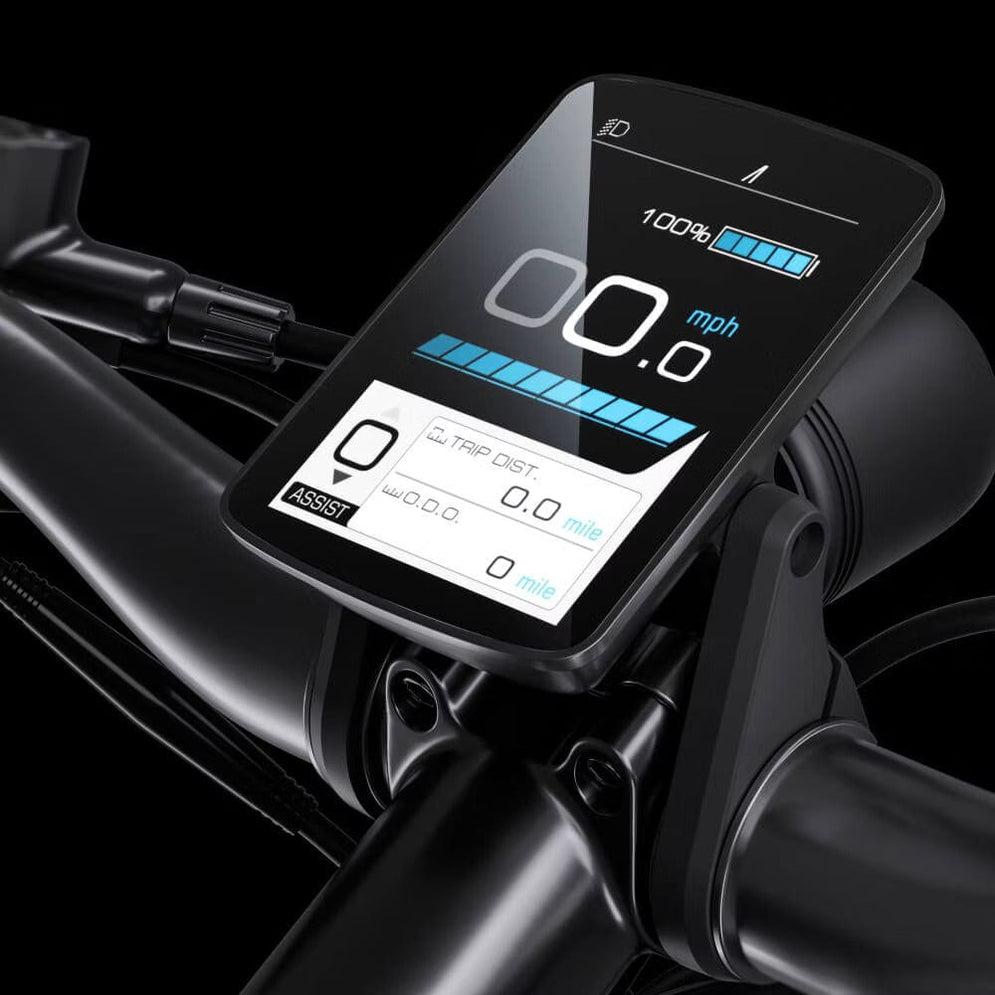
An electric bicycle display may look like a small component, but its cover glass has an important job. It protects the display surface, provides a clear viewing window, and forms part of the product’s overall appearance.
Unlike indoor electronic displays, an e-bike screen is used in changing outdoor conditions. Riders may view it under direct sunlight, encounter rain or road dust, and touch the screen repeatedly while riding.
For manufacturers developing electric bicycle displays, choosing the right E-Bike Display Glass involves more than selecting a piece of transparent glass. Optical performance, surface treatment, mechanical design, and assembly requirements all need to be considered together.
This guide explains six practical points that OEM buyers and product engineers should review before ordering custom electric bike display glass.
1. Start With the Actual Display Structure
The first step is understanding how the glass will be installed.
Electric bicycle displays are available in different shapes and configurations. Some use compact handlebar-mounted screens, while others integrate the display into a larger control unit.
For example, Bosch offers several display formats, including the Kiox 300 and Kiox 500. These illustrate how display dimensions and mounting arrangements can differ even within the same product category.
Reference: Bosch eBike Display Products.
When specifying custom e-bike display glass, engineers should identify:
- Overall glass length and width
- Display viewing area
- Corner radius and external profile
- Mounting holes and cutouts
- Glass-to-housing clearance
- Position of printed borders
- Assembly and bonding method
A drawing is more useful than a general size description because it shows how the glass interacts with the complete display assembly.
For OEM projects, the glass outline should be confirmed before CNC machining begins.
2. Consider Sunlight Reflection and Display Readability
One of the most important requirements for outdoor display glass is readability.
When sunlight hits a glass surface, reflected light can interfere with the information displayed underneath. This can make speed readings, battery indicators, navigation information, and other graphics harder to distinguish.
Two surface treatments are commonly considered when developing outdoor display cover glass.
Anti-Reflective (AR) Coating
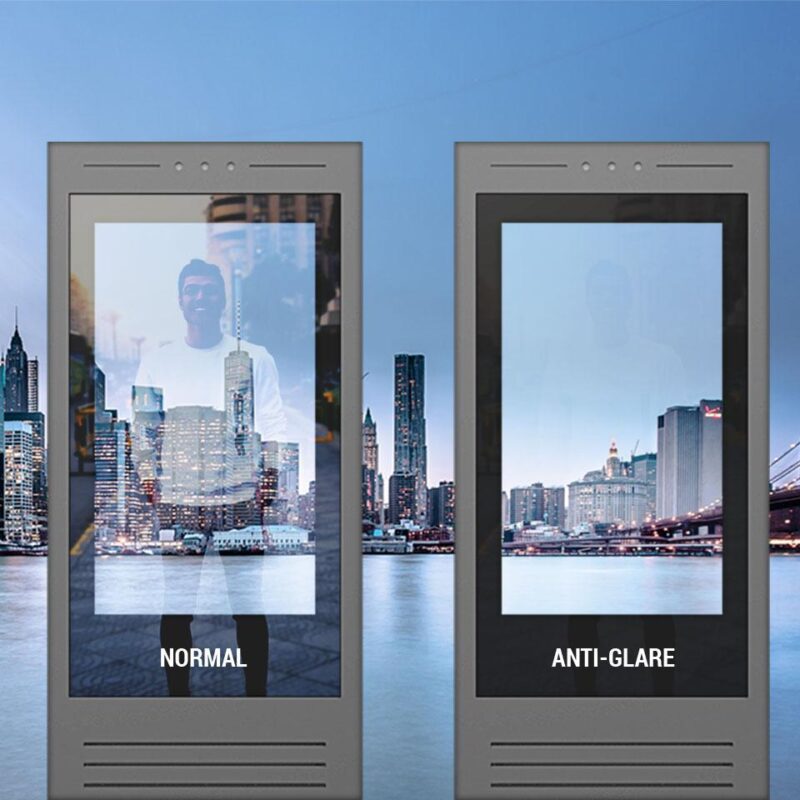
AR coating is designed to reduce surface reflection and improve light transmission.
It may be suitable for electric bicycle display glass where reflected light is a concern and maintaining a clear view of the LCD is important.
The actual performance should be evaluated on the complete optical structure rather than the glass substrate alone.
Anti-Glare (AG) Treatment
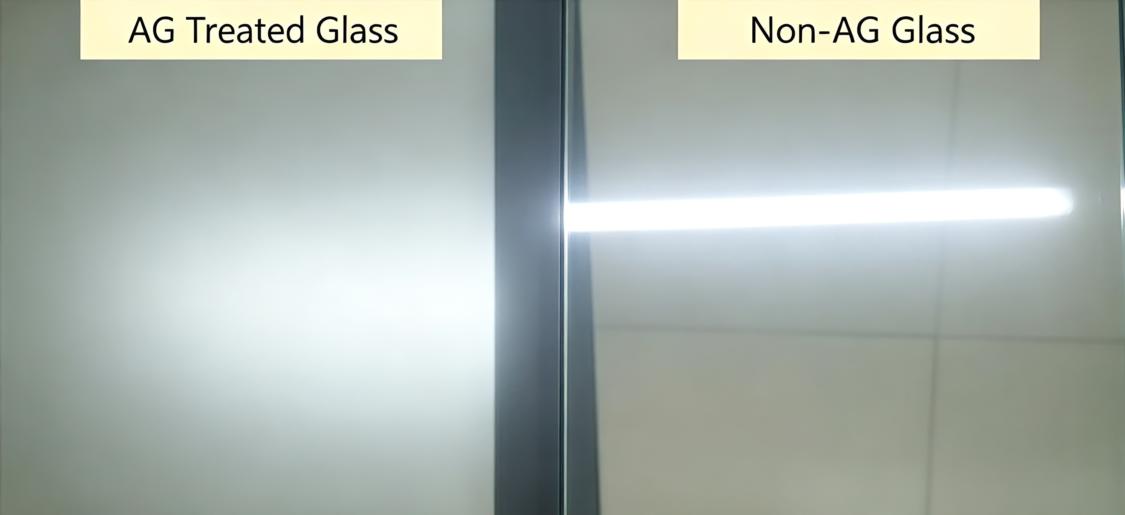
AG treatment works differently. It modifies the surface to diffuse reflected light instead of primarily reducing reflection through an optical coating structure.
This can help reduce distracting glare, but the resulting surface texture may also affect image sharpness and display appearance.
For this reason, AG is not automatically the best choice for every e-bike display.
The decision should consider the screen resolution, viewing distance, brightness, and desired surface appearance.
3. Select the Right Glass Material and Strengthening Process
The material selection affects the mechanical properties, processing possibilities, and cost of the finished glass component.
Two common materials for custom electronic cover glass are aluminosilicate glass and soda-lime glass.
Aluminosilicate Glass
Aluminosilicate glass is often considered for electronic cover applications requiring improved mechanical performance.
When combined with a suitable chemical strengthening process, it can provide enhanced surface compression and improved resistance to mechanical damage.
Soda-Lime Glass
Soda-lime glass is another option for electronic display components. It offers a practical balance of optical clarity, availability, and manufacturing cost.
The appropriate material depends on the application and required performance.
Chemical Strengthening vs. Thermal Tempering
Chemical strengthening and thermal tempering use different processes to improve glass strength.
The selection depends on the glass material, thickness, component geometry, and required mechanical properties.
For a custom E-Bike Display Cover Glass project, the strengthening method should be confirmed before finalizing the manufacturing sequence.
Learn more about Glass Materials for Custom Cover Glass.
4. Do Not Overlook Edge Processing and Mounting Details
A glass component can have the correct length and width but still fail to fit the display housing.
This is why edge processing and mechanical features deserve attention during product development.
For electric bicycle display glass, common drawing requirements include:
- Rounded external corners
- Ground or polished edges
- Mounting holes
- Small slots and openings
- Custom-shaped outlines
- Defined edge chamfers
CNC machining is used to produce these features according to the approved design.
The hole position, corner radius, and edge condition should be reviewed together. A small difference in the mounting geometry can affect assembly alignment or create unwanted mechanical stress.
It is also important to avoid placing unnecessary mechanical features too close to the glass edge.
Before mass production, buyers should confirm the finished drawing and applicable tolerances with the manufacturer.
5. Choose Printing and Bonding According to the Housing Design
The appearance of an e-bike display is not determined by the screen alone. The surrounding glass border also affects the finished product.
Black Border Printing
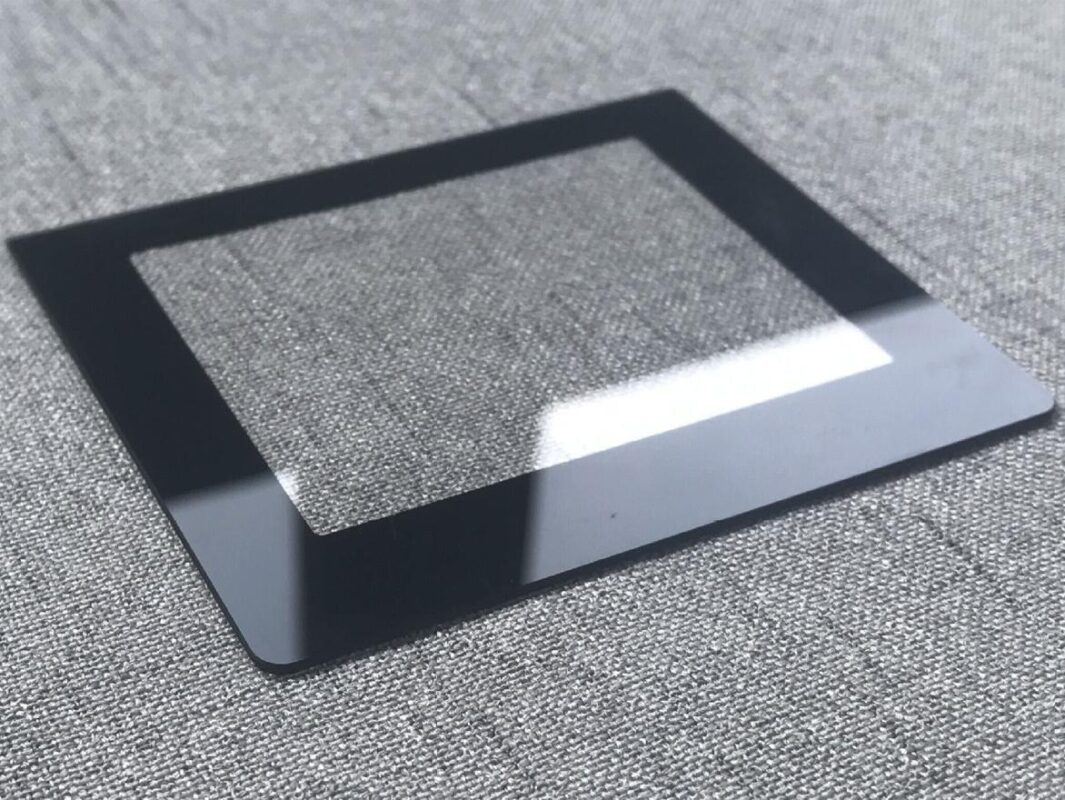
Silk screen printing can create a black border around the viewing area.
This can help conceal adhesive lines, internal structures, or the perimeter of the display module. It can also provide space for a brand logo or other decorative graphics.
For custom printed e-bike display glass, the artwork should be aligned with the active display area and the final housing dimensions.
Explore Silk Screen Printing for Cover Glass.
Adhesive Bonding
The glass may be attached to the housing or display structure using an appropriate adhesive solution.
Depending on the design, adhesive transfer tape, VHB tape, or OCA-related bonding may be considered.
The choice should account for:
- Bonding surface materials
- Adhesive thickness
- Glass dimensions
- Housing geometry
- Assembly sequence
- Required optical appearance
A bonding solution should be selected for the actual assembly, rather than simply choosing an adhesive based on its general product description.
6. Understand the Difference Between Glass Protection and Enclosure Protection
This is an important point for outdoor electronic products.
A cover glass protects the front surface of the display, but it does not automatically make the complete electronic device waterproof or dustproof.
The final protection level depends on the entire enclosure, including the housing, gaskets, seals, openings, buttons, connectors, and assembly interfaces.
For example, Bosch specifies IP55 protection for its Kiox 300 and Kiox 500 display products. This is a rating for the complete product, not a performance rating that can be assigned to the cover glass alone.
OEM buyers should therefore evaluate the glass and enclosure as separate but related parts of the design.
The glass manufacturer can review the glass dimensions, edges, openings, printing, and bonding requirements, while the complete device manufacturer must validate the finished enclosure.
Custom E-Bike Display Glass Manufacturing Process
Once the design requirements are confirmed, the glass component can move into manufacturing.
A typical custom glass project may involve the following stages.
Step 1: Drawing Review
Review the dimensions, glass thickness, material, shape, holes, slots, printing, and coating requirements.
Step 2: Glass Cutting
Cut the selected glass substrate into the required initial shape.
Step 3: CNC Machining
Process the edges, holes, slots, and other mechanical features according to the approved drawing.
Step 4: Strengthening
Apply the agreed chemical strengthening or thermal tempering process where required and technically suitable.
Step 5: Printing and Coating
Complete the specified black border printing, logo graphics, and AR, AG, or AF surface treatments.
Step 6: Cleaning and Inspection
Inspect the finished glass for dimensions, appearance, edge quality, printing alignment, and other agreed quality requirements.
The actual process sequence may vary depending on the glass material, processing requirements, and product structure.
For a broader overview of our manufacturing services, visit WM Cover Glass Capabilities.
What Information Should You Prepare Before Requesting a Quote?
A complete RFQ helps reduce repeated communication and makes technical evaluation easier.
For an electric bicycle display glass project, prepare the following information:
| Item | Recommended Information |
|---|---|
| Application | E-bike LCD, color display or control unit |
| Drawing | 2D drawing or 3D file |
| Material | Aluminosilicate or soda-lime glass |
| Thickness | Required thickness |
| Dimensions | Length, width and corner radius |
| Machining | Holes, slots and edge processing |
| Printing | Black border, logo and artwork |
| Coating | AR, AG, AF or untreated |
| Bonding | Required adhesive method |
| Quantity | Prototype and estimated production volume |
If the design is still being developed, an initial drawing or sample can help establish the manufacturing requirements.
Looking for a Custom E-Bike Display Glass Supplier?
A suitable glass component should fit the display structure, provide the required optical appearance, and match the mechanical design of the housing.
At WM Cover Glass, we support customized glass manufacturing for electronic displays and OEM applications, including cutting, CNC machining, edge finishing, chemical strengthening, silk screen printing, surface coatings, and adhesive bonding.
If you are developing an electric bicycle display or sourcing a custom glass component for an existing product, send us your drawing or sample for review.
Explore our E-Bike Display Cover Glass product page or contact our team to discuss your project requirements.