 +86-13925515590
 kleinma@aliyun.com
Front Glass Panel AR Coating Method: Ultrasonic Spraying Technology

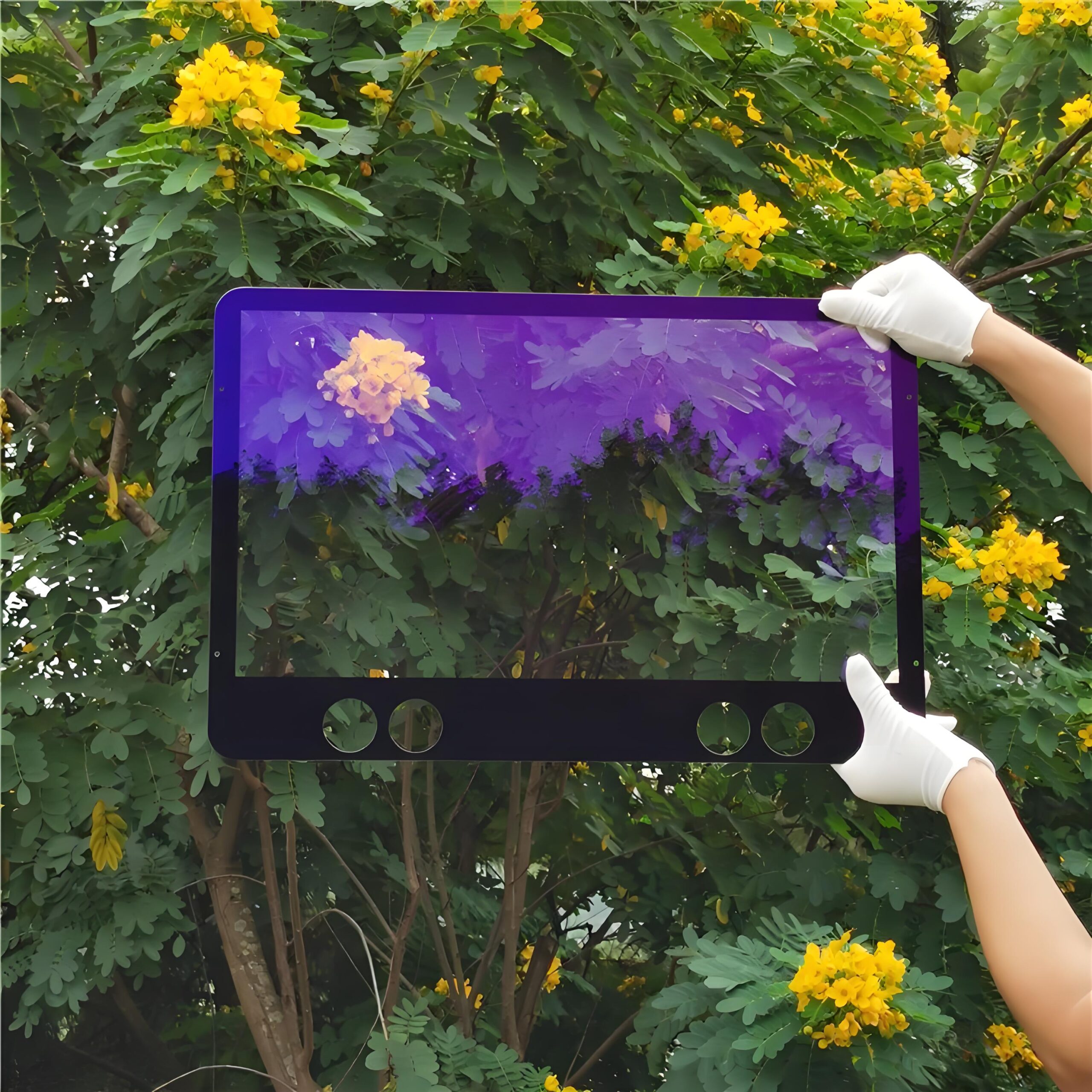
AR(Anti reflection) coating is an essential functional optical treatment in front glass penal deep processing. It creates low refractive index nanofilm layers on glass surfaces and offsets reflected light through optical interference. It can cut light loss noticeably and increase light transmittance while mitigating glare and harsh surface reflection on front glass panels.

Application Scenarios:
New Energy Photovoltaic Glass
Photovoltaic front glass panel demands extremely high light transmittance and reflective light loss directly drags down the power generation efficiency of photovoltaic modules. Ultrasonic spraying facilitates uniform single-layer or multi-layer AR anti-reflection film coating on photovoltaic glass. It slashes surface reflectance and raises light transmission, so it greatly improves the photoelectric conversion rate of photovoltaic assemblies. Dense, wear-resistant and weather-resistant coated films adapt well to harsh outdoor conditions and sustain steady power output over long-term operation, making ultrasonic spraying a pivotal process to upgrade photovoltaic glass performance and production efficiency.
Display & Touch Glass
Front glass panel used for smartphones, tablets, industrial control screens and touch panels commonly suffers from surface reflection, blurred images and poor visibility under strong sunlight. After AR coating through ultrasonic spraying, specular reflection is largely restrained and glare interference eliminated. Screen definition, color reproduction and outdoor visual performance are significantly optimized. The technology works seamlessly with 2D, 2.5D and 3D curved front glass panel, delivering all-round coating free from distortion, fully complying with stringent quality standards for precision glass used in consumer electronics.
Precision Optical Glass
Precision optical components including camera front glass panel and optical instrument lenses impose rigorous standards on coating uniformity and stable refractive index. Ultrasonic spraying enables nanoscale precise thickness control for coated films. It effectively eliminates common flaws such as pinholes, particle agglomeration and uneven thickness, stabilizing the refractive index of optical glass. Distortion in light refraction and transmission is prevented, satisfying the high-precision imaging requirements of premium optical devices.
Core Advantages
Uniform Atomization, Ultra-high Coating Precision & Outstanding Optical Performance
High-frequency ultrasonic vibration breaks AR coating front glass panel solution into micro-droplets with concentrated, controllable particle sizes. It eliminates splashing, stray mist and material accumulation plaguing conventional spraying methods. The finished coating features consistent thickness, flat and compact texture with no orange peel texture, edge marks or pinholes. Coated glass achieves drastically reduced reflectance and elevated transmittance alongside steady refractive index without local optical deviation, meeting strict criteria for high-end precision optical glass.
Exceptionally High Material Utilization & Reduced Production Costs
Different from high-pressure spraying, ultrasonic spraying adopts flexible directional atomization deposition with minimal droplet splatter, lifting raw material utilization above 90% and cutting material waste sharply. This process requires few auxiliary consumables and simple equipment maintenance, effectively lowering overall manufacturing expenses for mass production.
Mild & Non-damaging Process with Broad Substrate Compatibility
No high-speed or high-pressure airflow is generated during ultrasonic atomization, so glass substrates remain intact throughout coating. The gentle process is especially suitable for fragile substrates such as ultra-thin glass, curved glass and flexible glass. Coating can be completed under normal or low temperatures to avoid substrate deformation and material degradation.
Strong Adhesion & Long-lasting Stable Performance
Gentle deposition and even spreading of micro-droplets enable tight bonding between cured AR films and glass substrates, resisting peeling, flaking and cracking. Dense film structure delivers robust friction resistance, acid and alkali resistance, anti-aging and anti-fouling capabilities. Anti-reflection and high-transmittance properties stay consistent in the long run, extending the service life of functional glass and catering to long-term application demands in industrial and outdoor environments.
FAQ
Q1: How is ultrasonic AR spraying superior to conventional spraying?
A1: It produces uniform droplets without splashing and pinholes, enables nanoscale precise film control, raises material utilization above 90% and coats gently without damaging thin & curved glass for stable optical effects.
Q2: Does the AR coating stay durable on outdoor photovoltaic front glass panel?
A2: Yes. The dense coating firmly adheres to glass, featuring wear, corrosion and aging resistance. It sustains stable transmittance and power generation efficiency under harsh outdoor conditions long-term.