 +86-13925515590
 kleinma@aliyun.com

Glass Cover Plate: 8 Practical Steps to Schedule a Perfect Production Plan

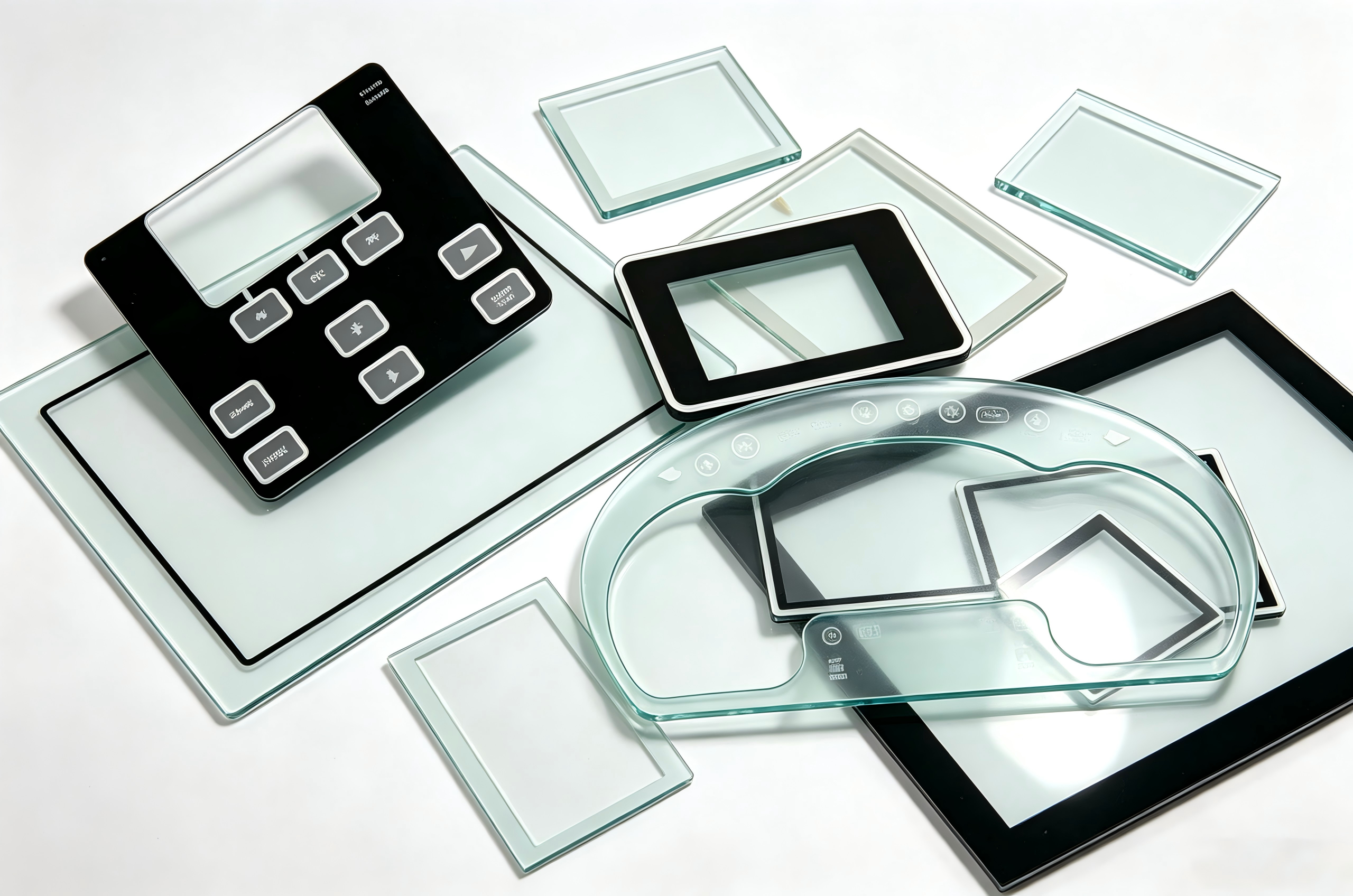
Glass Cover Plate, how long to produce them?
For the customers who involved in custom cover glass plate manufacturing, the most frequent question asked is the lead time from raw material to finished product? To understand this timeline is essential for effective project coordination. Take a sample order like 50pcs, 10 inch size, chemical strengthening, black border with logo printing as a reference, below is a step breakdown of each production phase and its estimated production span.

Stage 1:Glass Cover Plate Material Readiness
The standard glass substrate(thickness / brand) usually in stock, which allows for immediate production starts without waiting. But for speciality materials like anti glare(AG)etched glass, it depends on supplier schedules, usually takes 7 days. Other auxiliary supplies like fixtures, packaging and inks are usually obtainable in 3 days unless highly customized specifications required.
Stage 2:Glass Cover Plate Mechanical Processing
Cutting: While each sheet takes only 1~2 minutes to cut, the overall setup including machine calibration and parameter verification requires roughly 0.5 to 1 hour for the entire batch.
CNC Shaping: Custom jigs and grinding tools demand 3 days for fabrication, though this step can run in parallel with material preparation to save time. Each piece machining runs about 2 to 5 minutes, with an additional 4 hours reserved for tooling adjustments and test runs.
Initial Cleaning: After CNC processing, ultrasonic cleaning is performed through an 11-tank sequence, 30–45 minutes per batch.
Stage 3:Glass Cover Plate Chemical Strengthening & Post-Treatment
This is the most time-sensitive stage. The full cycle preheating, ion-exchange strengthening and controlled cooling spans 6 to 8 hours. Since strengthening parameters vary with glass thickness and composition, the furnace availability may introduce scheduling delays, this phase often becomes the critical path in the overall timeline. Following strengthening, components undergo a 0.5–1 hour soaking bath to remove chemical residues, succeeded by another ultrasonic cleaning round.
Stage 4: Glass Cover Plate Inspection
After each major operation, visual surface checks and dimensional measurements conducted. For a 50-piece lot, this inspection typically takes 0.5–1 hour per checkpoint.
Stage 5:Glass Cover Plate Printing & Curing
Screen-printing tooling (stencils and films) requires 1-2 days for preparation. Before each color layer, ink mixing and equipment fine-tuning are mandatory, with first-article approval preceeding full-scale printing. Each printing pass for 50 pieces takes roughly 20–30 minutes, followed by 20 minutes of thermal curing. For a three-pass job (e.g., bezel + logo + protective layer), the final curing step extends to 30 minutes. The entire printing sequence is allocated approximately 4 hours, including setup and changeover.
Stage 6: Glass Cover Plate Final Cleaning & Inspection
Post-printing cleaning repeats the ultrasonic process, after a final thorough inspection verifies both appearance and dimensional compliance.
Stage 7: Glass Cover Plate Documentation & Packaging
Once all quality checks are cleared, shipping documents and packing lists are generated, and the lot is securely packaged, this final step consumes about 20 minutes for 50 pieces.
Stage 8: Logistics & Delivery
Domestic shipments within the region generally take 1–2 days, while international deliveries are estimated at 3–5 days, subject to carrier routes and customs handling.
Glass Cover Plate Overall Timeline Summary
Excluding transportation time, the net production cycle from material release to ready-for-shipment status typically falls between 7-15 working days. It is important to note that actual durations may shift due to equipment conditions, process complexity, and current order book density. Our team remains committed to transparent communication and proactive scheduling to ensure on-time delivery without compromising quality standards.
FAQ
Which step takes the longest?
Chemical strengthening: 6–8 hours, plus possible furnace delays. This single stage sets the overall pace.
Can any steps overlap?
Yes, CNC jig making (2–3 days) runs parallel with material sourcing. But strengthening and printing are strictly sequential.
Why 7–15 days, not a fixed number?
Due to specialty material availability (AG glass: 7 days), equipment workload and multi-layer printing complexity. Always plan with a small buffer.
For more questions, please click.