 +86-13925515590
 kleinma@aliyun.com

Blog
Cover Glass Production Flows: 8 Proven Steps for Efficient Manufacturing Analysis

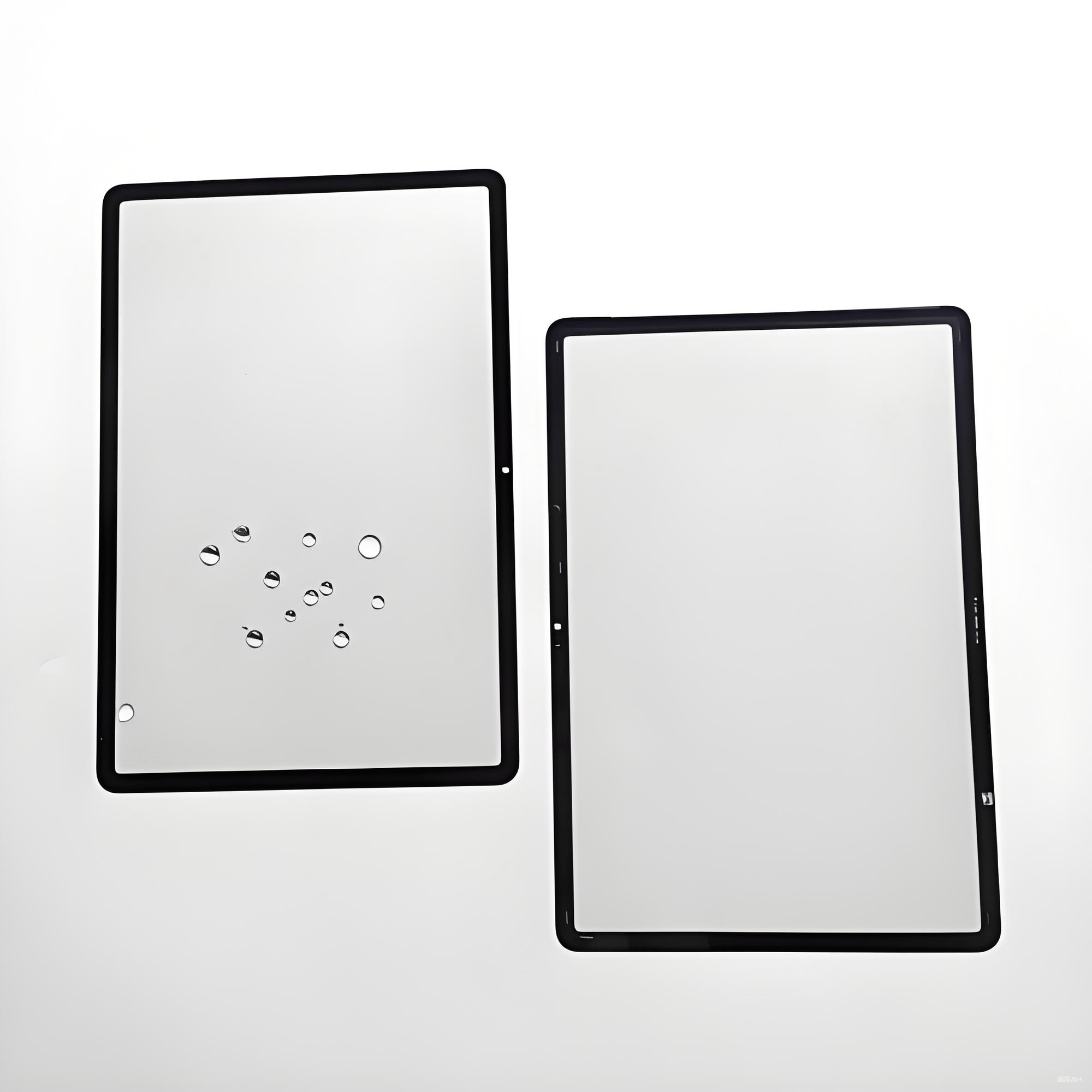
What’s The Cover Glass Production Flows?
From a big sheet of glass substrate, what it experience to become a small piece of cover glass?
To make it becomes your design, this big sheet of glass should experience from cutting, edging/drilling, tempering, printing, coatings, bonding, cleaning and packaging.
This article to tell you how to make it suceed step by step in simple words which allows beginner can understand easily.

Raw material slection.
1.Glass substrate
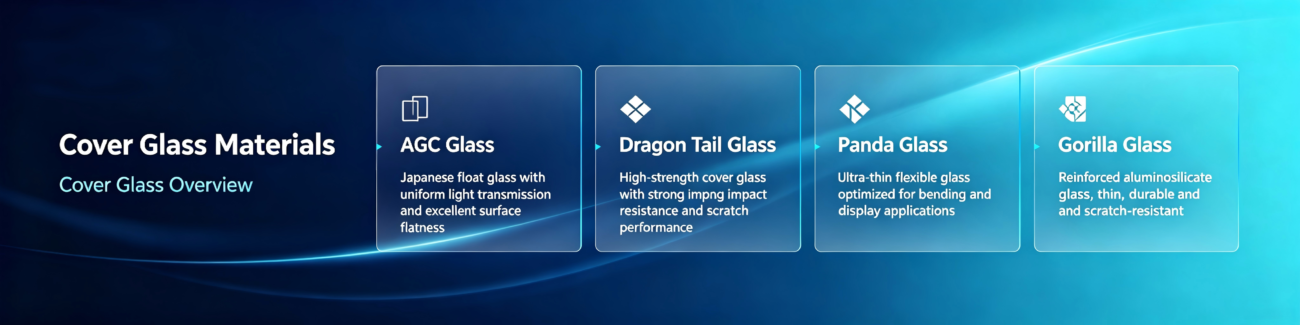
In market, there are 2 kinds of cover glass subtrate to be selected: Soda lime glass and Aluminosilicate glass.
1.The Soda lime glass is a cheaper option but less hardness(Around 6H), so it’s not the regular choice for ultra thin and high impact requirements.
The edge is green tone from side view. The regular brands like AGC, SGC etc.
2.The cost of Aluminosilicate glass is higher compare to Soda lime glass, also vary in different brands like Gorilla, Dragon Tail and Panda etc.
This glass substrate has better optical performance and hardness(8-9H) compare to soda lime glass.
There also other choices in market depends on different optical, hardness, temperature resistance requirements.
2.Inks
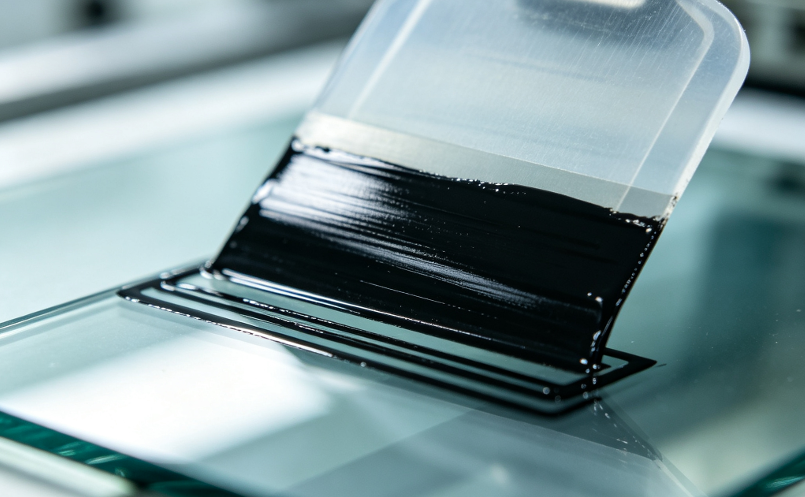
For cover glass, there are usually 2 kinds of inks: Resin ink and Ceramic ink in different applications.
1.To resin ink, also refers to low temperature ink. It used in cover glass most frequently due because it only “adhesive” to glass surface, no requirement on glass thickness.
The color looks more vivid and excellent light block capabilities but less durable in outdoor applications.
Since outdoor applications face direct sunlight and other harsh condition, the ink will peel off / yellowish easily, so UV ink will be another choice.
2.To ceramic ink, also refers to high temperature ink. It used in outdoor application most because of excellent performance in temperature durability.
The color looks less vivid and less light block capabilities compare to resin ink(So if strong light block needed, another layer of low temperature ink should be printed).
After print, they should be arranged thermally tempering to make the ink unibody in glass.
In this case, the ink couldn’t peel off in harsh condition and even scratch by knife.
Cover Glass Production Flows
1.Cutting
It’s the first step in cover glass production flows.
After received a big sheet of glass substrate it couldn’t put in CNC for processing directly but cutting into shape needed.
In normal practice, it will be cut into shape by automatic cutting machine(diamond unit) base on drawing.
But notice the edge is still sharp / burr / chips after cutting, so edge grinding will be needed.
2.CNC
It’s the second step in cover glass production flows.
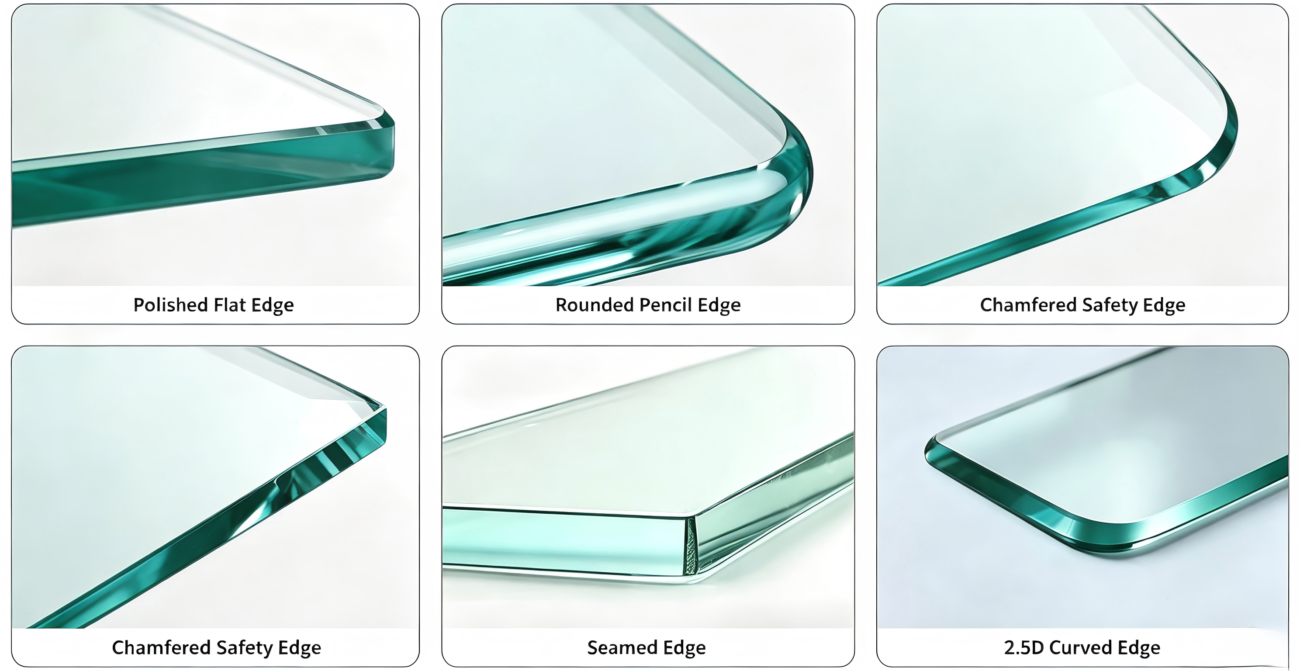
Since the edge is still sharp, then CNC edge grinding will be required.
The CNC processing not only remove the sharp edge but also can customize different edges(Polish / 2D / 2.5D etc.) .
Meanwhile, it can process slot / hole(+/-0.1mm) base on design.
3.Tempering
It usually consider as the third step in cover glass production flows.
There are 2 kinds of tempering methods for chemically strengthening and thermally tempered.
The chemically strengthening is most frequent used in thin cover glass, it can greatly improve the glass hardness(Soda lime glass 6H, Aluminosilicate 8-9H) without satisfy flatness and optical performance.
The thermally tempering mainly focus on thick glass application, weak in hardness but better impact resistance and safety glass that when break, it becomes small particles.
4.Printing
It’s the forth step in cover glass production flows.
The silk screen print is the first choice to print color / patterns in single or multi colors / layers.
The method is to use a screen base on design to put onto printing machine, the inks put on top of screen and glass lay bottom.
When operate, the squeegee passes over ink on screen. There are lots of micro holes(These holes is the basic construction of patterns) on screen to allow ink leak from top to glass surface.
So a layer of pattern formed.
5.Coatings
It’s the fifth step in cover glass production flows.
There are lots of coatings on glass but usually 3 kinds(AR, AG, AF).
AR, full name as anti reflection.
It’s a kind of plating coating to improve the light transmittance. Usually cover glass has 91% VLT and each side of coating increase 3-4%, so double sides up to 99%.
It usually tested by light transmittance tester, but this layer peel off easy that if expose to outer surface, AF coating recommened to add on it.
AG, full name as anti glare.
It usually used in strong light environment like vehicle console to scatter the light into different directions to avoid direct light to eye cause dangerous.
There are several methods to create this layer: Acid etching, printing, lamination but different in parameters in toughness, haze, transmittance.
AF, full name as anti fingerprint.
Without this coating, it can protect the AR coating and easy wipe dirt off to keep glass clean.
Usually there are 2 kinds of treatment including plating(expensive but durable) and spray(cheap but less durable, around severa thousand times) depend on use frequency.
6.Bonding
It’s the sixth step in cover glass production flows.
Usually we offer bonding including 3M tape(VHB tape included) and OCA tape(like phone screen protector, fully transparent).
7.Clean
It’s the seventh step in cover glass production flows.
We use ultrasonic cleaning post CNC, post chemical strengthening and finish products to make sure every step / every piece of finish product is fully clean.
8.Packaging
It’s the eighth step in cover glass production flows.
For thin cover glass, usually film like PE film applied in both sides, and then vacuum bag, foam and carton. If necessary wooden box will be packed.