Knowledge

What’s glass cover lens? An article to tell you

Custom Anti-Glare Cover Glass

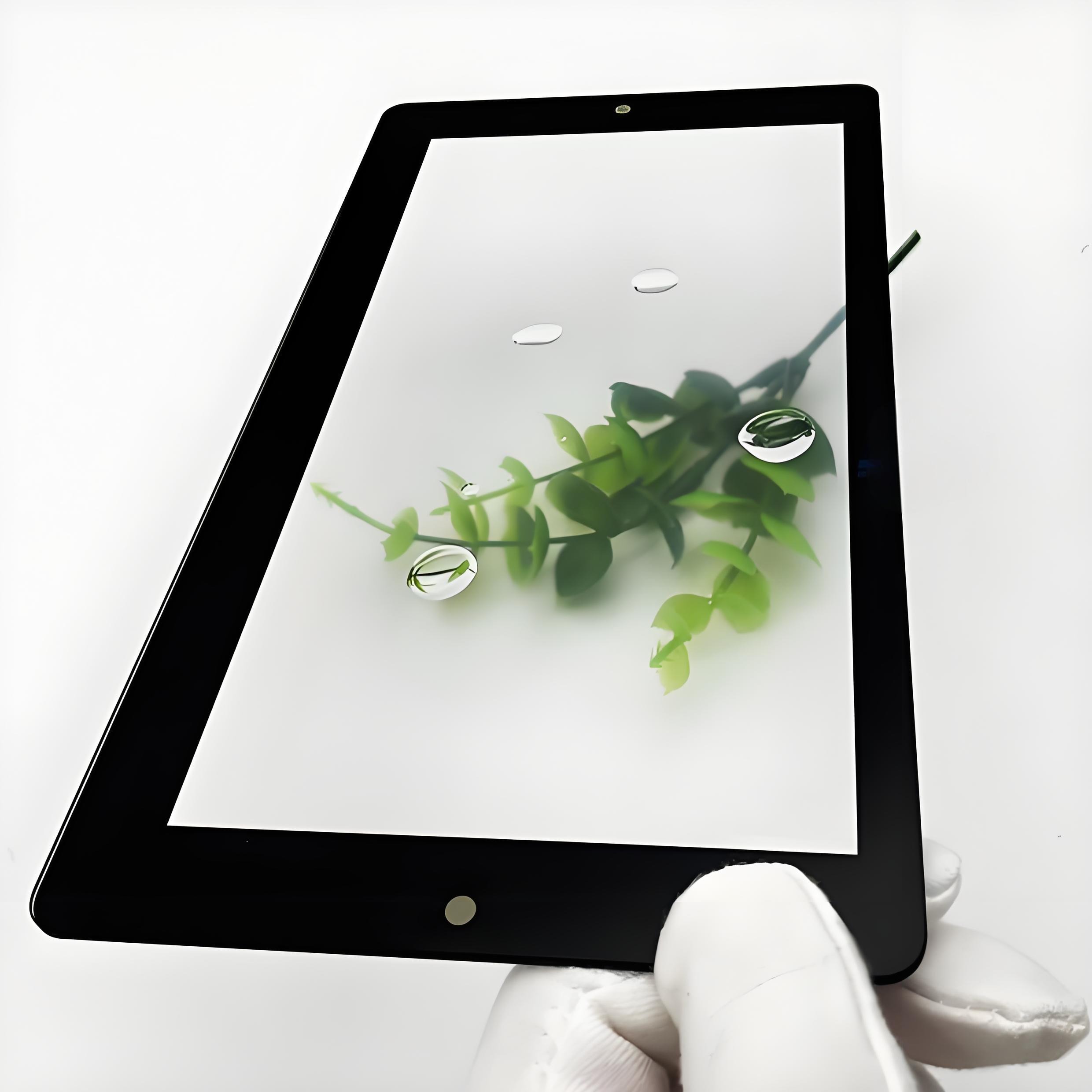
Nowaday, the glass cover lens is basically the outermost protective layer of electronic product’s touchscreen, it also called enhance optical glass, window glass or reinforces lens. It’s because of sit right on top of the touch panel and serves as the main protective barrier. The manufacturers use ultra thin flat glass as the core raw material. The untreated glass goes through multiple refined procedures including cutting, CNC carving, chemical strengthening, coatings and printing. Once all done, the final cover lens can resist impact and scratches, repel oil and fingerprints and also boost the screen’s overall light transmittance.
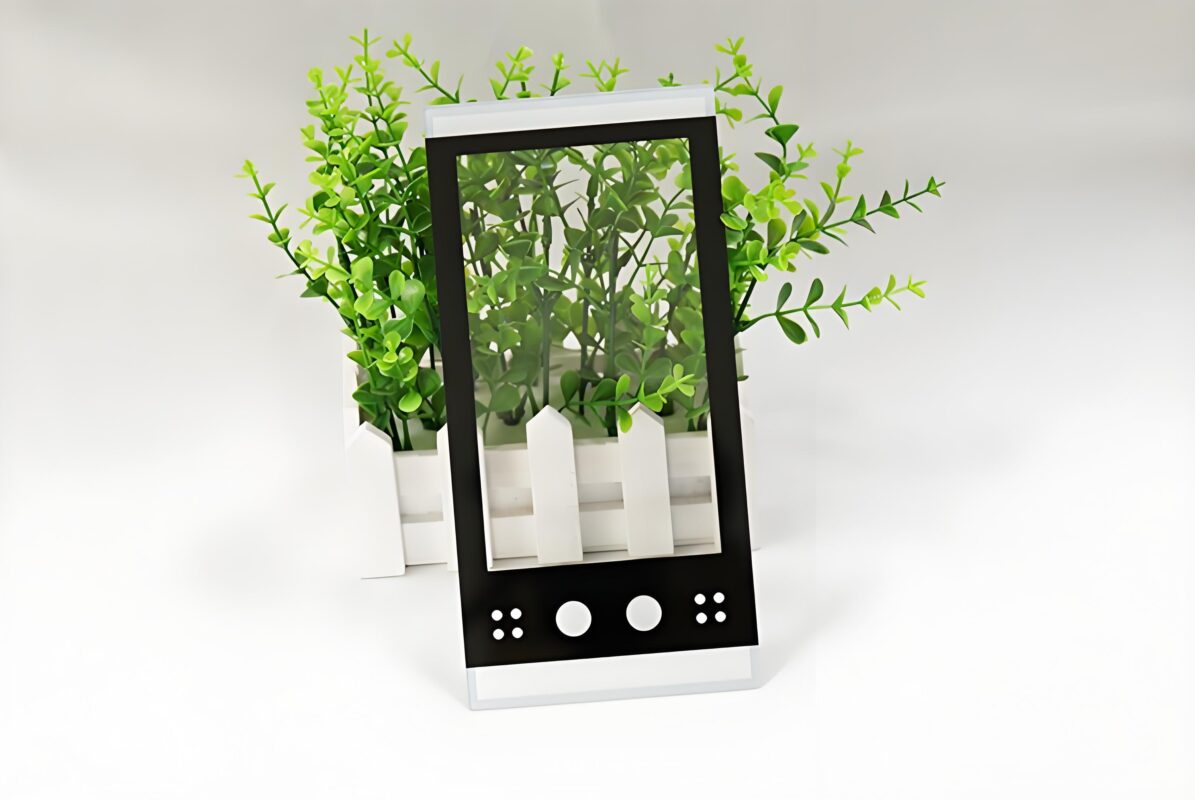

Display Cover GlassCustom Cover Glass

Now, the mainstream cover lens types for devices cover 2D, 2.5D, 3D, UTG(ultra thin glass) and aluminosilicate glass. In today’s market, 3D glass,UTG and aluminosilicate glass are the most widely selected options. In simple, 3D glass features a fully curved surface replace flat design. UTG refers to ultra thin glass with a thickness 1.2mm below. The aluminosilicate glass made by calendering method with a Li₂O-Al₂O₃-SiO₂ material formula. It ofers high transparency and works better for chemical strengthening with much better physical and chemical performance than regular soda lime glass. In general, glass cover lens manufacturing relies on highly customized production, tight tolerance processing, complex workflows and interdisciplinary technical integration.
2D, 2.5D and 3D glass remain the three most common cover lens solutions on the market. Traditional 2D glass is completely flat with zero curvature on both the surface and edges. 2.5D glass keeps a flat main display area but adds subtle curved polishing to the edges for a smoother look and better hand feel. 3D glass is a major upgrade – it curves on both the surface and inner edges. When paired with flexible OLED panels, it stretches the visual screen boundary and makes the display look larger and more immersive.
Because 3D glass requires complex curved shaping steps, its production process is far more intricate than 2D and 2.5D glass. This leads to lower production yield and a higher unit price. Even so, 3D glass is extremely popular, as it matches OLED screens perfectly while offering a sleek appearance and comfortable grip. It also packs plenty of practical perks: it’s thin, lightweight, crystal clear, anti-glare and anti-fingerprint. On top of that, it’s hard, scratch-resistant and stable enough to withstand various weather and daily use conditions.
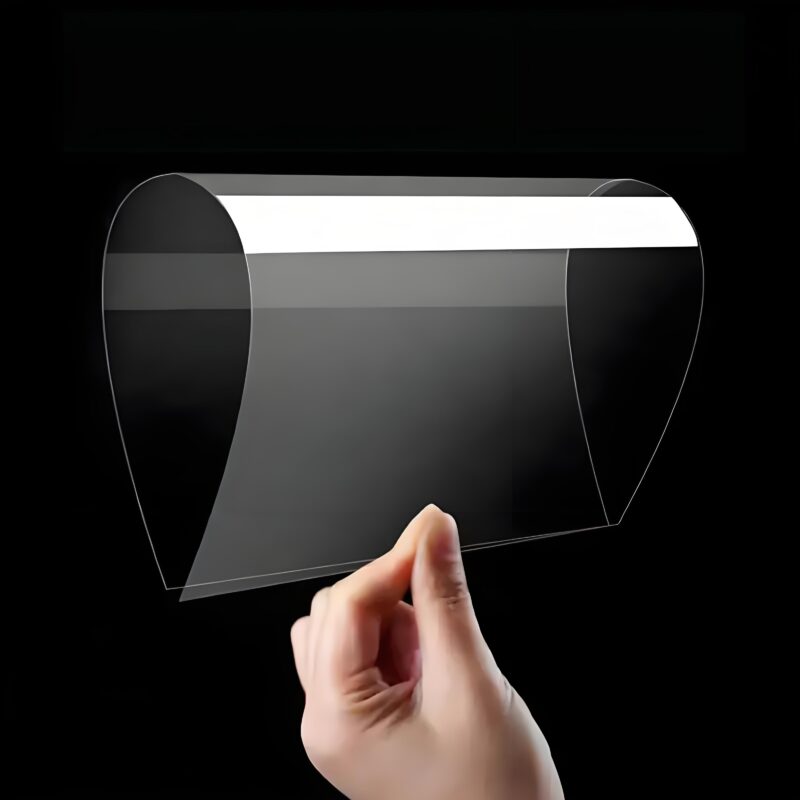
UTG stands for Ultra-Thin Glass, a flexible ultra-thin cover glass tailored for high-end smartphones. Its thickness typically ranges from 0.1mm to 1.2mm, and some advanced variants can even go below 0.1mm. Thickness is the key factor that defines its flexibility. UTG thicker than 1mm is mostly flat and rigid. Glass between 0.2mm and 1mm can achieve basic bending, while versions thinner than 0.2mm support full folding. When balancing real-world usability, product yield and manufacturing costs, UTG with a thickness of 0.1mm to 0.5mm takes up the largest share in the consumer electronics market.
UTG
A complete smartphone UTG module includes several key components: the UTG glass body, touch sensors, UTG substrate, OLED layer, isolation adhesive and UTG barrier structure. As the outermost functional layer, UTG effectively cuts down device weight and optimizes overall screen performance. Compared with other cover materials, UTG is thinner and lets in more visible light. It’s hard enough to resist scratches, won’t leave permanent creases after repeated bending, offers responsive touch feedback, and works steadily under high temperatures.
That said, UTG still has noticeable room for improvement when compared with mature silicon-aluminum glass. Its biggest pain points are the high technical barriers and difficulties in large-scale mass production. Besides that, its anti-shatter capability and bending durability also need further optimization.
There are two primary manufacturing methods for UTG glass right now. The one-step forming method is a high-temperature thermal processing technique. It demands top-tier technical capabilities and massive capital investment, so the whole production process is quite hard to execute. The two-step forming method, by contrast, uses low-temperature processing. It’s simpler to operate and requires much lower investment. The secondary stretching process heats raw glass sheets beyond their softening point and stretches them to the target ultra-thin thickness. Meanwhile, the secondary thinning process has become the go-to mass-production approach for most emerging UTG manufacturers.
Overall, UTG production follows two core routes: direct forming and thinning processing. For foldable phones, qualified UTG usually measures 20μm to 70μm in thickness and can withstand at least 200,000 folding cycles. This standard calls for much more precise manufacturing and strengthening techniques than ordinary cover glass requires.
The direct forming route means manufacturers directly produce ultra-thin glass sheets that meet the required thickness specifications, which only need simple post-processing before assembly. However, producing ultra-thin raw glass directly is incredibly difficult. For this reason, most manufacturers choose the thinning process. They start with standard glass sheets of 0.2mm to 0.3mm thick, then thin them down to the target size through chemical etching and physical polishing. After cutting and chemical strengthening, the finished UTG is ready for terminal use. Thanks to its lower cost and higher output efficiency, the thinning method delivers clear economic advantages for large-scale industrial production.

Leave a Reply

Your email address will not be published. Required fields are marked *