 +86-13925515590
 kleinma@aliyun.com

Blog
How to identify AR, AG and AF in cover glass?

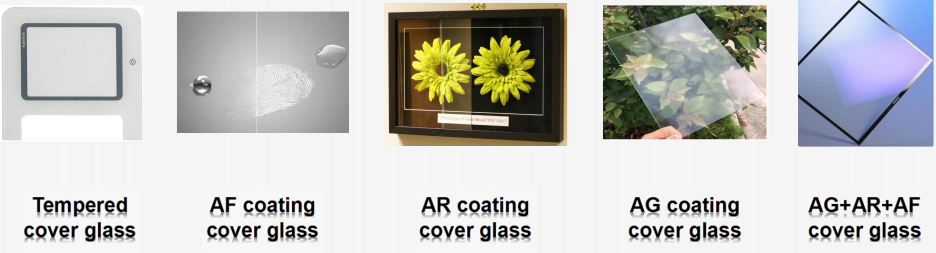
Cover Glass With 3A Application In Nowaday
Whenever new display project launched, engineering or design teams usually face a common optical challenge: Reduce unnecessary reflections. It usually means sourcing a different type of cover glass. But herewith a catch: No matter you’re in procurement or R & D, if it’s your first time deal with this kind of glass, possibly you might even don’t know what keywords to write into a search engine to let alone the correct industry terms. So many people end up asking cover glass suppliers for the products like “anti reflection glass”, “glare reducing glass” or even “no reflect glass” without really nailing down what actual need.
In order to help you to understand quickly and guide you to the right cover glass suppliers, this article breaks down 3 key glass treatments: AG, AR and AF and what they do, where they use and how you can tell them seperately in simple ways.
AG Glass(Anti Glare Glass)
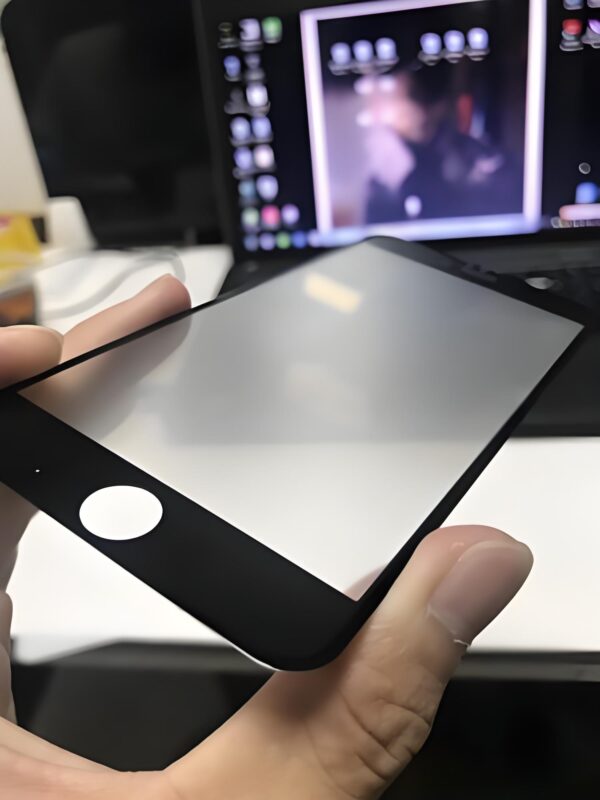
It also refers to glare proof glass. It produced by chemically etching or spray on the surface to create a microscopic, uneven texture. The roughened finish turns harsh reflections into soft, diffused light through scrattering.
What it does:
When external light hits the surface, it disperses rather than reflects directly, significantly reduce eye strain and improve viewability in bright conditions. The lower gloass level the stronger diffuse effect and better glare suppression. AG coatings can be applied to single or double sides, but the treated side must always face the viewer.
What it applied:
Mostly found in outdoor or high ambient light displays: Consider digital signage, ATMs, POS terminals, ultrasound monitors, e-readers, gas station screens and subway ticket machines.
Quick checking:
Place the glass under a fluorescent lamp and look at the tube from the front. If the tube appears blurred or spread out, it’s the AG side. If it’s sharp and clear, that’s the untreated side, it’s the most simple method.
AR Glass(Anti Reflection Glass)
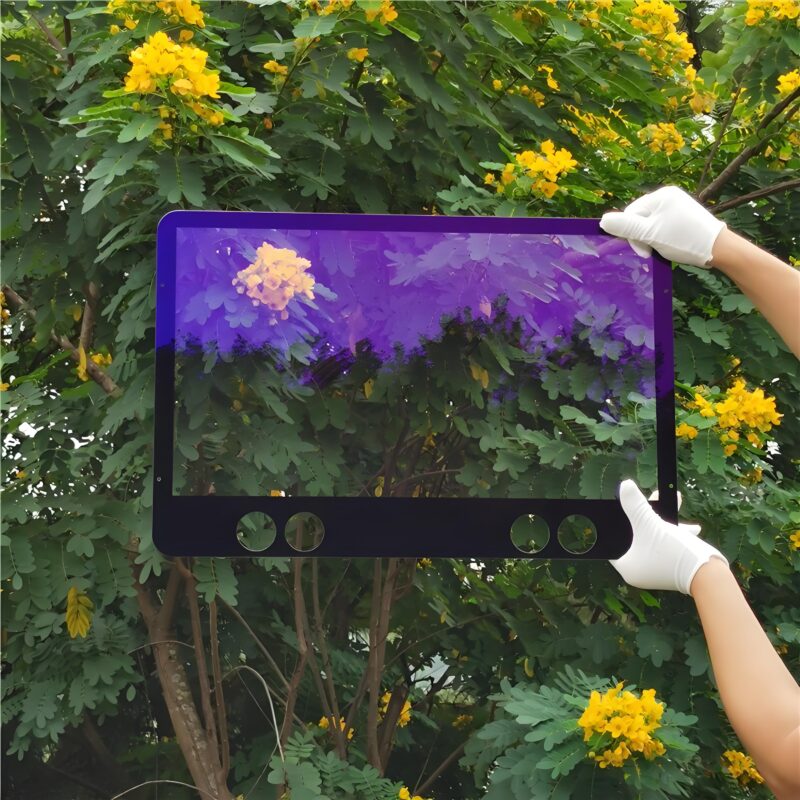
It usually called anti reflective or transmission enhancing glass. It involves depositing one or more optical thin film layers on surface to cut down reflectance and boost light transmission.
What it does:
To increase the amount of light pass through, AR glass makes the display content pop with greater clarity and contrast, offer a more comfortable and crisp viewing experience. Top-tier AR coatings can push transmittance up to 99% and keep reflectance under 1%.
Where it used?
Ideal for high definition screens, picture frames, smartphone lenses and camera modules on various devices.
Quick checking:
Put an ordinary piece of glass next to an AR coated one, both flat against a printed image or screen. Whichever side shows noticeably sharper and brighter visuals is the AR glass.
Note: AG glass can also receive an additional AR coating on top if needed.
AF Glass(Anti Fingerprint Glass)
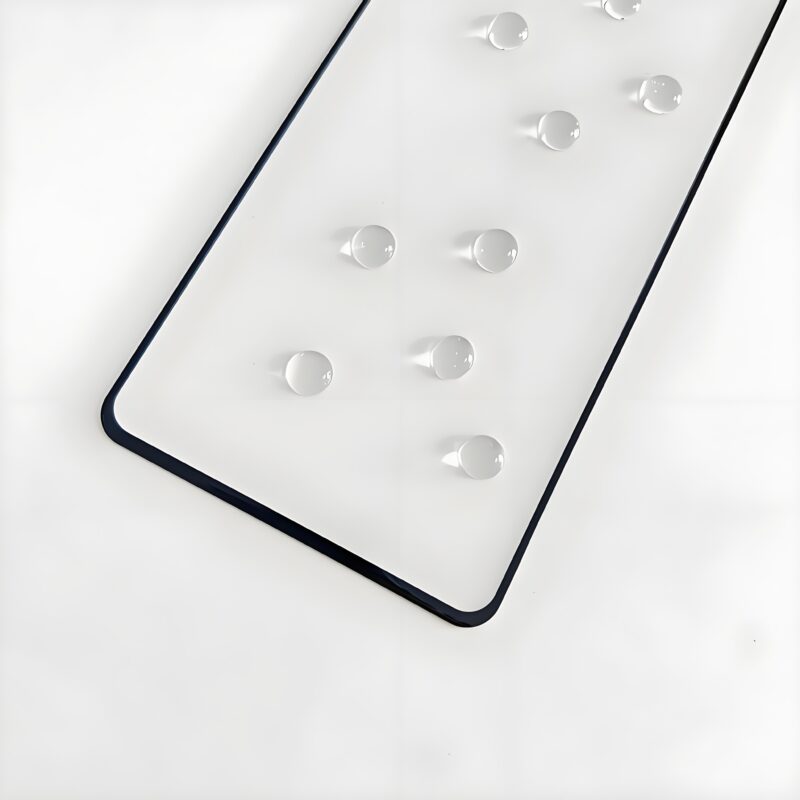
Inspired by lotus effect, AF treatment applies a nano scale chemical layer to make the surface highly hydrophobic and oleophobic.
What it does:
It makes the glass smudges, fingerprints and grease marks much easier to wipe off, while offer a smoother and silkier tactile feel during touch operation.
Where it used:
Almost universally applied to touchscreen cover glass. AF is typically a single side coating applied to the outer surface.
Common hybrid options: AG+AF, AR+AF or even AG+AR+AF in combination.
Quick checking:
1.Drop a small water droplet on surface: If it beads up and rolls freely, that’s the AF side.
2.Draw a line with an oil based marker: If the ink fails to stick or beads up, that also can be indentify as AF treatment.
To keep these definitions, use cases and simple identification tricks in mind, you’ll be able to quickly find what type of glass needed and more clearly tell supplier requirements, save time and avoid mistake happen.